Mongolian Beef with Sticky Brown Sugar Sauce
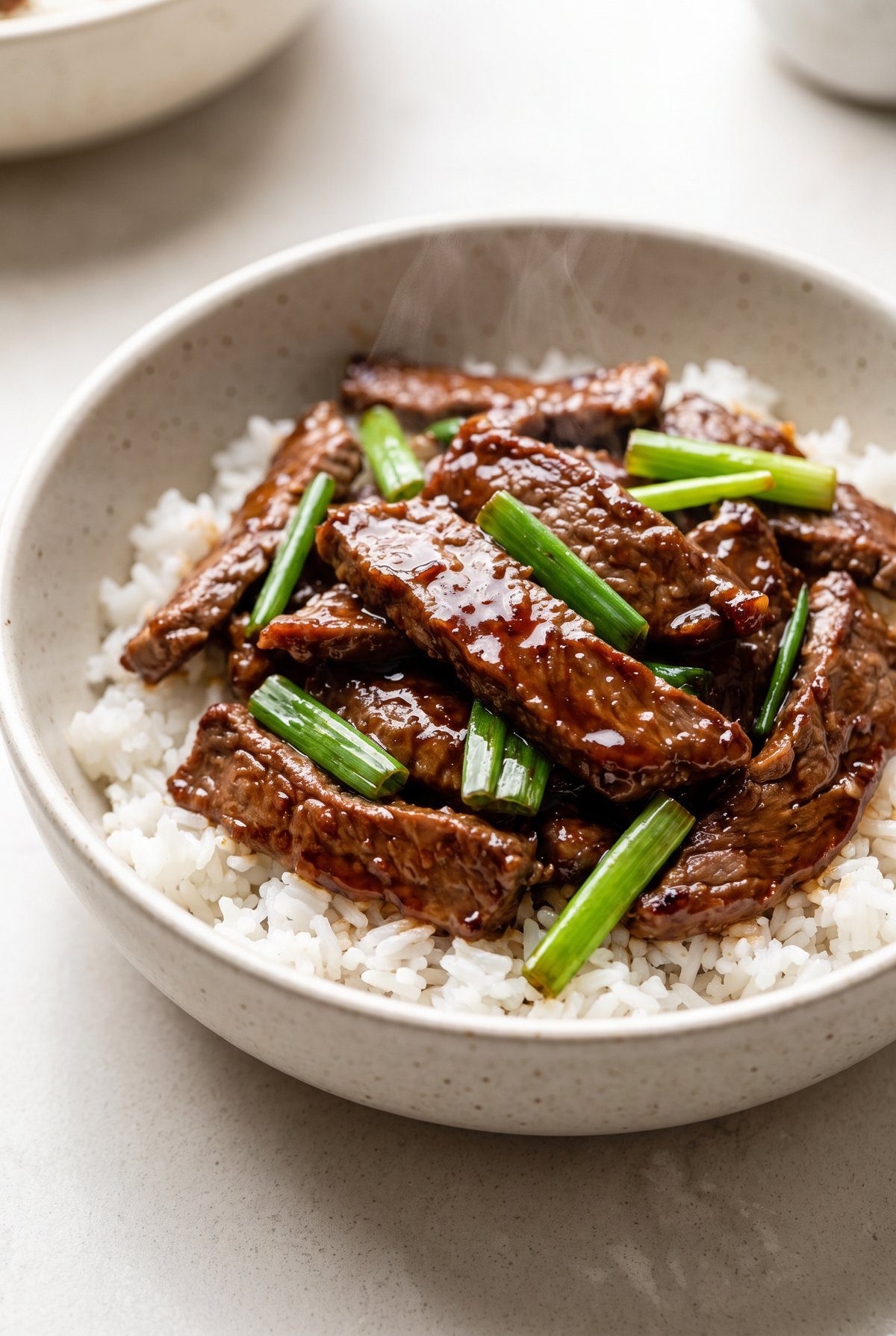
Mongolian beef made with crisp-seared flank steak in a sticky brown sugar and soy glaze with ginger, garlic, and green onions. Ready in 35 minutes.
This post may contain affiliate links. See our disclosure policy.
Mongolian beef is the takeout order that turns out to be almost embarrassingly easy at home, and this version is the one everybody knows: thin strips of flank steak tossed in cornstarch, seared hard so the edges go crisp, then folded into a glossy brown sugar and soy glaze with a pile of green onions. It goes over rice and it’s gone in about ten minutes.
The whole dish lives or dies on how you cut the steak. Slice it 1/4 inch thick against the grain and every piece stays tender, because you’ve already cut the long muscle fibers short. Cut it thick, or with the grain, and no sauce on earth will save it. Twenty minutes in the freezer firms the meat up enough that a sharp knife glides right through.
The cornstarch does two jobs. It gives the beef that light crust when it hits hot oil, and the thin coating that stays on each piece melts into the glaze so the sauce clings instead of pooling at the bottom of the bowl.
Why You’ll Love This Mongolian Beef Recipe
- Faster than delivery. The beef sears in about three minutes a batch, so dinner lands on the table in 35 minutes start to finish.
- That sticky restaurant glaze. Brown sugar, soy sauce, ginger, and garlic reduce into a shiny sauce that coats every strip of beef.
- Tender beef, no marinating. Slicing flank steak thin against the grain does the work a long marinade usually gets credit for.
- Kids eat it without a fight. It’s sweet, it’s salty, and there’s nothing green in it unless you count the onions on top.
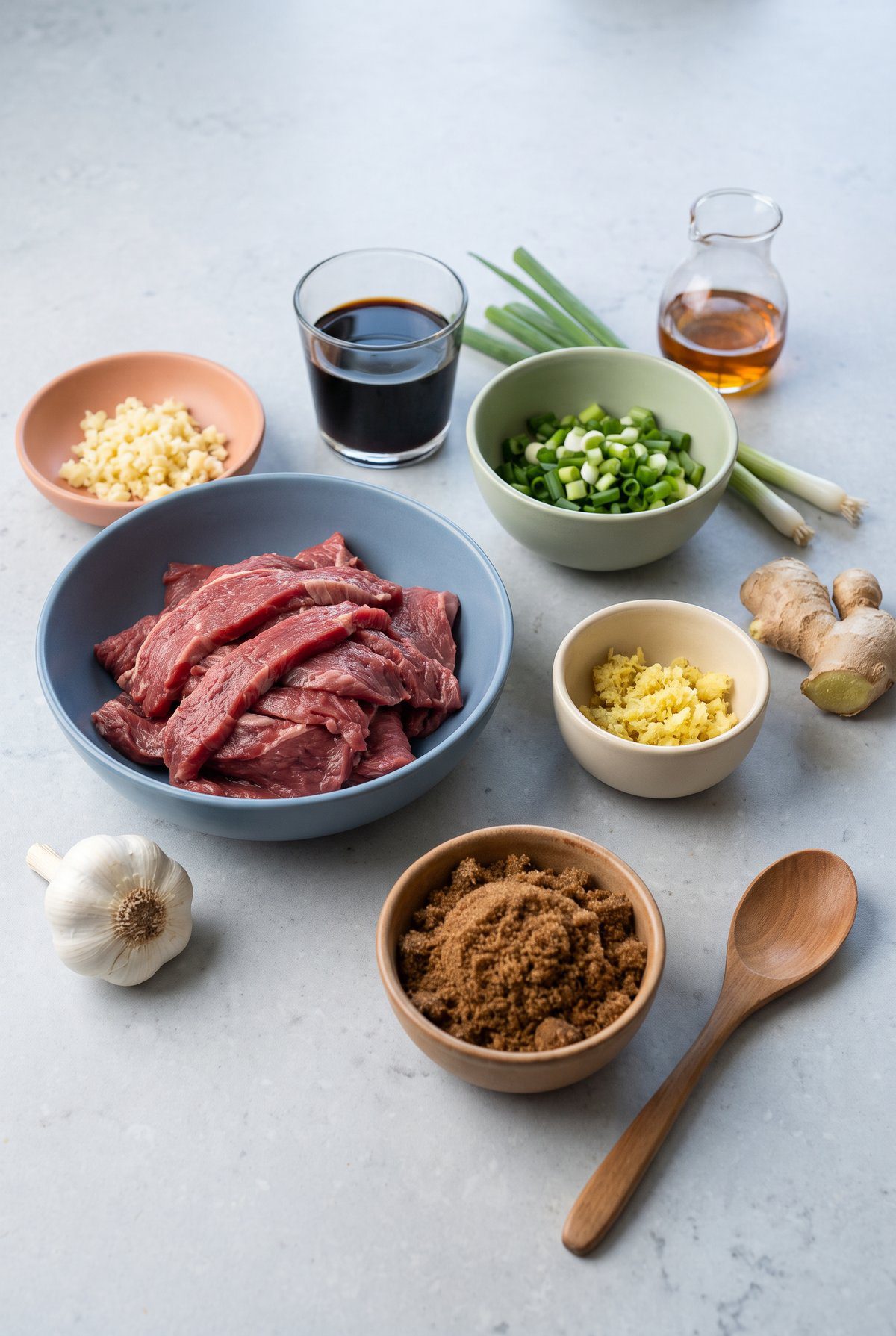
Mongolian Beef Ingredients
Use low-sodium soy sauce. Half a cup of the regular kind reduces down into something you can’t eat, and the brown sugar can’t cover for it. If low-sodium is all you have on hand is the regular bottle, use 1/3 cup soy sauce and bump the water up to 1/2 cup.
- 1 1/2 lbs flank steak, sliced 1/4 inch thick against the grain
- 1/3 cup cornstarch
- 3 tbsp vegetable oil
- 1 tsp fresh ginger, minced
- 4 cloves garlic, minced
- 1/2 cup low-sodium soy sauce
- 1/2 cup packed dark brown sugar
- 1/3 cup water
- 1 tsp toasted sesame oil
- 1/4 tsp red pepper flakes (optional)
- 2 tsp cornstarch, for the slurry
- 1 tbsp cold water, for the slurry
- 6 green onions, cut into 1-inch pieces
- 4 cups cooked white rice, for serving
Recipe Variations
- Top sirloin or skirt steak both stand in for flank. Slice them just as thin and just as firmly against the grain. They’re whole cuts of beef like flank, so USDA guidance is 145°F with a 3-minute rest, and strips this thin sail past that in the pan and again in the simmering sauce.
- Swap in 1 1/2 pounds of boneless, skinless chicken thighs sliced into thin strips. Same cornstarch coating, same hard sear, but chicken is poultry and has to reach 165°F, so give it an extra minute or two per batch and check a thick piece with a thermometer.
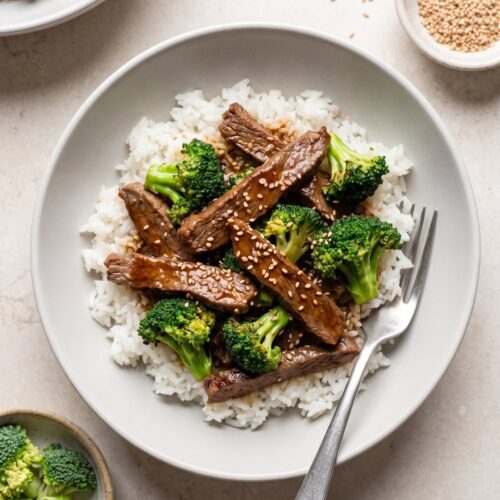
- Add a head of broccoli cut into small florets. Steam or blanch it separately for 3 minutes, then fold it in with the green onions at the very end so it stays bright green.
How to Make Mongolian Beef
- Slice the beef thin: Put the flank steak in the freezer for 15-20 minutes to firm it up. Find the direction the muscle fibers run, then slice across them, 1/4 inch thick. Cut any long strips in half so nothing is bigger than about 3 inches.
- Coat in cornstarch: Toss the beef with the 1/3 cup cornstarch in a bowl or a zip-top bag until every piece is dusted. Shake off the extra. Loose cornstarch dumped into the skillet turns the sauce cloudy and pasty.
- Mix the sauce: Whisk the soy sauce, brown sugar, water, sesame oil, and red pepper flakes together in a measuring cup until the sugar dissolves. Keep it next to the stove, because things move fast once the beef starts cooking.
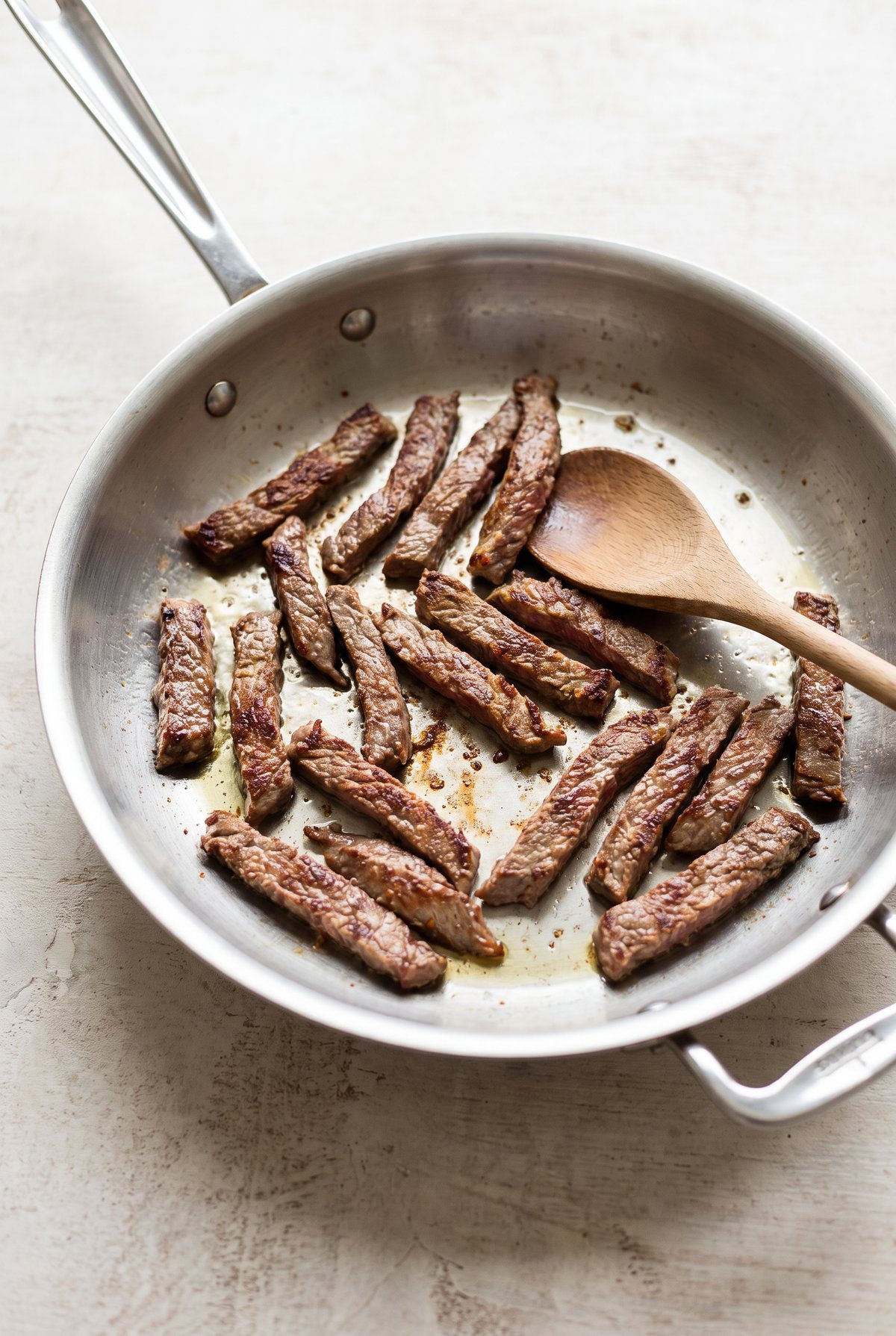
- Sear the beef in batches: Heat the vegetable oil in a large skillet or wok over high heat until it shimmers. Add half the beef in a single layer and let it sit undisturbed for 1-2 minutes, until the underside browns, then flip and cook 1 minute more. Transfer to a plate and repeat with the rest. Flank is a whole cut of beef, and USDA guidance for whole cuts is 145°F followed by a 3-minute rest. Strips sliced this thin can’t be probed accurately, so cook until no pink remains, then let them rest on the plate while you build the sauce. They pass 145°F in the pan and go well past it again in the simmering glaze.
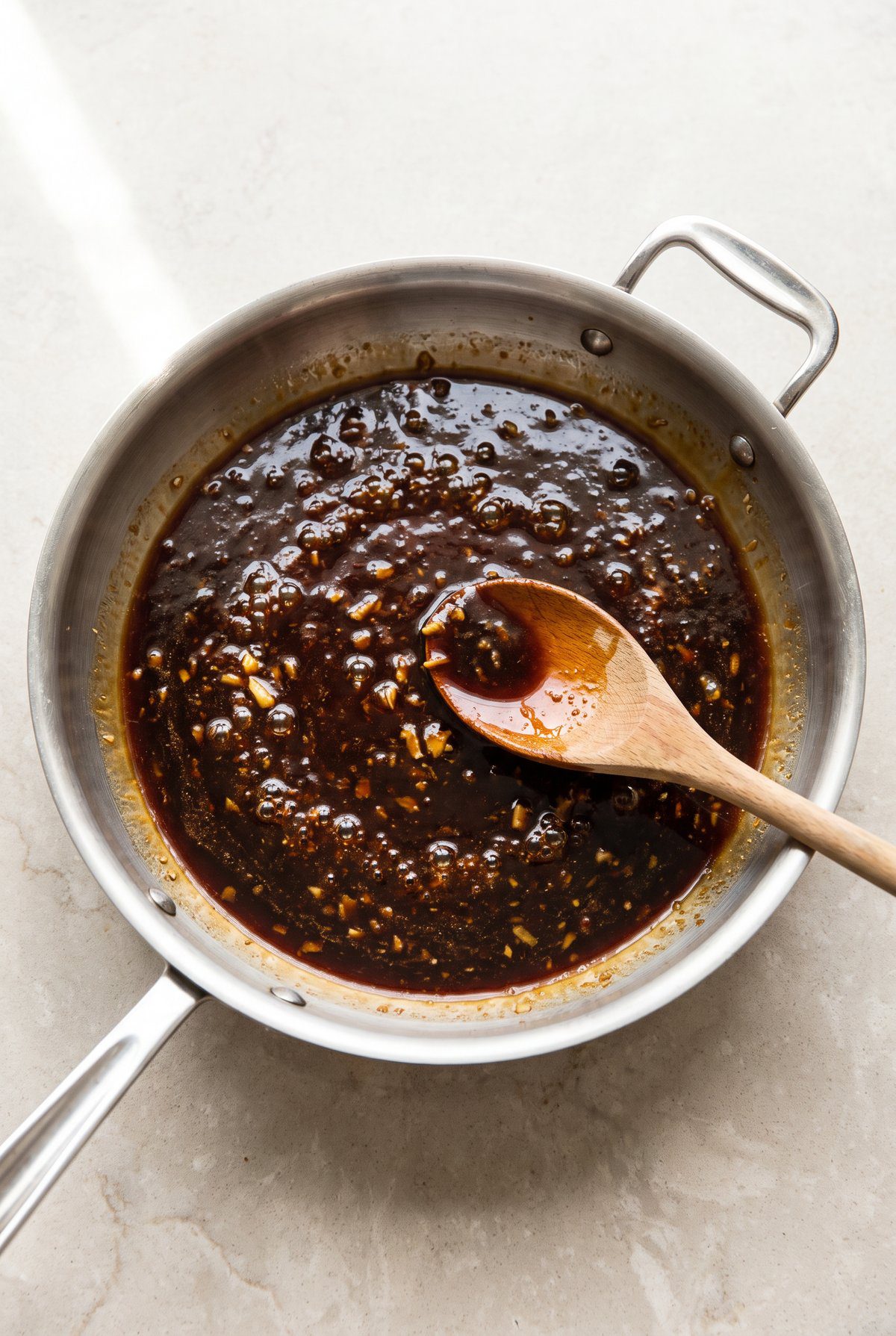
- Cook the aromatics and sauce: Turn the heat to medium. Add the ginger and garlic to the empty skillet and stir for 30 seconds, just until they smell sweet. Pour in the sauce, scrape up the browned bits, and simmer for 3-4 minutes.
- Thicken the glaze: Stir the 2 teaspoons cornstarch into the 1 tablespoon cold water, then whisk it into the simmering sauce. Let it bubble for 30-60 seconds, until it thickens enough to coat a spoon.
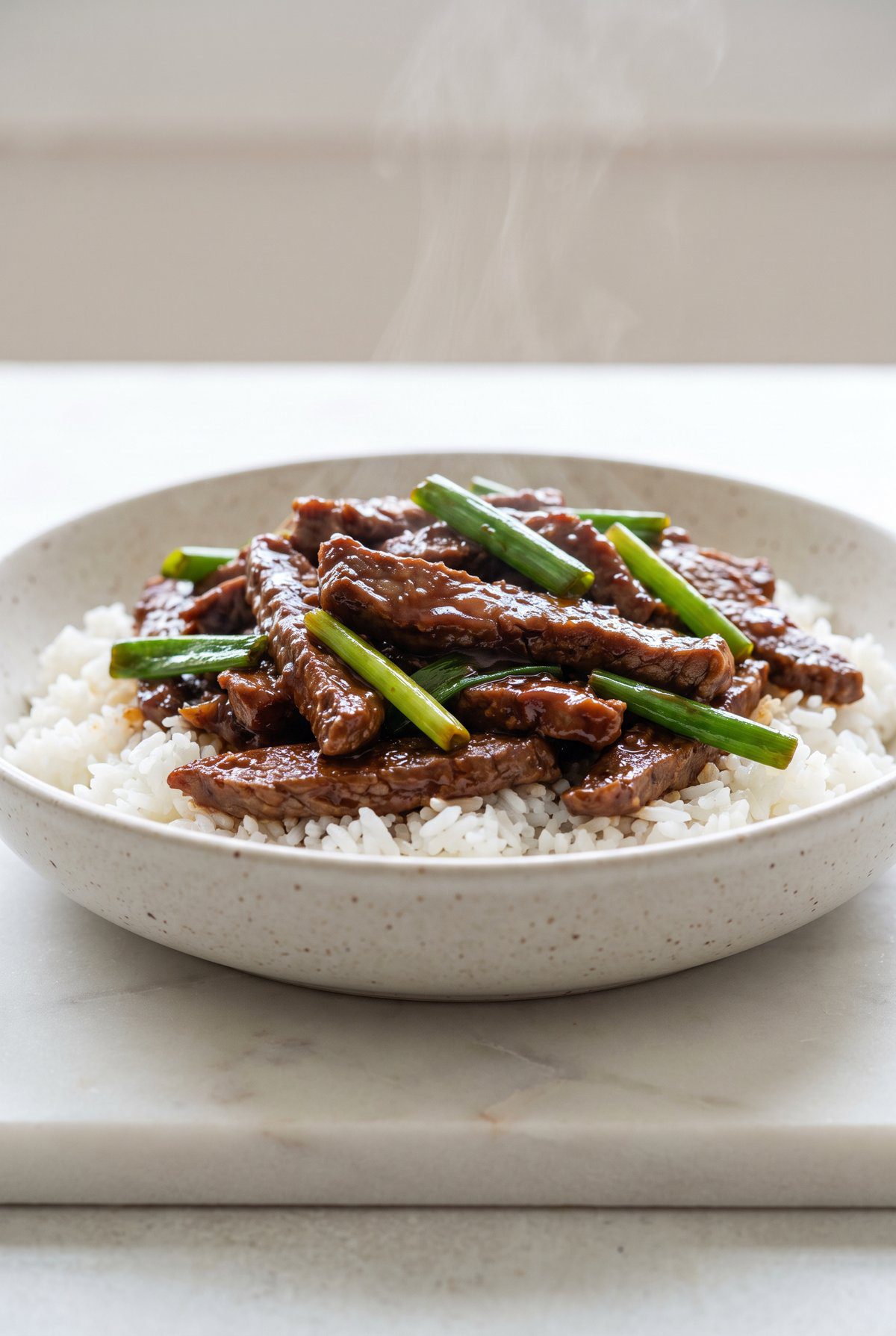
- Toss and serve: Return the beef and any juices to the pan, add the green onions, and toss for 1-2 minutes until everything is coated and hot. Serve over the cooked white rice.
Recipe FAQs
What Cut of Beef Is Best for Mongolian Beef?
Flank steak. It’s lean, it has a strong grain that’s easy to see and cut across, and it stays tender when it’s sliced thin. Skirt steak and top sirloin are the next best picks.
Why Did My Mongolian Beef Come out Tough?
Almost always the slicing. Thick pieces or pieces cut with the grain stay chewy no matter how long they cook. The other cause is crowding the pan, which steams the beef gray instead of searing it.
Do I Need a Wok?
No. A 12-inch skillet works fine as long as you cook the beef in two batches. What matters is high heat and room between the pieces, not the shape of the pan.
Can I Make the Sauce Less Sweet?
Yes. Cut the brown sugar to 1/3 cup and add a teaspoon of rice vinegar at the end. It’ll still glaze, just with less of the candy-sweet edge the restaurant version has.
Is Mongolian Beef Actually Mongolian?
No. It came out of Taiwanese-American restaurants and got the name for marketing. There’s no Mongolian cooking tradition behind it, which is why you won’t find a single authoritative version.
Cooking Tips
- Let the pan get properly hot before the first batch goes in. A drop of water should skitter and vanish. Lukewarm oil soaks into the cornstarch and you lose the crust entirely.
- Look at the steak before you pick up the knife. The grain shows as fine parallel lines running the length of the meat, and your cuts should cross them at a right angle.
- Have the green onions cut and the slurry mixed before the beef hits the pan. From the first sear to the last toss is under ten minutes, and there’s no time to chop mid-cook.
Storage and Freezing
To store: Refrigerate leftovers in an airtight container for up to 3 days. Store the rice separately so it doesn’t soak up all the sauce overnight.
To freeze: It freezes for up to 2 months, though the cornstarch crust softens completely and the sauce thins out on thawing. Thaw overnight in the fridge and reduce it a minute in a hot pan to bring the glaze back.
To reheat: Warm in a skillet over medium-high for 2-3 minutes with a splash of water, stirring, until it reaches 165°F. The microwave works but the beef firms up fast, so use short bursts.
How to Serve Mongolian Beef
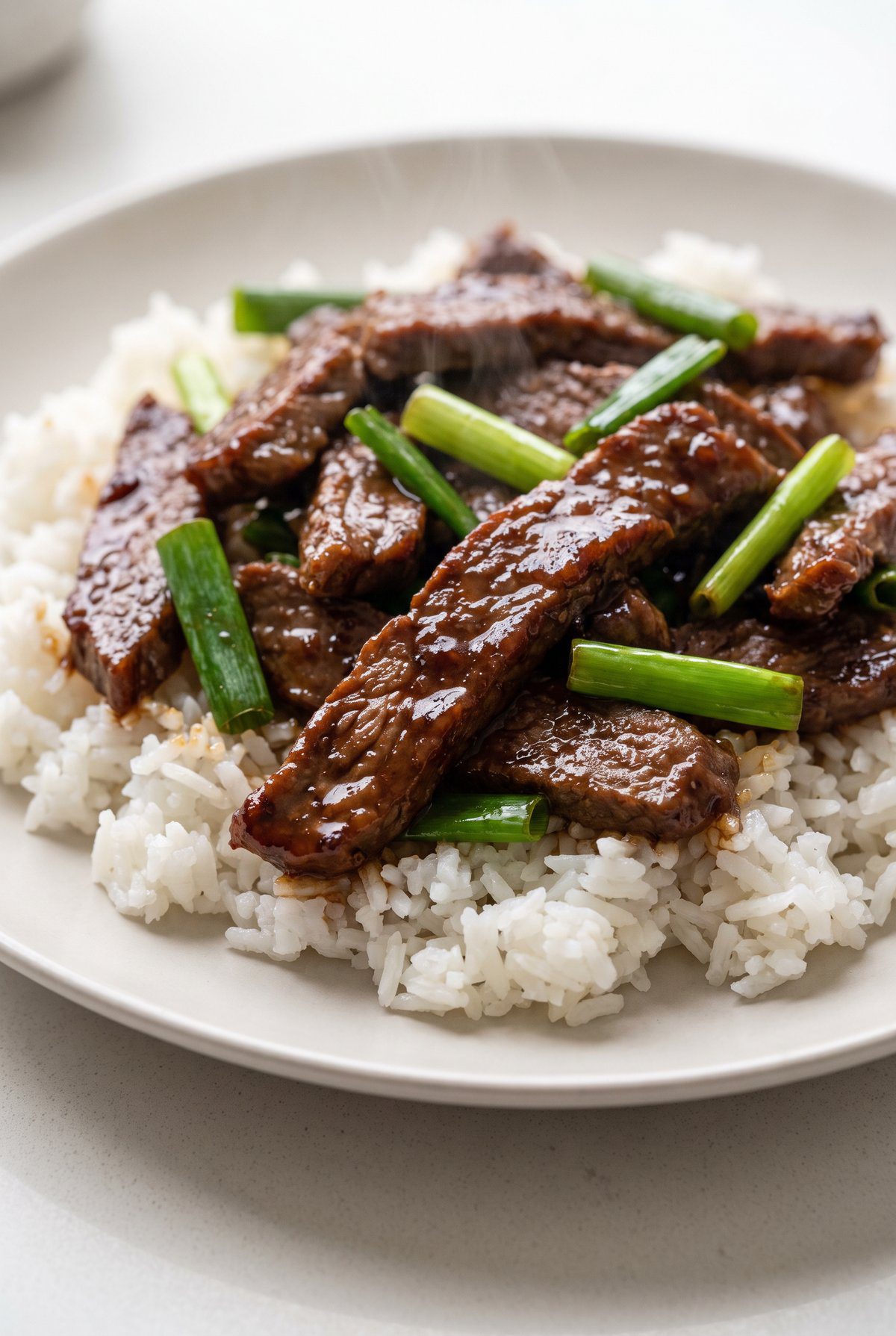
Mongolian Beef belongs over steamed white rice, and a bowl of that plus a plate of steamed broccoli or snap peas makes a complete dinner. Fried rice works too if you have leftover rice sitting in the fridge. For the same sweet-and-savory flavors on a night when you have ground beef instead of steak, our Mongolian Ground Beef Noodles gets there in even less time.
Loved This Recipe?
Mongolian Beef is one of those dinners that costs less than takeout, lands faster than delivery, and disappears just as quickly.
Leave a star rating in the comments below, it helps other people find this recipe. Made it? Tag @allwellfed on Instagram, I love seeing this one in other people’s kitchens.
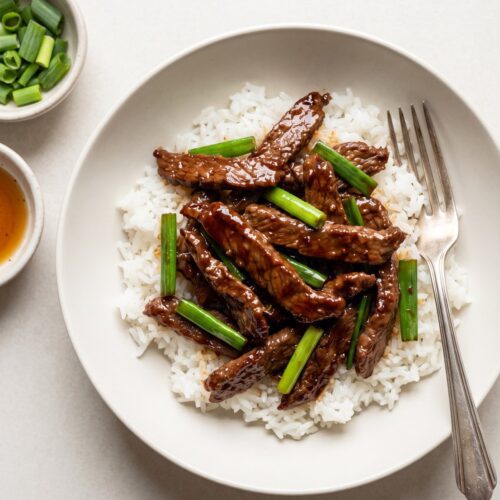
Mongolian Beef with Sticky Brown Sugar Sauce
Equipment
Ingredients
- 1 1/2 lbs flank steak sliced 1/4 inch thick against the grain
- 1/3 cup cornstarch
- 3 tbsp vegetable oil
- 1 tsp fresh ginger minced
- 4 cloves garlic minced
- 1/2 cup low-sodium soy sauce
- 1/2 cup packed dark brown sugar
- 1/3 cup water
- 1 tsp toasted sesame oil
- 1/4 tsp red pepper flakes optional
- 2 tsp cornstarch for the slurry
- 1 tbsp cold water for the slurry
- 6 green onions cut into 1-inch pieces
- 4 cups cooked white rice for serving

Instructions
- Slice the beef thin: Put the flank steak in the freezer for 15-20 minutes to firm it up. Find the direction the muscle fibers run, then slice across them, 1/4 inch thick. Cut any long strips in half so nothing is bigger than about 3 inches.
- Coat in cornstarch: Toss the beef with the 1/3 cup cornstarch in a bowl or a zip-top bag until every piece is dusted. Shake off the extra. Loose cornstarch dumped into the skillet turns the sauce cloudy and pasty.
- Mix the sauce: Whisk the soy sauce, brown sugar, water, sesame oil, and red pepper flakes together in a measuring cup until the sugar dissolves. Keep it next to the stove, because things move fast once the beef starts cooking.
- Sear the beef in batches: Heat the vegetable oil in a large skillet or wok over high heat until it shimmers. Add half the beef in a single layer and let it sit undisturbed for 1-2 minutes, until the underside browns, then flip and cook 1 minute more. Transfer to a plate and repeat with the rest. Flank is a whole cut of beef, and USDA guidance for whole cuts is 145°F followed by a 3-minute rest. Strips sliced this thin can’t be probed accurately, so cook until no pink remains, then let them rest on the plate while you build the sauce. They pass 145°F in the pan and go well past it again in the simmering glaze.
- Cook the aromatics and sauce: Turn the heat to medium. Add the ginger and garlic to the empty skillet and stir for 30 seconds, just until they smell sweet. Pour in the sauce, scrape up the browned bits, and simmer for 3-4 minutes.
- Thicken the glaze: Stir the 2 teaspoons cornstarch into the 1 tablespoon cold water, then whisk it into the simmering sauce. Let it bubble for 30-60 seconds, until it thickens enough to coat a spoon.
- Toss and serve: Return the beef and any juices to the pan, add the green onions, and toss for 1-2 minutes until everything is coated and hot. Serve over the cooked white rice.
Notes
If you made this, leave a star rating down in the comments. It takes about ten seconds, and it’s how other cooks decide whether a recipe is worth trying.