Takeout-Style Kung Pao Chicken
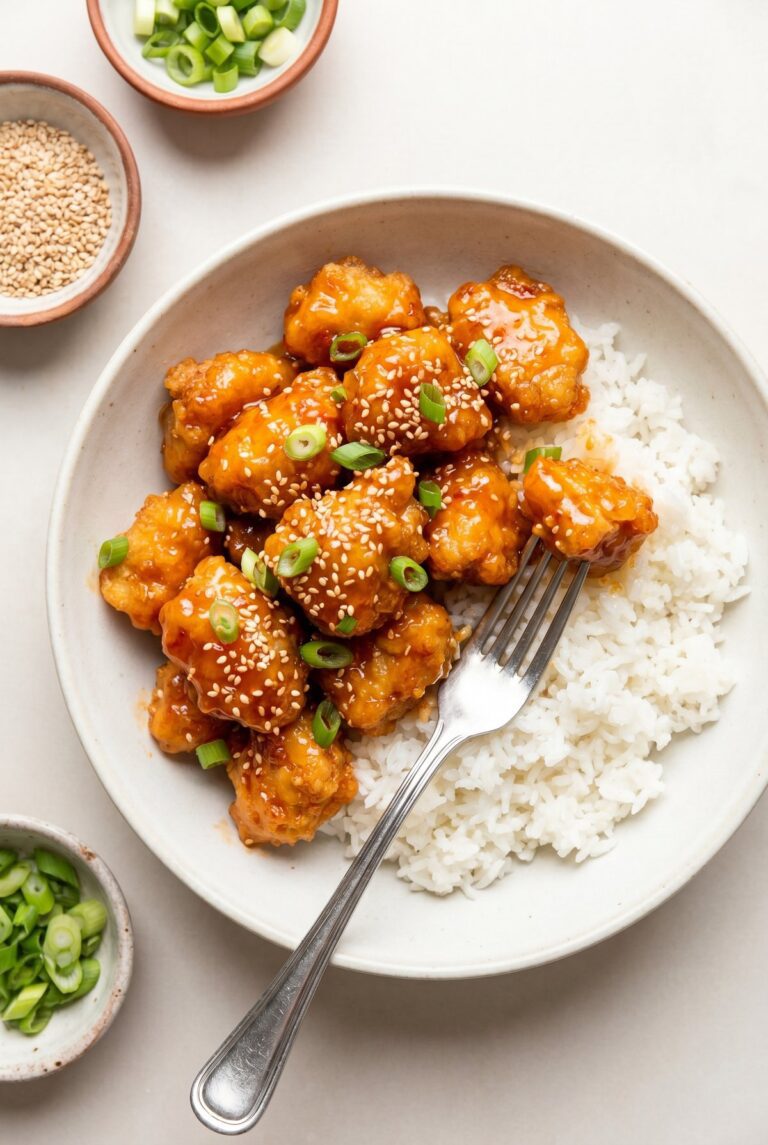
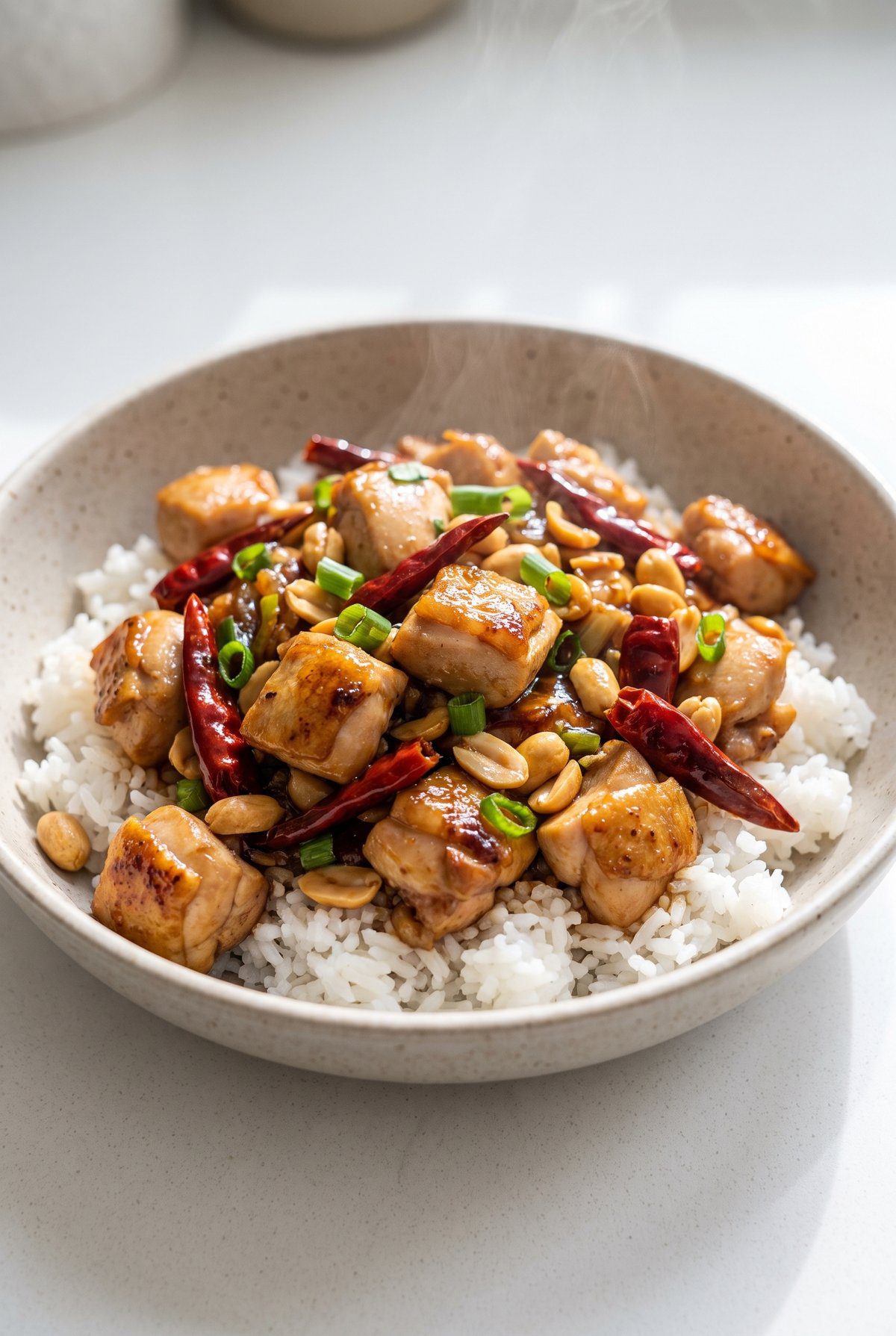
Kung pao chicken with tender chicken, roasted peanuts, and dried chiles in a glossy soy and black vinegar sauce. Better than takeout in 30 minutes.
This post may contain affiliate links. See our disclosure policy.
Kung pao chicken is the takeout order I finally stopped paying for. Cubes of chicken get a quick cornstarch marinade, hit a hot pan with dried chiles and garlic, and finish in a dark, glossy sauce that lands somewhere between salty, sweet, and tangy. Roasted peanuts go in at the very end so they stay crunchy, and the whole thing takes 30 minutes.
That cornstarch marinade does more than you’d expect. Tossing the chicken with soy sauce, sherry, and a spoonful of cornstarch before it cooks is a simplified version of velveting, the technique Chinese restaurants use to keep stir-fried meat tender. The starch forms a thin coat that holds moisture in through the fast, hot cook, then helps the sauce grab onto every piece at the end.
Dried red chiles are the other thing worth getting right. Shake most of the seeds out and they bring smoky warmth without a lot of burn, so use 4 for a mild pan or 10 if your family likes heat. Chinese black vinegar is what makes the sauce taste like the restaurant version; balsamic is the closest swap if your store doesn’t carry it.
Why You’ll Love This Kung Pao Chicken Recipe
- Tender chicken, every time. A 15-minute cornstarch and soy marinade keeps the meat soft through a hard, fast sear.
- Heat you actually control. Dried chiles let you dial the spice from gentle to serious just by counting how many go in the pan.
- Cheaper and faster than delivery. Thirty minutes and about a third of the price of the same dish from a restaurant.
- That glossy restaurant sauce. Cornstarch in the sauce turns it thick and shiny so it coats the chicken instead of pooling under it.
Kung Pao Chicken Ingredients
Chicken thighs are the better choice here over breast. Stir-frying is fast and hot, and thighs have enough fat to stay juicy through it, while breast meat goes dry the moment you look away.
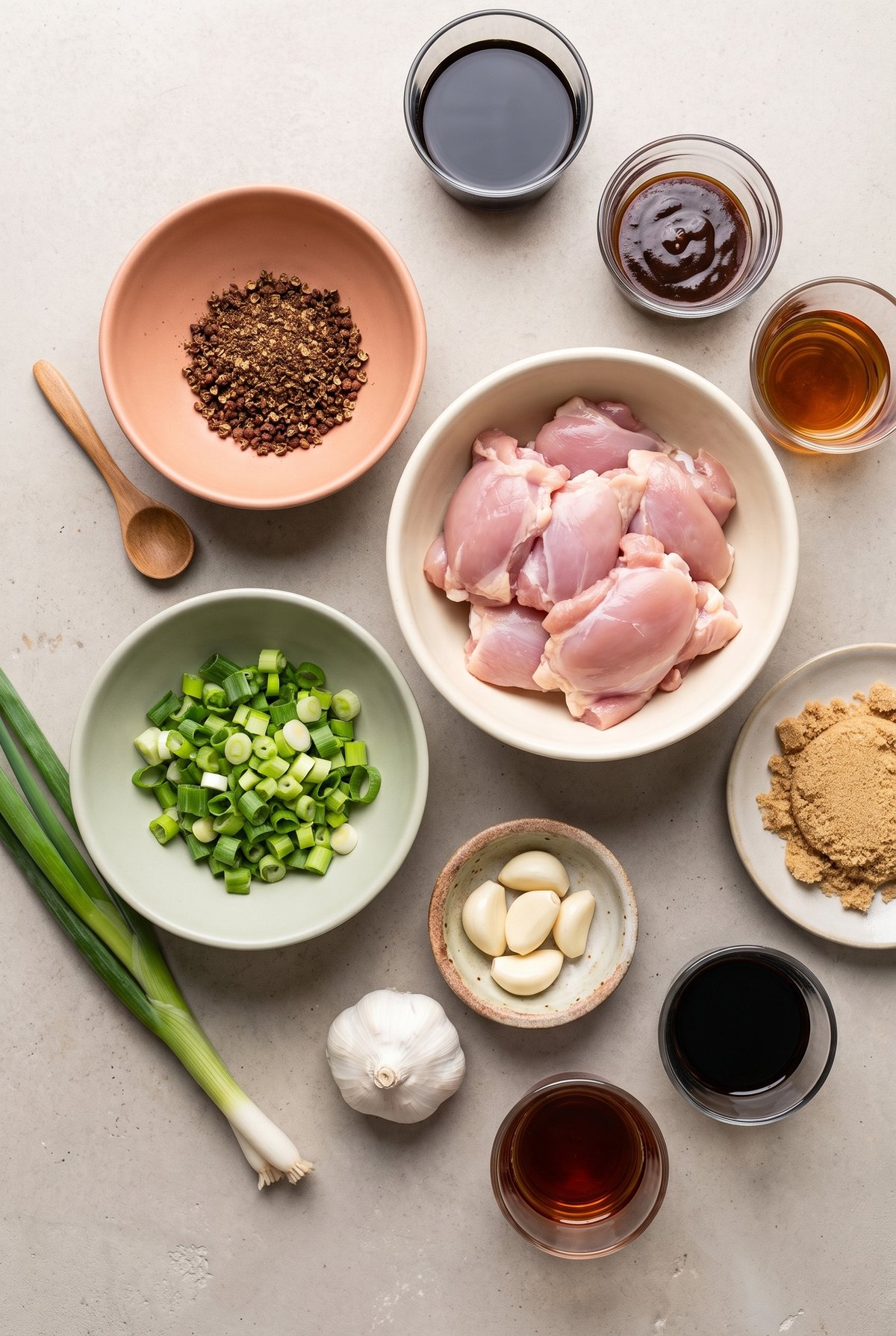
- 1 1/2 lbs boneless, skinless chicken thighs, cut into 3/4-inch pieces
- 1 tbsp low-sodium soy sauce
- 1 tbsp dry sherry or Shaoxing wine
- 1 tbsp cornstarch
- 3 tbsp low-sodium soy sauce, for the sauce
- 2 tbsp Chinese black vinegar
- 2 tbsp light brown sugar
- 1 tbsp hoisin sauce
- 2 tsp toasted sesame oil
- 2 tsp cornstarch, for the sauce
- 1/3 cup chicken broth
- 2 tbsp vegetable oil
- 8 dried red chiles, halved and most seeds shaken out
- 1 tsp ground Sichuan peppercorns (optional)
- 4 cloves garlic, minced
- 1 tbsp fresh ginger, minced
- 5 green onions, cut into 1-inch pieces
- 3/4 cup roasted unsalted peanuts
- 4 cups cooked white rice, for serving
Recipe Variations
- Add a diced red bell pepper and a handful of diced zucchini with the garlic for a vegetable-heavy version closer to American takeout.
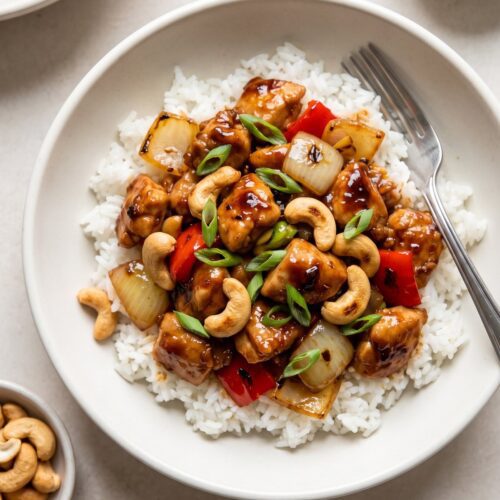
- Swap the peanuts for roasted cashews if you’re cooking around a peanut allergy; add them at the same point.
- Use shrimp instead of chicken and skip the marinade. Sear them 1-2 minutes per side, pull them out, and stir them back in with the peanuts.
How to Make Kung Pao Chicken
- Marinate the chicken: Toss the chicken pieces with 1 tablespoon soy sauce, the sherry, and 1 tablespoon cornstarch until every piece is coated. Let it sit for 15 minutes while you prep everything else.
- Mix the kung pao sauce: In a small bowl, whisk together the 3 tablespoons soy sauce, black vinegar, brown sugar, hoisin, sesame oil, 2 teaspoons cornstarch, and chicken broth until the cornstarch fully dissolves. Set it right next to the stove.
- Sear the chicken: Heat the vegetable oil in a large skillet or wok over medium-high heat until it shimmers. Add the chicken in a single layer and let it sit undisturbed for 2 minutes to brown, then stir and cook another 3-4 minutes until golden all over and cooked to 165°F on an instant-read thermometer. Move it to a plate.
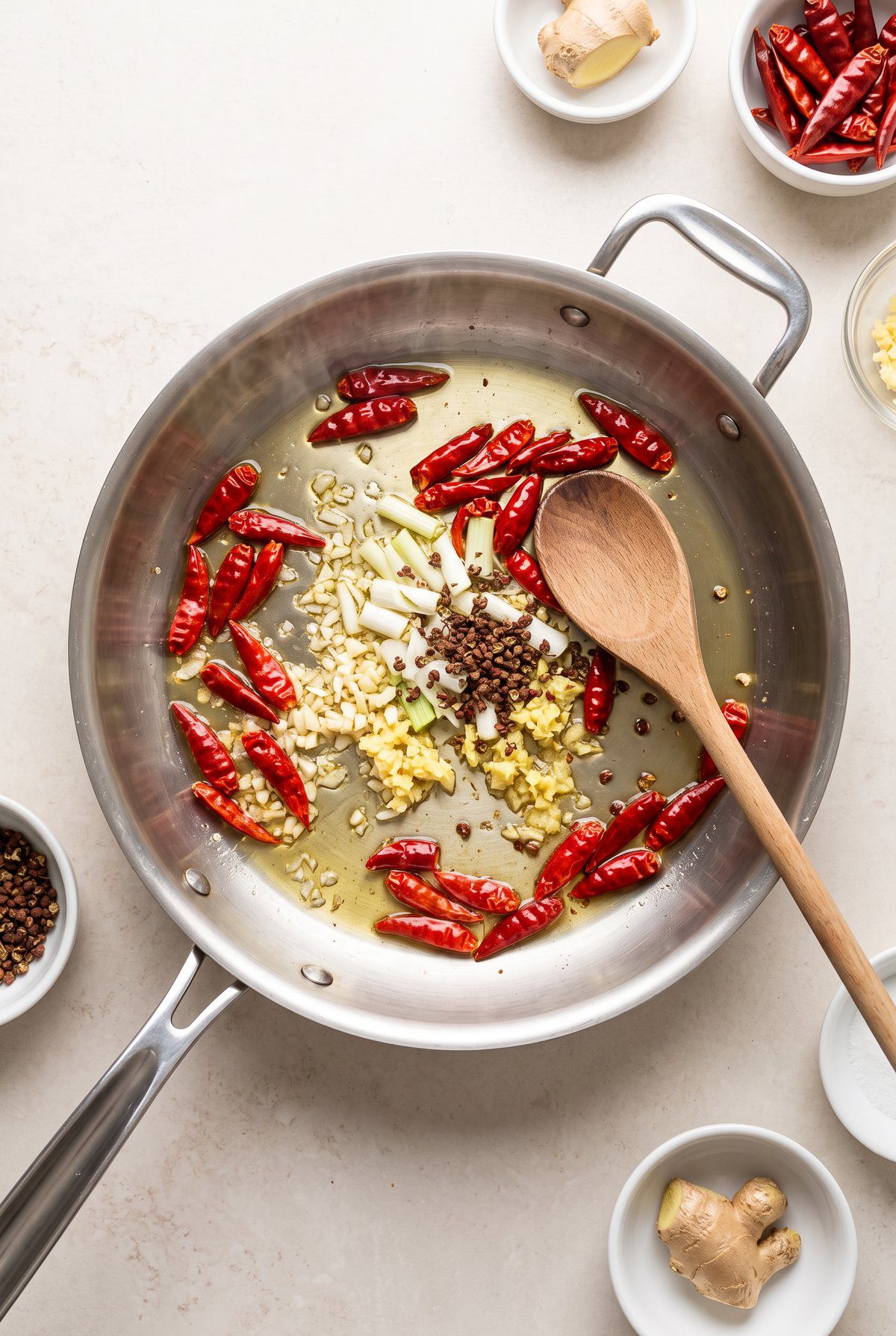
- Toast the chiles and aromatics: Turn the heat down to medium. Add the dried chiles and stir for 20-30 seconds, just until you can smell them, well before they darken. Add the garlic, ginger, the white pieces of green onion, and the ground Sichuan peppercorns, if using, and stir 30 seconds more. The peppercorns go in here rather than into shimmering oil, since ground spice has no husk to protect it and scorches into bitterness in seconds.
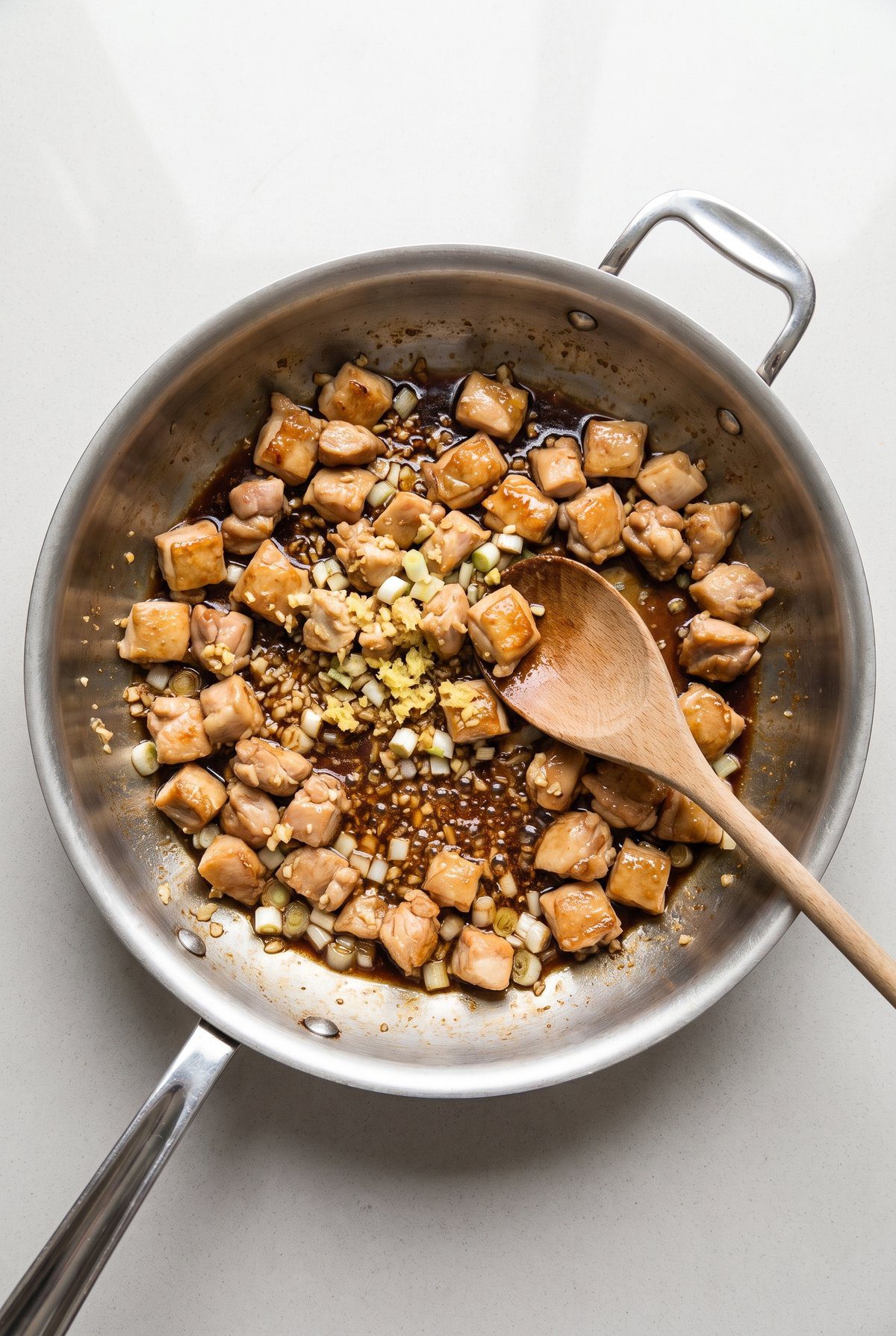
- Sauce it: Return the chicken and any juices to the pan. Give the sauce a quick re-whisk and pour it in. Cook for 1-2 minutes, stirring constantly, until it thickens into a glossy glaze that coats every piece of chicken.
- Finish with peanuts: Take the pan off the heat and fold in the roasted peanuts and the green tops of the onions. Adding them last keeps the peanuts crunchy and the onions bright.
- Serve: Spoon over the cooked white rice while everything is still hot.
Recipe FAQs
How Spicy Is Kung Pao Chicken?
It’s up to you. Eight halved chiles with the seeds shaken out gives a warm, medium heat. Drop to 4 for mild, or leave the seeds in and use 10 for a version with real bite.
What Can I Use Instead of Chinese Black Vinegar?
Balsamic vinegar is the closest substitute in both color and that malty sweetness. Rice vinegar works too, though the sauce comes out sharper and lighter in color.
Are the Sichuan Peppercorns Necessary?
Not necessary, but they’re what creates the tingly, slightly numbing sensation that defines the original Sichuan dish. Without them you get a very good sweet and savory stir fry; with them you get kung pao.
Can I Use Chicken Breast?
Yes, though watch it closely. Cut it into the same 3/4-inch pieces, cook it to 165°F, and pull it the moment it gets there since breast meat dries out fast at stir-fry heat.
Can I Make This Ahead?
The sauce keeps in the fridge for up to a week and the chicken can marinate for up to 4 hours. The stir fry itself is best cooked right before you eat it, since the peanuts soften once they sit in the sauce.
Cooking Tips
- Prep everything before you turn on the burner. Once the oil is hot, this dish moves in about 8 minutes and there’s no time to go mince garlic.
- Use your widest pan and don’t crowd it. Chicken packed into a small skillet steams and turns gray instead of getting those browned edges.
- Buy roasted unsalted peanuts, not raw. Raw peanuts stay soft and taste flat, and salted ones push the sauce over the edge.
Storage and Freezing
To store: Keep leftovers in an airtight container in the fridge for up to 4 days.
To freeze: The chicken and sauce freeze well for up to 3 months. Freeze without the peanuts and stir in fresh ones after reheating, since frozen peanuts turn soft.
To reheat: Reheat in a skillet over medium heat with a splash of broth or water to loosen the sauce, about 4-5 minutes. The microwave works too, in 1-minute bursts.
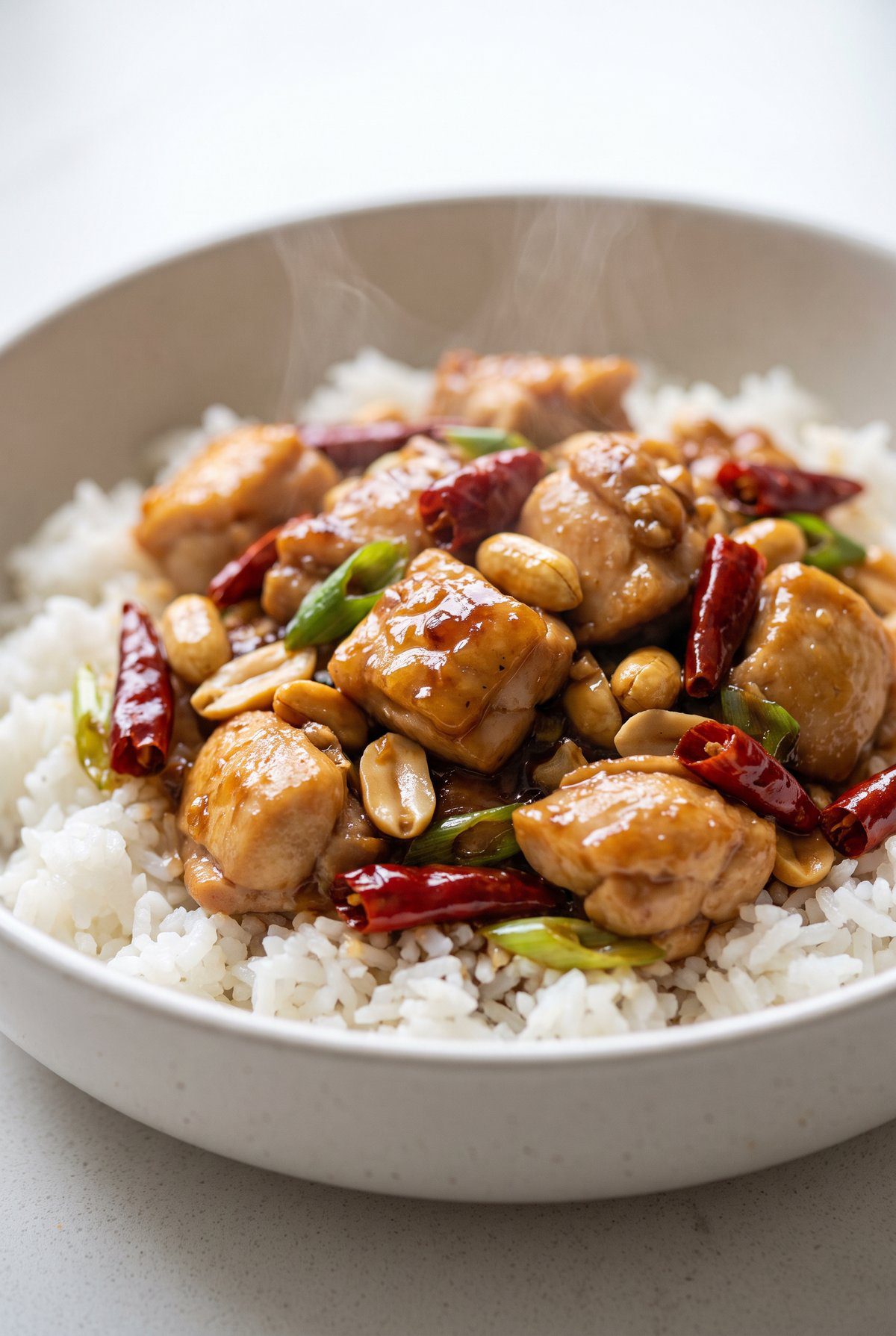
How to Serve Kung Pao Chicken
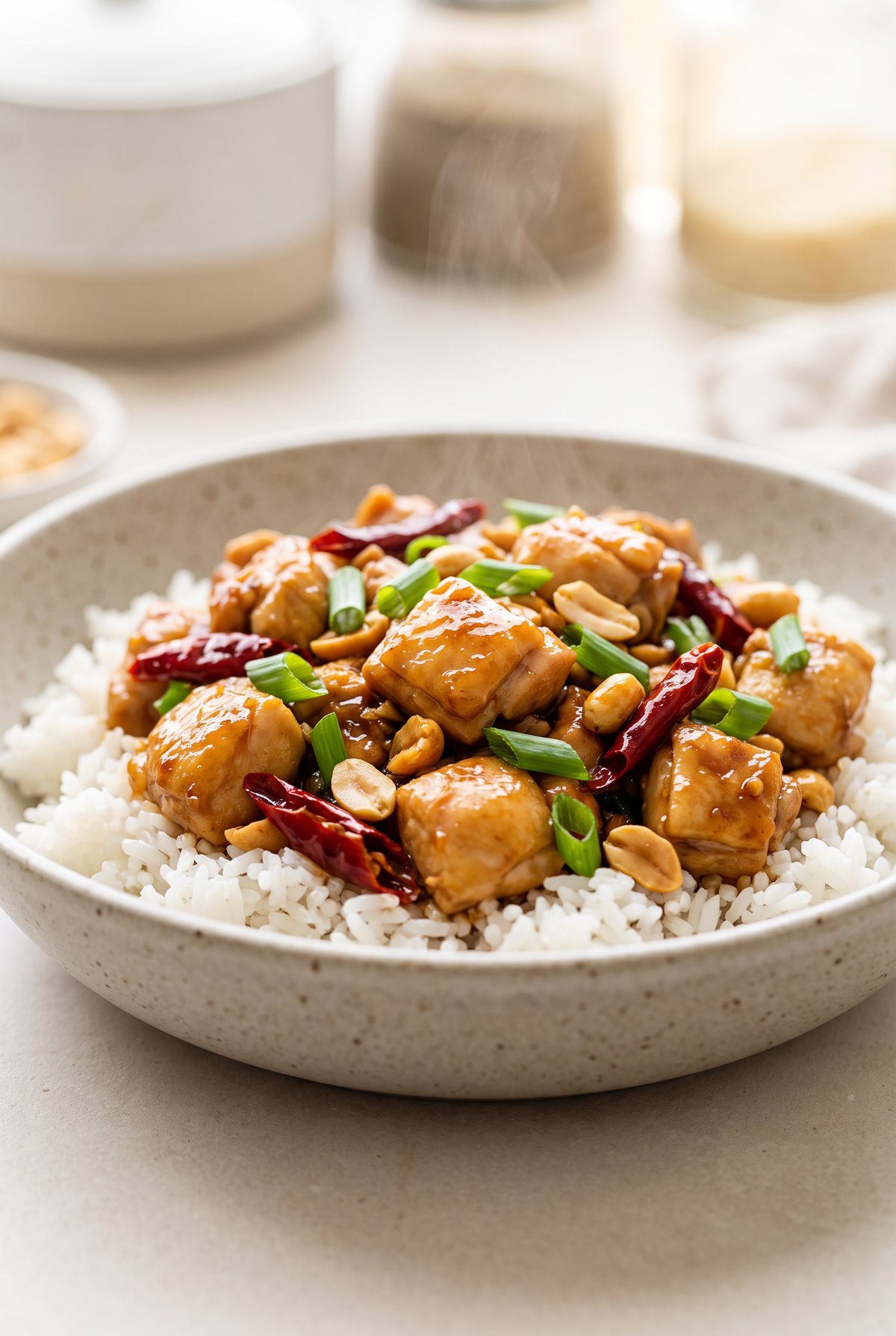
Kung pao chicken is built to go over steamed white rice, which soaks up the extra sauce that would otherwise get left in the pan. Stir-fried green beans or a plate of quick smashed cucumbers on the side balances all that salty-sweet glaze. This is one of the recipes in our August weeknight dinner collection, and more fast skillet meals like it are on the way.
Loved This Recipe?
Kung pao chicken makes a strong case for skipping the delivery app and reaching for the skillet instead.
Leave a star rating in the comments below, it helps other people find this recipe. Made it? Tag @allwellfed on Instagram, I love seeing this one in other people’s kitchens.
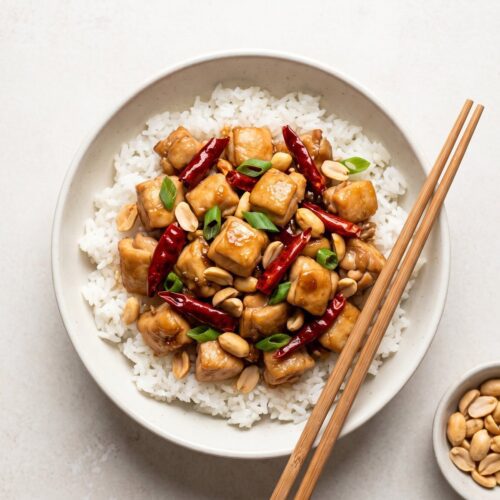
Takeout-Style Kung Pao Chicken
Equipment
- Instant-Read Thermometer 165°F, checked in two spots rather than one.
Ingredients
- 1 1/2 lbs boneless, skinless chicken thighs cut into 3/4-inch pieces
- 1 tbsp low-sodium soy sauce for the marinade
- 1 tbsp dry sherry or Shaoxing wine
- 1 tbsp cornstarch for the marinade
- 3 tbsp low-sodium soy sauce for the sauce
- 2 tbsp Chinese black vinegar
- 2 tbsp light brown sugar
- 1 tbsp hoisin sauce
- 2 tsp toasted sesame oil
- 2 tsp cornstarch for the sauce
- 1/3 cup chicken broth
- 2 tbsp vegetable oil
- 8 dried red chiles halved and most seeds shaken out
- 1 tsp ground Sichuan peppercorns optional
- 4 cloves garlic minced
- 1 tbsp fresh ginger minced
- 5 green onions cut into 1-inch pieces
- 3/4 cup roasted unsalted peanuts
- 4 cups cooked white rice for serving

Instructions
- Marinate the chicken: Toss the chicken pieces with 1 tablespoon soy sauce, the sherry, and 1 tablespoon cornstarch until every piece is coated. Let it sit for 15 minutes while you prep everything else.
- Mix the kung pao sauce: In a small bowl, whisk together the 3 tablespoons soy sauce, black vinegar, brown sugar, hoisin, sesame oil, 2 teaspoons cornstarch, and chicken broth until the cornstarch fully dissolves. Set it right next to the stove.
- Sear the chicken: Heat the vegetable oil in a large skillet or wok over medium-high heat until it shimmers. Add the chicken in a single layer and let it sit undisturbed for 2 minutes to brown, then stir and cook another 3-4 minutes until golden all over and cooked to 165°F on an instant-read thermometer. Move it to a plate.
- Toast the chiles and aromatics: Turn the heat down to medium. Add the dried chiles and stir for 20-30 seconds, just until you can smell them, well before they darken. Add the garlic, ginger, the white pieces of green onion, and the ground Sichuan peppercorns, if using, and stir 30 seconds more. The peppercorns go in here rather than into shimmering oil, since ground spice has no husk to protect it and scorches into bitterness in seconds.
- Sauce it: Return the chicken and any juices to the pan. Give the sauce a quick re-whisk and pour it in. Cook for 1-2 minutes, stirring constantly, until it thickens into a glossy glaze that coats every piece of chicken.
- Finish with peanuts: Take the pan off the heat and fold in the roasted peanuts and the green tops of the onions. Adding them last keeps the peanuts crunchy and the onions bright.
- Serve: Spoon over the cooked white rice while everything is still hot.
Notes
If you made this, leave a star rating down in the comments. It takes about ten seconds, and it’s how other cooks decide whether a recipe is worth trying.