Classic Chicken Piccata in Lemon Caper Sauce
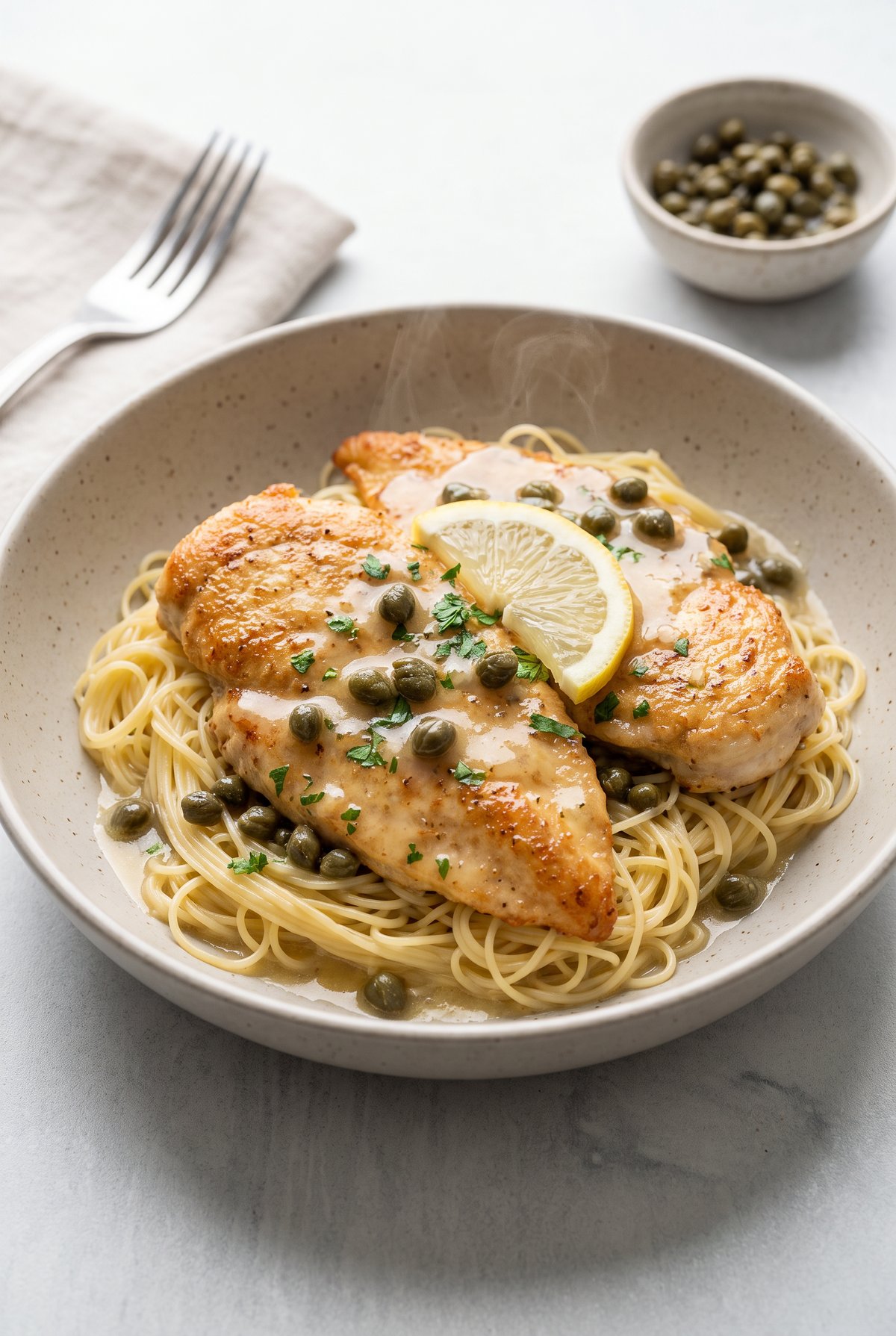
Chicken piccata with golden pan-fried cutlets in a lemon, white wine, and caper butter sauce. A restaurant dinner that takes 40 minutes at home.
This post may contain affiliate links. See our disclosure policy.
Chicken piccata looks like you fussed and takes about forty minutes. This chicken piccata sticks to the classic: thin chicken cutlets dredged in flour and pan-fried golden, then finished in a bright sauce of white wine, chicken broth, fresh lemon and capers with cold butter swirled in at the end.
Thin cutlets are what make it fast. Slicing each breast in half through the middle and pounding it to about a quarter inch means the chicken cooks through in six or seven minutes total, and thin chicken stays juicy where a thick breast dries out waiting for its center to catch up.
The sauce comes together in the same skillet, on the browned bits the chicken left behind. Add the butter off the heat and swirl the pan rather than stirring. Cold butter melted gently emulsifies into the sauce and gives it that glossy, slightly thick body. Butter dropped into a boiling pan breaks into grease instead.
Why You’ll Love This Chicken Piccata Recipe
- A sauce built from four things. Wine, broth, lemon and butter reduce into something glossy that tastes far more complicated than it is.
- Chicken that stays juicy. Quarter-inch cutlets cook in about three minutes a side, which isn’t long enough for chicken breast to dry out.
- Dinner in 40 minutes. Nothing here marinates, rests or bakes, so it moves as fast as you can pound the chicken.
- It plates like a restaurant. Golden cutlets under a lemony pan sauce with parsley scattered over the top look like a thirty dollar entree.
Chicken Piccata Ingredients
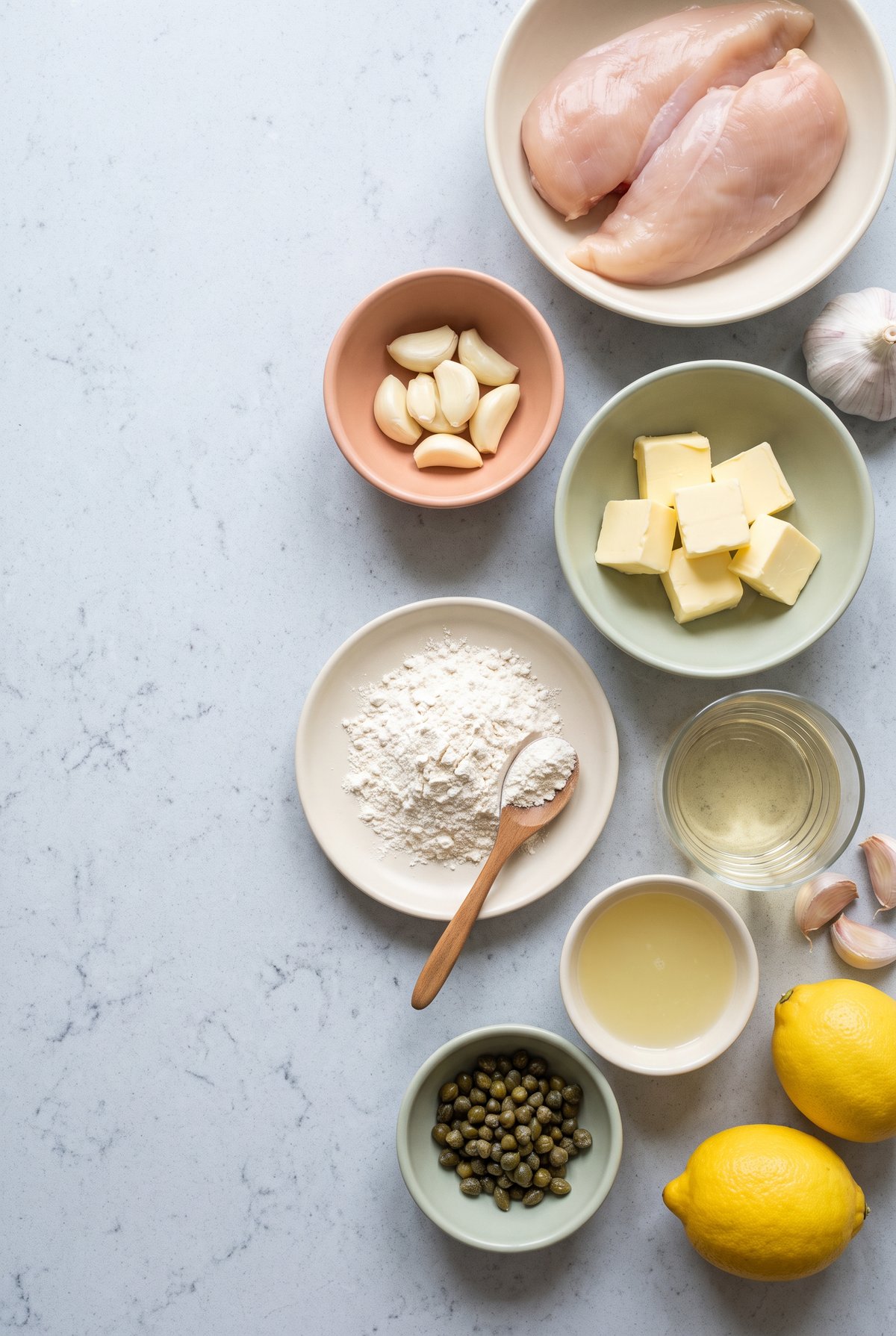
Buy capers packed in brine and rinse them before they go in. That brine is sharp enough to throw off the lemon and butter balance, and rinsing keeps the sauce tasting bright instead of aggressively salty.
- 1 1/2 lbs boneless, skinless chicken breasts, halved horizontally into 4 cutlets
- 1 tsp salt
- 1/2 tsp black pepper
- 1/2 cup all-purpose flour
- 3 tbsp olive oil
- 1 tbsp butter, for searing
- 4 cloves garlic, thinly sliced
- 1/2 cup dry white wine
- 1 cup chicken broth
- 2 tbsp fresh lemon juice (from 1 lemon)
- 3 tbsp capers, drained and rinsed
- 3 tbsp cold unsalted butter, cut into pieces
- 1/4 cup fresh parsley, chopped
- 1 lemon, sliced into rounds, for serving
- 8 oz angel hair pasta, for serving
Recipe Variations
- Leave the capers out for a kid-friendly version. The sauce is still bright from the lemon and wine, and you can set a small bowl of capers on the table for whoever wants them.
- Use chicken thighs instead of breasts. Pound 6 boneless skinless thighs to an even 1/2 inch, sear them 4 to 5 minutes per side, and cook them to 165°F just like the breasts.
- Skip the wine and use 1 1/2 cups of chicken broth in place of the wine and broth together, plus an extra tablespoon of lemon juice. You lose a little depth, so let the sauce reduce an extra minute or two to make up for it.
How to Make Chicken Piccata
- Make the cutlets: Lay each chicken breast flat and slice it in half horizontally to make 4 thin pieces. Put them between two sheets of plastic wrap and pound to an even 1/4 inch. Pat them dry and season both sides with the salt and pepper.
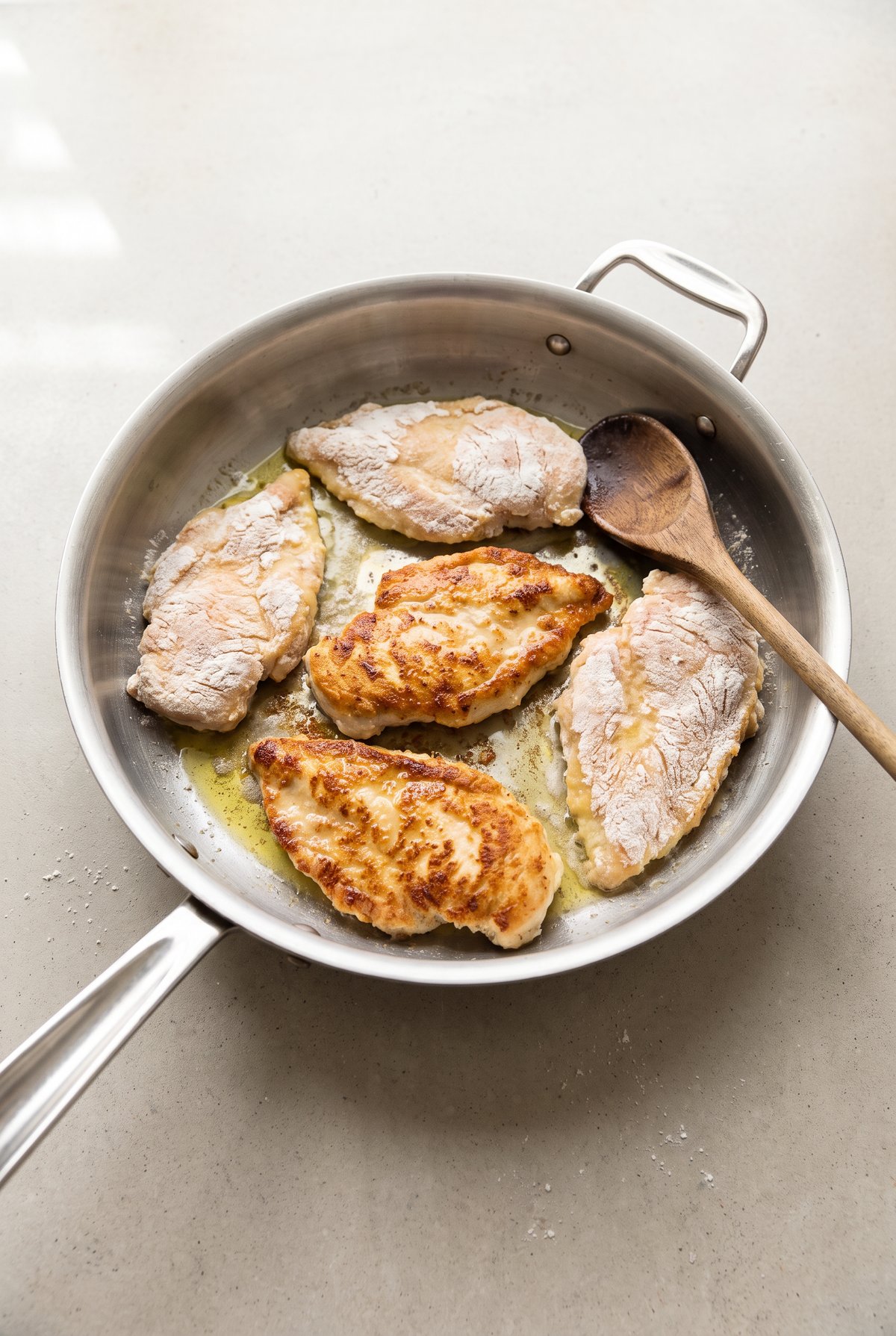
- Dredge in flour: Spread the flour on a plate and press each cutlet into it on both sides, then shake off the excess. A thin, even coat is what browns and later thickens the sauce. A heavy one slides off in the pan.
- Sear the chicken: Heat the olive oil and the 1 tablespoon of butter in a large skillet over medium-high heat until it shimmers. Cook the cutlets in two batches, 3 to 4 minutes per side, until deep golden and the chicken reaches 165°F on an instant-read thermometer. Move them to a plate.
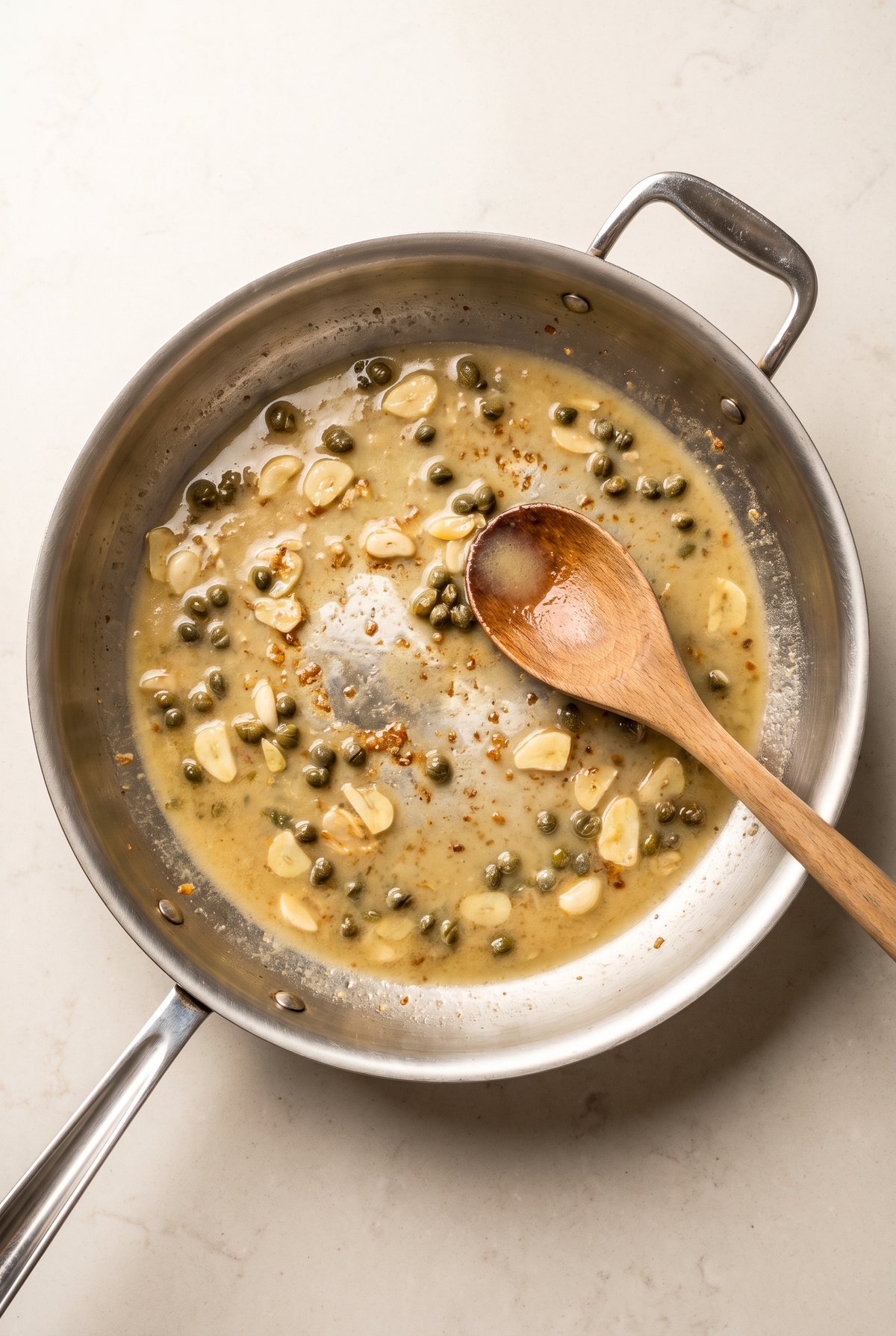
- Cook the garlic and reduce the wine: Turn the heat to medium and add the sliced garlic to the same skillet. Cook 30 seconds, just until it smells sweet and before it takes on any color. Pour in the white wine and simmer 3 to 4 minutes, scraping the browned bits off the bottom, until the liquid has reduced by about half.
- Build the sauce: Add the chicken broth, lemon juice and rinsed capers. Simmer 4 to 5 minutes, until the sauce has reduced by roughly a third and coats the back of a spoon.
- Boil the pasta: While the sauce reduces, cook the angel hair in a pot of salted water according to the package directions until al dente, then drain.
- Swirl in the cold butter: Take the skillet off the heat and add the cold butter a piece at a time, swirling the pan until each piece melts into the sauce. It should turn glossy and slightly thick. Stir in the parsley.
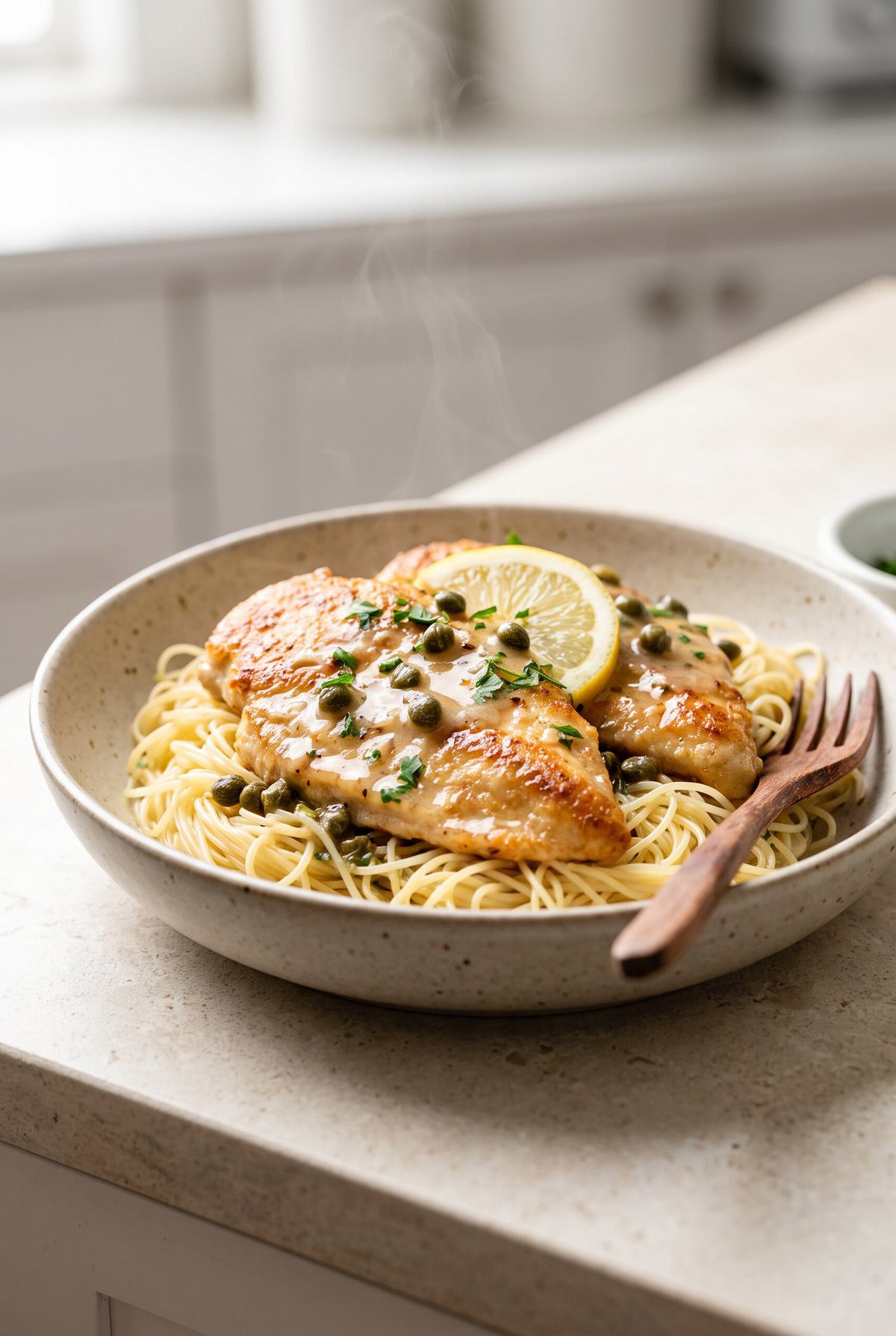
- Warm the chicken and serve: Return the cutlets to the skillet just long enough to warm through and coat them in sauce, about 1 minute. Serve over the drained angel hair with lemon rounds on the side.
Recipe FAQs
What Does Piccata Mean?
It’s an Italian preparation: meat sliced thin, dredged in flour, sautéed, and served in a sauce of lemon, butter and capers. Chicken piccata is the American version of a dish traditionally made with veal.
Can I Make Chicken Piccata without Wine?
Yes. Use 1 1/2 cups of chicken broth in place of the wine and broth together, and add an extra tablespoon of lemon juice to bring back some of the acidity the wine was providing.
What Wine Should I Use?
Something dry and crisp that you’d actually drink, like pinot grigio or sauvignon blanc. Skip anything labeled cooking wine. It’s salted, and that salt concentrates as the sauce reduces.
Why Did My Pan Sauce Separate?
The butter went in while the pan was still hot enough to boil. Pull the skillet off the burner, add cold butter a piece at a time, and swirl instead of stirring so it emulsifies rather than melting into grease.
What Do I Serve with Chicken Piccata?
Angel hair or linguine catches the sauce best. Buttered orzo, roasted asparagus, or crusty bread for mopping the pan all work too, and a simple arugula salad cuts the richness.
Cooking Tips
- Save a little of the pasta water. If the sauce reduces further than you meant it to, a splash of that starchy water loosens it without thinning the flavor the way plain broth would.
- Slice the garlic instead of mincing it. Minced garlic scorches in a pan that hot, and burnt garlic will carry through the whole sauce.
- Dredge the chicken right before it goes in the pan. Flour sitting on damp chicken turns pasty within a few minutes and slips off in the oil instead of browning.
Storage and Freezing
To store: Refrigerate the chicken and sauce together in an airtight container for up to 3 days.
To freeze: Freezing isn’t recommended. The butter sauce separates on thawing and the flour coating goes soft, so this one is worth eating fresh.
To reheat: Warm in a covered skillet over medium-low with a splash of broth for 5 to 6 minutes, until the chicken reaches 165°F. The microwave works but the crust goes soft.
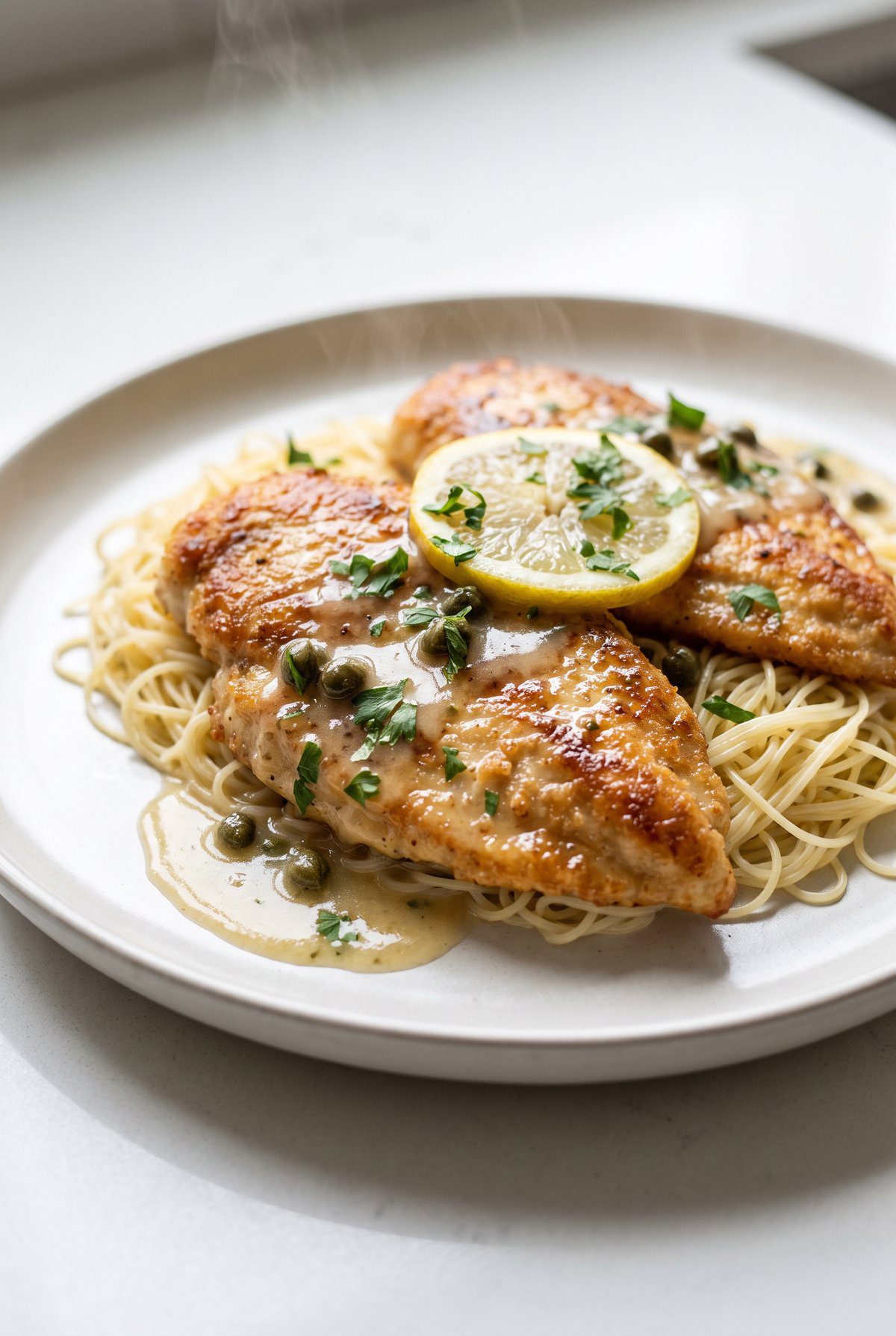
How to Serve Chicken Piccata
Chicken piccata is usually served over angel hair or linguine so the pasta catches the sauce, though buttered orzo, mashed potatoes or a pile of roasted asparagus all do the job. Crusty bread isn’t optional at my table, because there is always sauce left in the pan. A lightly dressed arugula salad on the side keeps the plate from feeling heavy.
Loved This Recipe?
Chicken piccata takes 40 minutes and turns an ordinary Tuesday into something that tastes like a night out.
Leave a star rating in the comments below, it helps other people find this recipe. Made it? Tag @allwellfed on Instagram, I love seeing this one in other people’s kitchens.
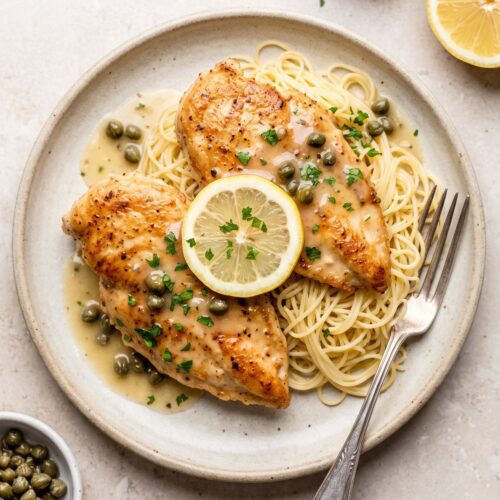
Classic Chicken Piccata in Lemon Caper Sauce
Equipment
- Instant-Read Thermometer 165°F, checked in two spots rather than one.
Ingredients
- 1 1/2 lbs boneless, skinless chicken breasts halved horizontally into 4 cutlets
- 1 tsp salt
- 1/2 tsp black pepper
- 1/2 cup all-purpose flour
- 3 tbsp olive oil
- 1 tbsp butter for searing
- 4 cloves garlic thinly sliced
- 1/2 cup dry white wine
- 1 cup chicken broth
- 2 tbsp fresh lemon juice from 1 lemon
- 3 tbsp capers drained and rinsed
- 3 tbsp cold unsalted butter cut into pieces
- 1/4 cup fresh parsley chopped
- 1 lemon sliced into rounds, for serving
- 8 oz angel hair pasta for serving

Instructions
- Make the cutlets: Lay each chicken breast flat and slice it in half horizontally to make 4 thin pieces. Put them between two sheets of plastic wrap and pound to an even 1/4 inch. Pat them dry and season both sides with the salt and pepper.
- Dredge in flour: Spread the flour on a plate and press each cutlet into it on both sides, then shake off the excess. A thin, even coat is what browns and later thickens the sauce. A heavy one slides off in the pan.
- Sear the chicken: Heat the olive oil and the 1 tablespoon of butter in a large skillet over medium-high heat until it shimmers. Cook the cutlets in two batches, 3 to 4 minutes per side, until deep golden and the chicken reaches 165°F on an instant-read thermometer. Move them to a plate.
- Cook the garlic and reduce the wine: Turn the heat to medium and add the sliced garlic to the same skillet. Cook 30 seconds, just until it smells sweet and before it takes on any color. Pour in the white wine and simmer 3 to 4 minutes, scraping the browned bits off the bottom, until the liquid has reduced by about half.
- Build the sauce: Add the chicken broth, lemon juice and rinsed capers. Simmer 4 to 5 minutes, until the sauce has reduced by roughly a third and coats the back of a spoon.
- Boil the pasta: While the sauce reduces, cook the angel hair in a pot of salted water according to the package directions until al dente, then drain.
- Swirl in the cold butter: Take the skillet off the heat and add the cold butter a piece at a time, swirling the pan until each piece melts into the sauce. It should turn glossy and slightly thick. Stir in the parsley.
- Warm the chicken and serve: Return the cutlets to the skillet just long enough to warm through and coat them in sauce, about 1 minute. Serve over the drained angel hair with lemon rounds on the side.
Notes

If you made this, leave a star rating down in the comments. It takes about ten seconds, and it’s how other cooks decide whether a recipe is worth trying.