Restaurant-Style Hot and Sour Soup
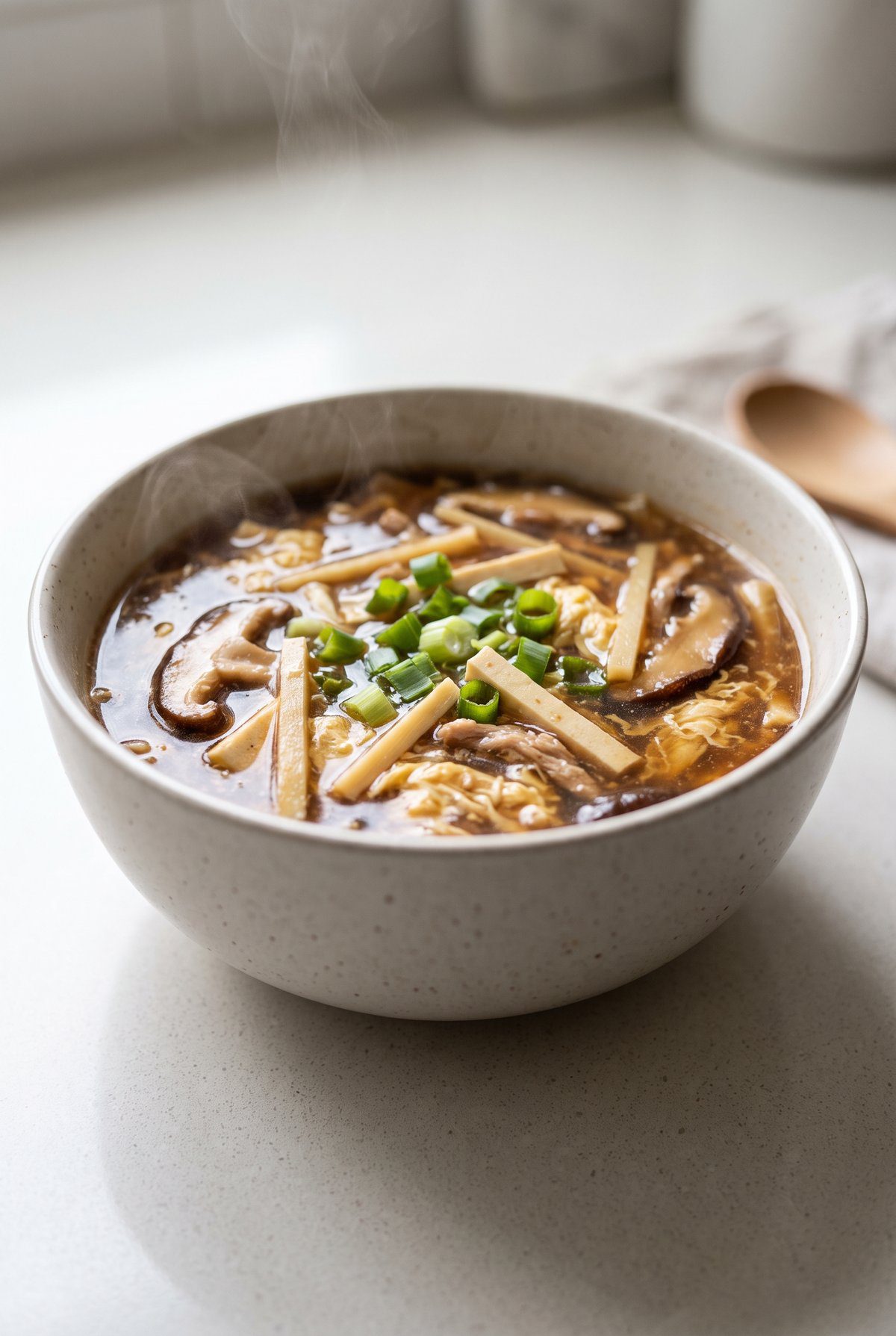
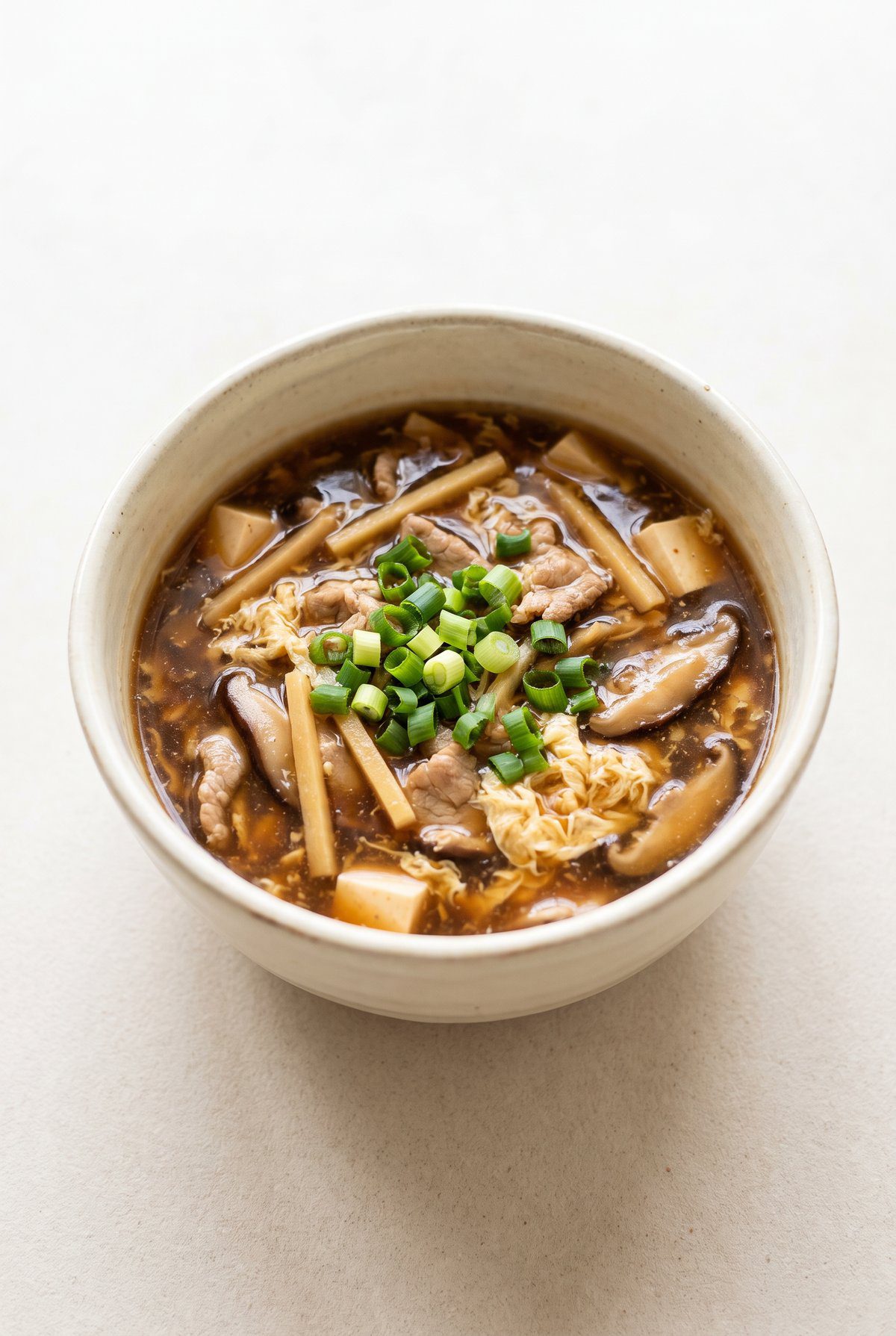
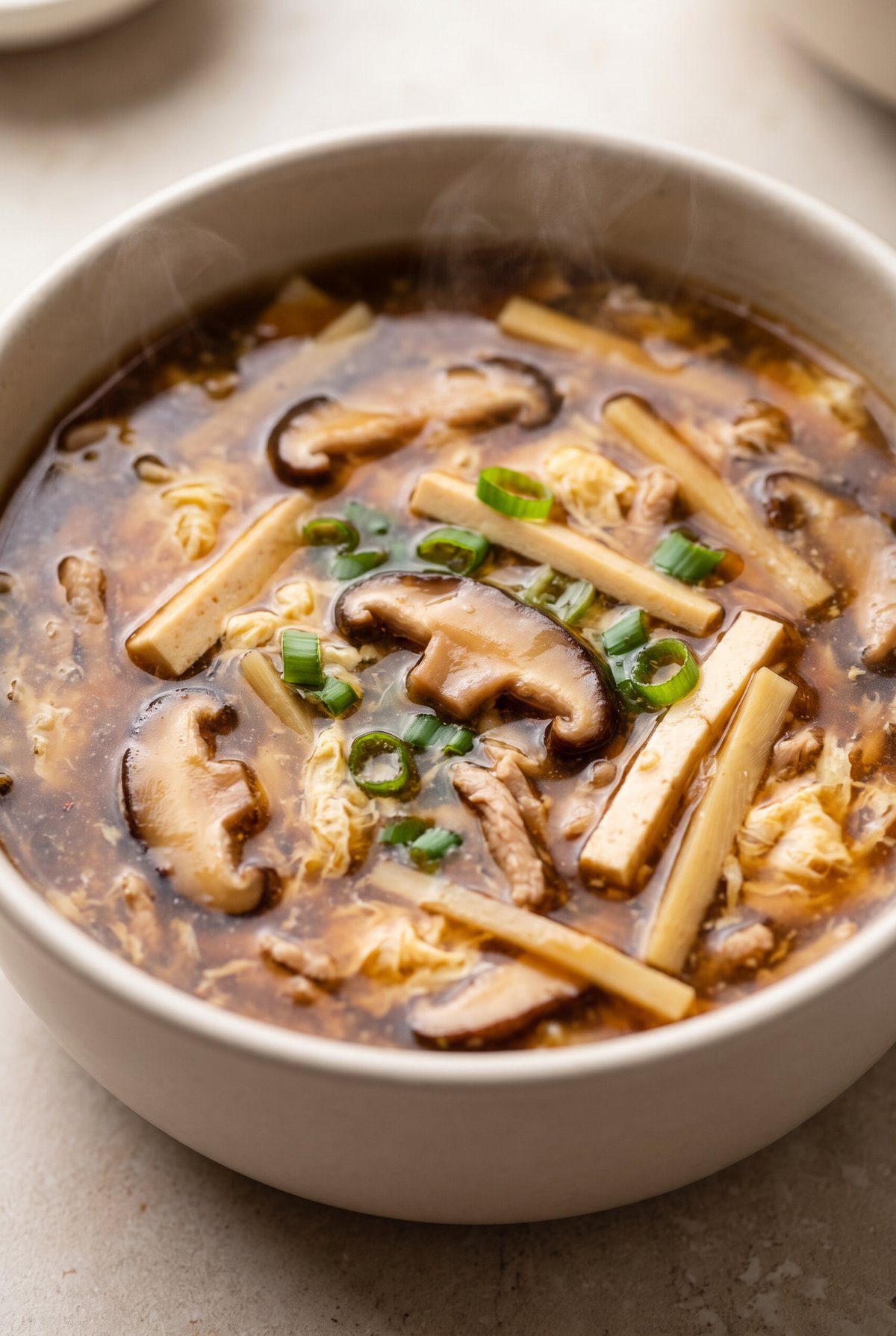
Hot and sour soup made the takeout way with pork, shiitake, tofu, and egg ribbons in a silky broth finished with rice vinegar and white pepper.
This post may contain affiliate links. See our disclosure policy.
Hot and sour soup is the first thing I order at a Chinese restaurant, and it turns out to be one of the simpler things to make at home once you know where the flavor comes from. The hot is ground white pepper. The sour is vinegar. Those two ingredients carry the entire bowl.
Both go in at the very end, after the pot comes off the burner. Vinegar simmered for any length of time loses its clean edge and just tastes vaguely tangy, and white pepper turns bitter and dusty when it cooks too long. Off the heat, the sour stays bright and the pepper stays warm.
The silky body is cornstarch, and there’s more of it than you’d guess. A third of a cup whisked into cold water and drizzled into the simmering pot gives the broth that thick, glossy texture that holds the egg ribbons suspended instead of letting everything sink to the bottom.
Why You’ll Love This Hot and Sour Soup Recipe
- Cheaper than one takeout order. One pot makes six bowls for about what a single container costs at the restaurant.
- On the table in 35 minutes. No soaking and no dried mushrooms to rehydrate, just fresh shiitake straight from the produce section.
- You control the hot and the sour. White pepper and vinegar both go in at the end, so you can taste and add more of either until it’s balanced the way you like it.
- One pot and a whisk. Everything happens in the same Dutch oven, egg ribbons included.
Hot and Sour Soup Ingredients
Use ground white pepper, not black. White pepper is the heat in this soup and it tastes completely different from black: earthy and slow-building where black pepper is sharp and piney. It sits right next to the black pepper in the spice aisle, and a small jar lasts a long time.
- 8 oz boneless pork loin, cut into thin matchsticks
- 1 tbsp water
- 1 tsp vegetable oil
- 1 tbsp cornstarch, for the pork
- 8 cups low-sodium chicken broth
- 8 oz fresh shiitake mushrooms, stems removed and caps thinly sliced
- 1 (8 oz) can bamboo shoots, drained and cut into matchsticks
- 3 tbsp soy sauce
- 1 tbsp dark soy sauce (optional, for color)
- 1/2 tsp granulated sugar
- 1 tsp toasted sesame oil
- 1/3 cup cornstarch, for thickening
- 1/3 cup cold water
- 8 oz firm tofu, cut into 1/4-inch matchsticks
- 2 large eggs, beaten
- 1/3 cup rice vinegar
- 1 1/2 tsp ground white pepper
- 4 scallions, thinly sliced

Recipe Variations
- Swap the pork for 8 ounces of boneless, skinless chicken breast cut into matchsticks. Chicken is poultry, so cook it to 165°F, which takes about 3 minutes of simmering for pieces this thin.
- Leave the meat out and use vegetable broth for a meatless pot. Add another 4 ounces of shiitake and 4 more ounces of tofu so there’s still something to chew on.
- Add 1/2 cup of rehydrated sliced wood ear mushrooms with the shiitake if your store carries them. They are the crunchy black strips in the restaurant version and they hardly taste like anything on their own, they’re in there for texture.
How to Make Hot and Sour Soup
- Coat the pork: Toss the pork matchsticks with the 1 tablespoon of water until it’s absorbed, then with the vegetable oil and the 1 tablespoon of cornstarch. That thin coating keeps the pork tender in the broth instead of tightening into little strings.
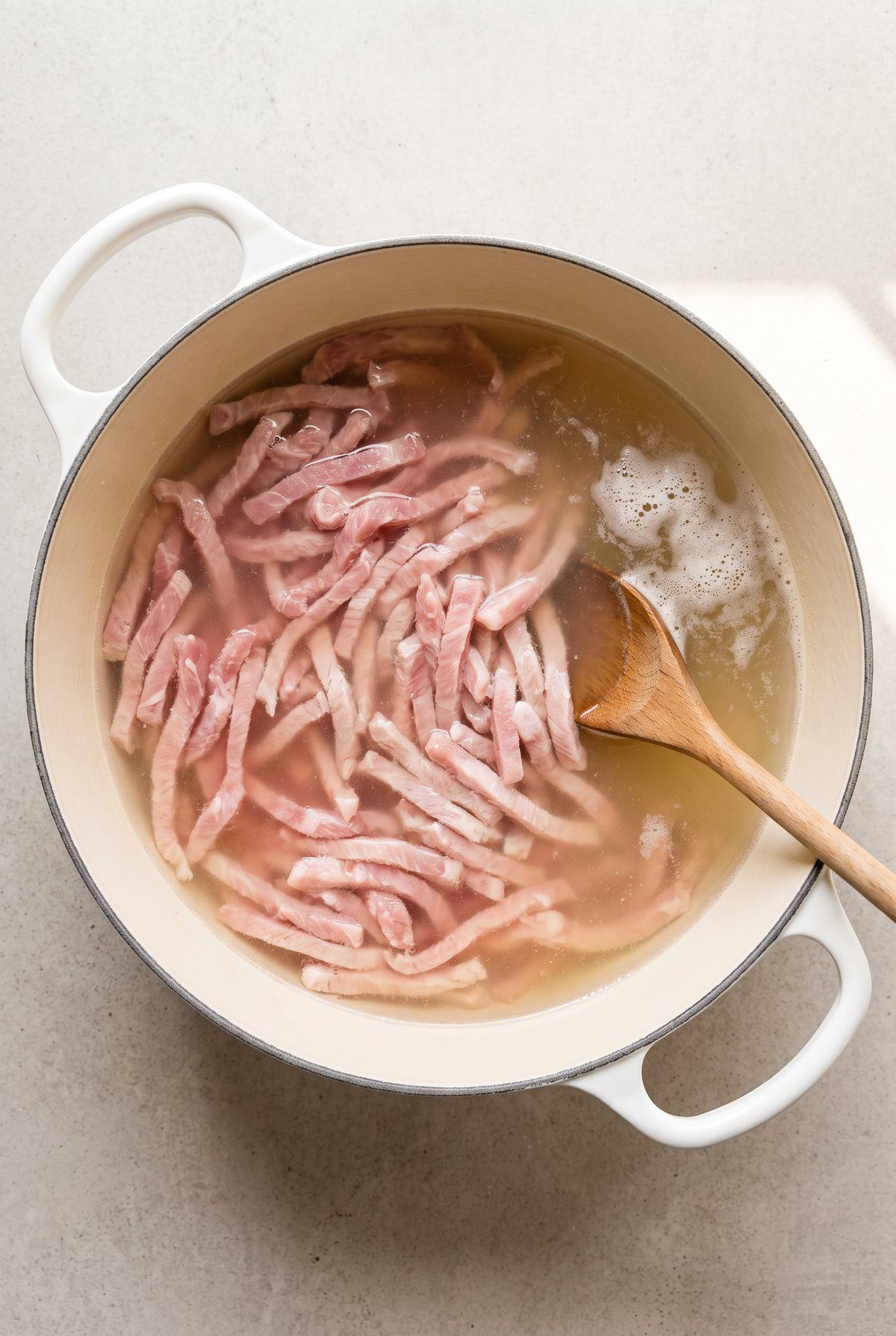
- Cook the pork: Bring the chicken broth to a boil in a large Dutch oven. Add the pork, stirring right away to separate the pieces, and simmer 2-3 minutes until no pink remains. Skim off any gray foam. Pork loin is a whole-muscle cut and USDA calls for 145°F, but matchsticks this thin pass that within a minute in boiling broth and are far too thin to probe accurately, so go by the pink disappearing. The soup keeps simmering well past that point.
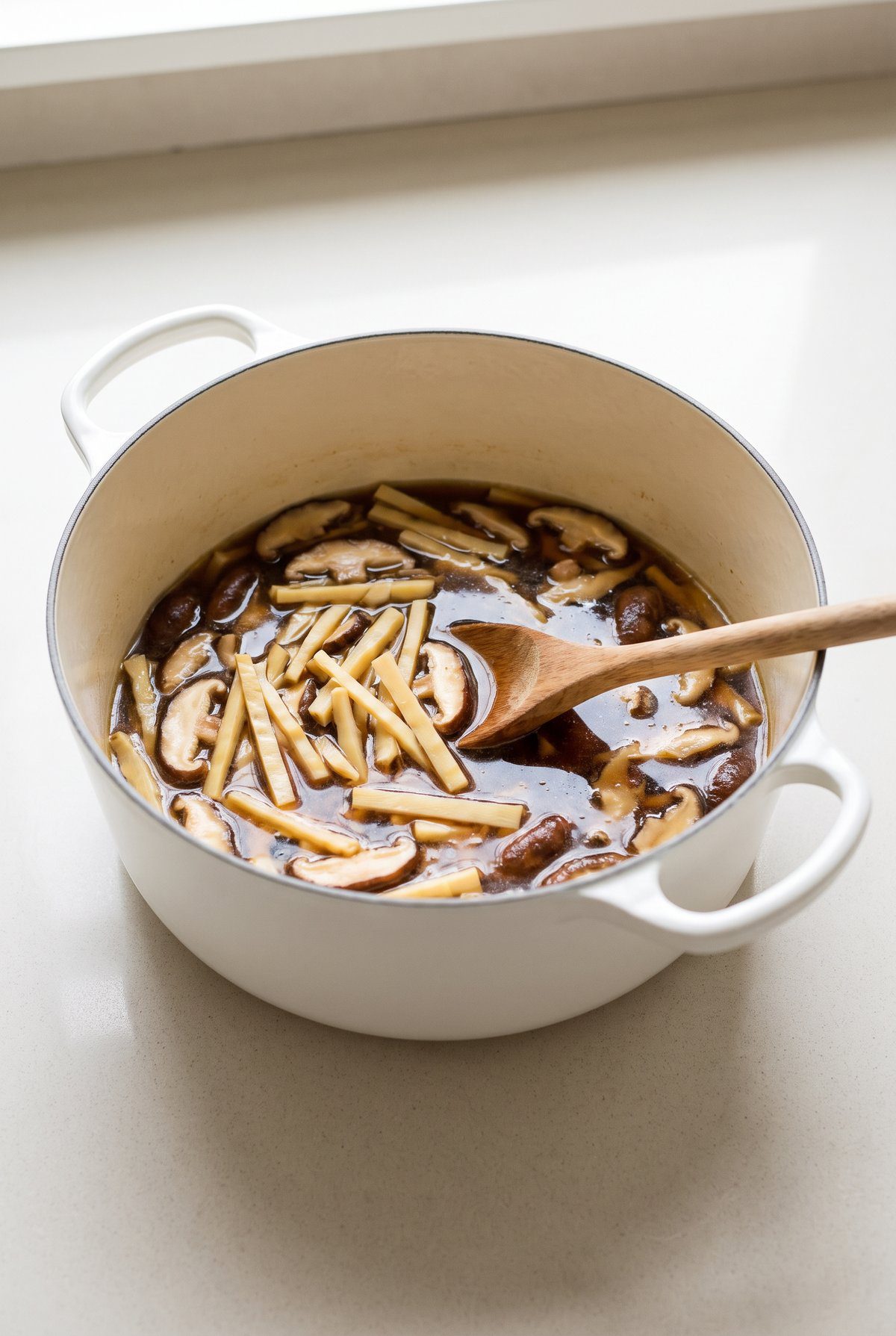
- Simmer the vegetables: Add the shiitake and bamboo shoots and simmer 5 minutes, until the mushrooms are soft and have shrunk by about half.
- Season the broth: Stir in the soy sauce, the dark soy sauce if you’re using it, the sugar, and the sesame oil.
- Thicken it: Whisk the 1/3 cup of cornstarch into the 1/3 cup of cold water until there are no lumps. Stir the soup in a slow circle and drizzle in about three quarters of the slurry. Simmer 1-2 minutes, until the broth turns glossy and coats a spoon. Add the rest if you want it thicker.
- Add the tofu and egg ribbons: Stir in the tofu. Turn the heat to low, stir the soup in a slow circle, and pour the beaten eggs in a thin stream around the pot. Stop stirring for 15 seconds and let the eggs set into ribbons, then give it one gentle stir.
- Finish off the heat: Take the pot off the burner. Stir in the rice vinegar and white pepper. Taste it, then add more vinegar for sour or more white pepper for hot, a little at a time. Ladle into bowls and top with the scallions.
Recipe FAQs
What Makes Hot and Sour Soup Hot and Sour?
Ground white pepper for the heat and vinegar for the sour. There’s no chili in the classic version, which is why the heat feels warm and spread out instead of sharp on the tip of your tongue.
Can I Use Black Pepper Instead of White?
You can, but it won’t taste like this soup. White pepper is earthy and slightly fermented where black pepper is bright and piney. If it’s all you have, use half as much so it doesn’t take over.
Why Did My Egg Turn into Scrambled Clumps?
The soup was boiling and the spoon was moving too fast. Drop the heat to low, stir in a slow circle, pour the egg in a thin stream, then leave it alone for 15 seconds.
What Kind of Vinegar Should I Use?
Rice vinegar is the easiest to find and gives a clean, mild sourness. Chinkiang black rice vinegar is the traditional choice and tastes deeper and a little malty. Distilled white vinegar works in a pinch but comes on harsh, so start with half and add from there.
Can I Make It without Tofu?
Yes. Leave it out and add another 4 ounces of mushrooms in its place. The soup is built on the broth and the thickener, not the tofu.
Cooking Tips
- Freeze the pork for 15 minutes before slicing. Firm meat holds still under the knife, and matchsticks this thin are nearly impossible to cut from a soft, room-temperature piece.
- Whisk the cornstarch into cold water, never warm. Warm water starts gelling the starch on contact and you get lumps that never dissolve no matter how long you whisk.
- Add the vinegar and white pepper in two rounds. Stir in about two thirds, taste, then adjust. It’s easy to add more sour and nearly impossible to take it back out.
Storage and Freezing
To store: Refrigerate in an airtight container for up to 3 days. The cornstarch keeps setting as it chills, so it will be much thicker cold than it was hot.
To freeze: Don’t freeze this one. Cornstarch-thickened broth turns watery and grainy after thawing, and frozen tofu comes back spongy and full of holes.
To reheat: Warm it gently over medium-low heat with a splash of broth stirred in until it reaches 165°F. A hard boil breaks the cornstarch down and thins the whole pot out.
How to Serve Hot and Sour Soup
Hot and sour soup is a starter more than a main, so it belongs next to the rest of a takeout-style dinner. Egg rolls, pork fried rice, or a plate of beef and broccoli all sit well beside it. For a lighter night, a big bowl of this and a crisp cucumber salad is plenty.
Loved This Recipe?
Hot and Sour Soup comes together in about 35 minutes for less than one takeout container costs, which is a good trade on a Tuesday.
Leave a star rating in the comments below, it helps other people find this recipe. Made it? Tag @allwellfed on Instagram, I love seeing this one in other people’s kitchens.

Restaurant-Style Hot and Sour Soup
Equipment
Ingredients
- 8 oz boneless pork loin cut into thin matchsticks
- 1 tbsp water
- 1 tsp vegetable oil
- 1 tbsp cornstarch for the pork
- 8 cups low-sodium chicken broth
- 8 oz fresh shiitake mushrooms stems removed and caps thinly sliced
- 1 (8 oz) can bamboo shoots drained and cut into matchsticks
- 3 tbsp soy sauce
- 1 tbsp dark soy sauce optional, for color
- 1/2 tsp granulated sugar
- 1 tsp toasted sesame oil
- 1/3 cup cornstarch for thickening
- 1/3 cup cold water
- 8 oz firm tofu cut into 1/4-inch matchsticks
- 2 large eggs beaten
- 1/3 cup rice vinegar
- 1 1/2 tsp ground white pepper
- 4 scallions thinly sliced

Instructions
- Coat the pork: Toss the pork matchsticks with the 1 tablespoon of water until it’s absorbed, then with the vegetable oil and the 1 tablespoon of cornstarch. That thin coating keeps the pork tender in the broth instead of tightening into little strings.
- Cook the pork: Bring the chicken broth to a boil in a large Dutch oven. Add the pork, stirring right away to separate the pieces, and simmer 2-3 minutes until no pink remains. Skim off any gray foam. Pork loin is a whole-muscle cut and USDA calls for 145°F, but matchsticks this thin pass that within a minute in boiling broth and are far too thin to probe accurately, so go by the pink disappearing. The soup keeps simmering well past that point.
- Simmer the vegetables: Add the shiitake and bamboo shoots and simmer 5 minutes, until the mushrooms are soft and have shrunk by about half.
- Season the broth: Stir in the soy sauce, the dark soy sauce if you’re using it, the sugar, and the sesame oil.
- Thicken it: Whisk the 1/3 cup of cornstarch into the 1/3 cup of cold water until there are no lumps. Stir the soup in a slow circle and drizzle in about three quarters of the slurry. Simmer 1-2 minutes, until the broth turns glossy and coats a spoon. Add the rest if you want it thicker.
- Add the tofu and egg ribbons: Stir in the tofu. Turn the heat to low, stir the soup in a slow circle, and pour the beaten eggs in a thin stream around the pot. Stop stirring for 15 seconds and let the eggs set into ribbons, then give it one gentle stir.
- Finish off the heat: Take the pot off the burner. Stir in the rice vinegar and white pepper. Taste it, then add more vinegar for sour or more white pepper for hot, a little at a time. Ladle into bowls and top with the scallions.
Notes

If you made this, leave a star rating down in the comments. It takes about ten seconds, and it’s how other cooks decide whether a recipe is worth trying.