Crispy General Tso Chicken
General tso chicken made at home with cornstarch-crisped chicken thighs tossed in a sticky soy, hoisin, and rice vinegar sauce. Ready in 40 minutes.
This post may contain affiliate links. See our disclosure policy.
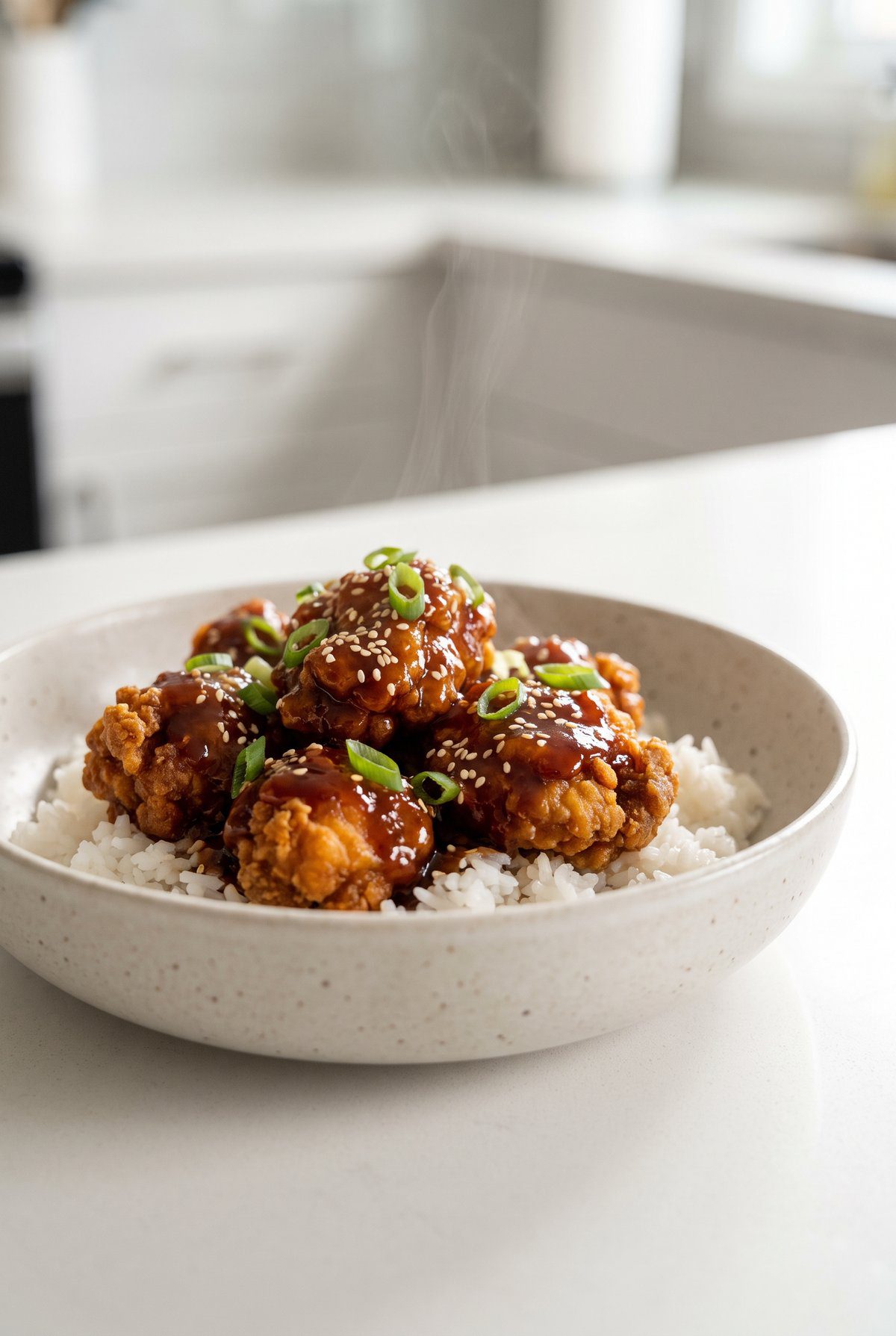
General tso chicken is genuinely better at home, mostly because you eat it while the coating is still crisp. Chicken thighs go in cornstarch, fry golden, and get tossed in a sticky sweet-and-savory sauce at the last second. The sauce balances four things.
Brown sugar brings sweetness, rice vinegar brings tang, soy sauce brings salt, and hoisin brings the dark, slightly funky depth underneath. Whisk it together before the oil ever gets hot, because once the frying starts you won’t have a free hand.
Timing the toss is the whole game. Sauce the chicken more than a minute or two before it hits the table and the coating starts softening. Get the plates out and the rice scooped first, then combine.
Why You’ll Love This General Tso Chicken Recipe
- Crisp that survives the sauce. A cornstarch-only coating fries harder than a flour batter, so it holds its crunch through the toss and onto the plate.
- The sauce is one bowl and a whisk. Soy sauce, rice vinegar, hoisin, brown sugar, broth, and cornstarch get stirred together before the oil even goes on the heat.
- Cheaper than ordering it. A pound and a half of chicken thighs and a bottle of hoisin feed 4 for less than two takeout entrees cost.
- You control the heat. The red pepper flakes go in near the end, so a mild batch for the kids and a hotter one for you is a matter of holding back half a teaspoon.
General Tso Chicken Ingredients
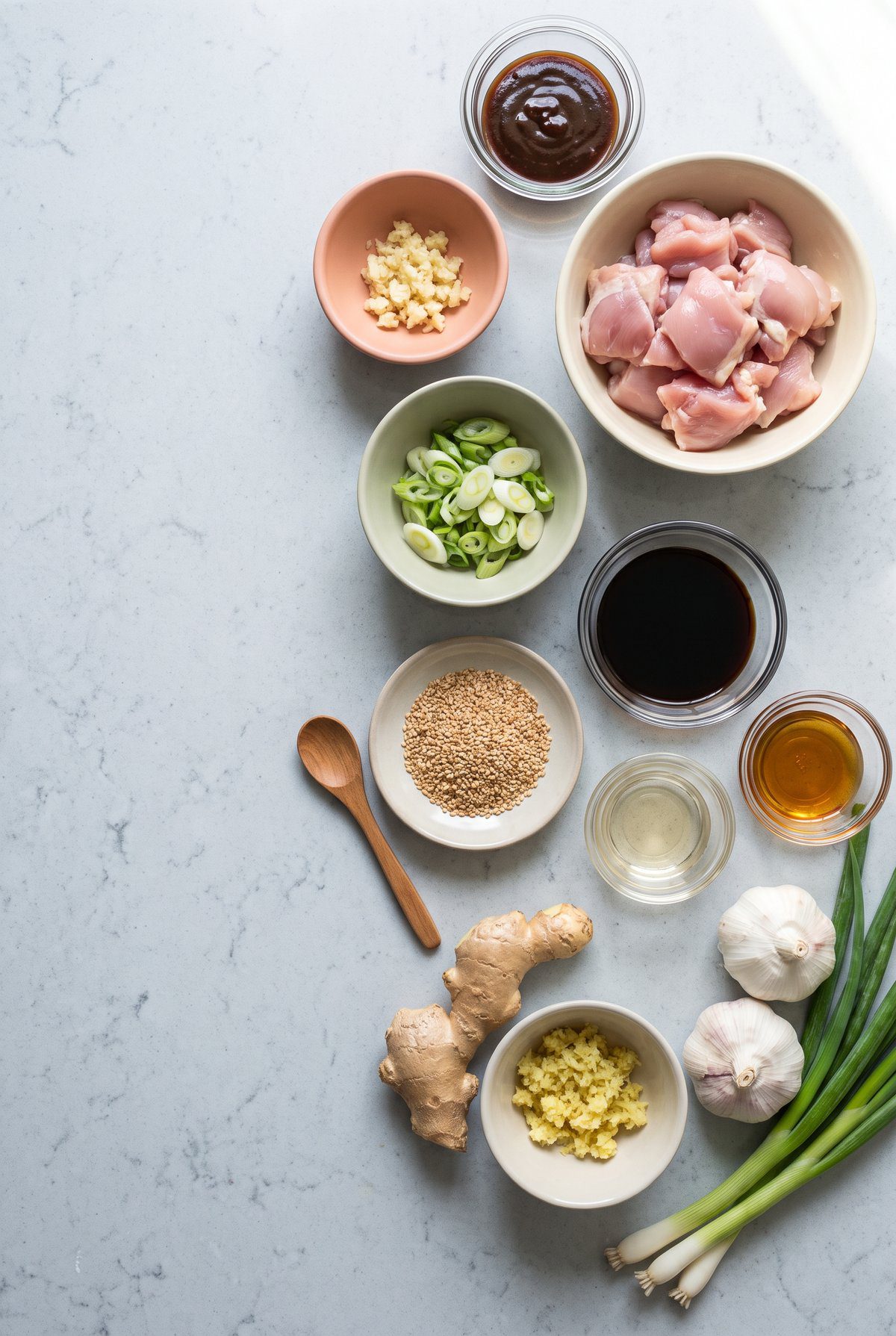
Chicken thighs beat breasts here by a wide margin. They hold up to hot oil without drying out, they stay tender under a heavy sauce, and they cost less per pound. If breast meat is what you have, cut it a little larger, into 1 1/4 inch pieces, so there’s more room for error.
- 1 1/2 lbs boneless, skinless chicken thighs, cut into 1-inch pieces
- 1/2 tsp salt
- 3/4 cup cornstarch, for coating
- 1/2 cup chicken broth
- 1/4 cup low-sodium soy sauce
- 3 tbsp rice vinegar
- 2 tbsp hoisin sauce
- 3 tbsp brown sugar
- 1 1/2 tbsp cornstarch, for the sauce
- 1 tsp toasted sesame oil
- 1 1/2 cups vegetable oil, for frying
- 1 tbsp fresh ginger, minced
- 3 cloves garlic, minced
- 1/2 tsp red pepper flakes
- 3 scallions, thinly sliced
- 1 tsp sesame seeds
- 4 cups cooked white rice, for serving
Recipe Variations
- Use boneless, skinless chicken breast cut into 1 1/4 inch pieces instead of thighs. Fry 4-5 minutes per batch, the same as the thighs, and pull the pieces the moment they hit 165°F. Breast dries out faster than thigh, so there’s less room to overshoot.
- Add 3 cups of broccoli florets. Steam or blanch them 3 minutes until bright green, then fold them in with the chicken at the very end so they don’t go limp in the sauce.
- Bake it instead of frying. Toss the coated chicken with 3 tablespoons of oil, spread it on a wire rack set over a sheet pan, and bake at 425°F for 20-25 minutes, until golden and cooked through to 165°F. The coating comes out drier and less shattery, but it works.
How to Make General Tso Chicken
- Mix the sauce: Whisk the chicken broth, soy sauce, rice vinegar, hoisin, brown sugar, the 1 1/2 tablespoons of cornstarch, and the sesame oil together in a small bowl until no lumps remain. Set it next to the stove.
- Coat the chicken: Toss the chicken pieces with the salt, then add the 3/4 cup of cornstarch and toss until every piece is dusted white and dry to the touch. Shake off the loose powder as you go and let the coated chicken sit 5 minutes.
- Heat the oil: Pour the vegetable oil into a large deep skillet or wok to a depth of about 1/2 inch and heat it over medium-high to 350°F. A pinch of cornstarch dropped in should sizzle right away.
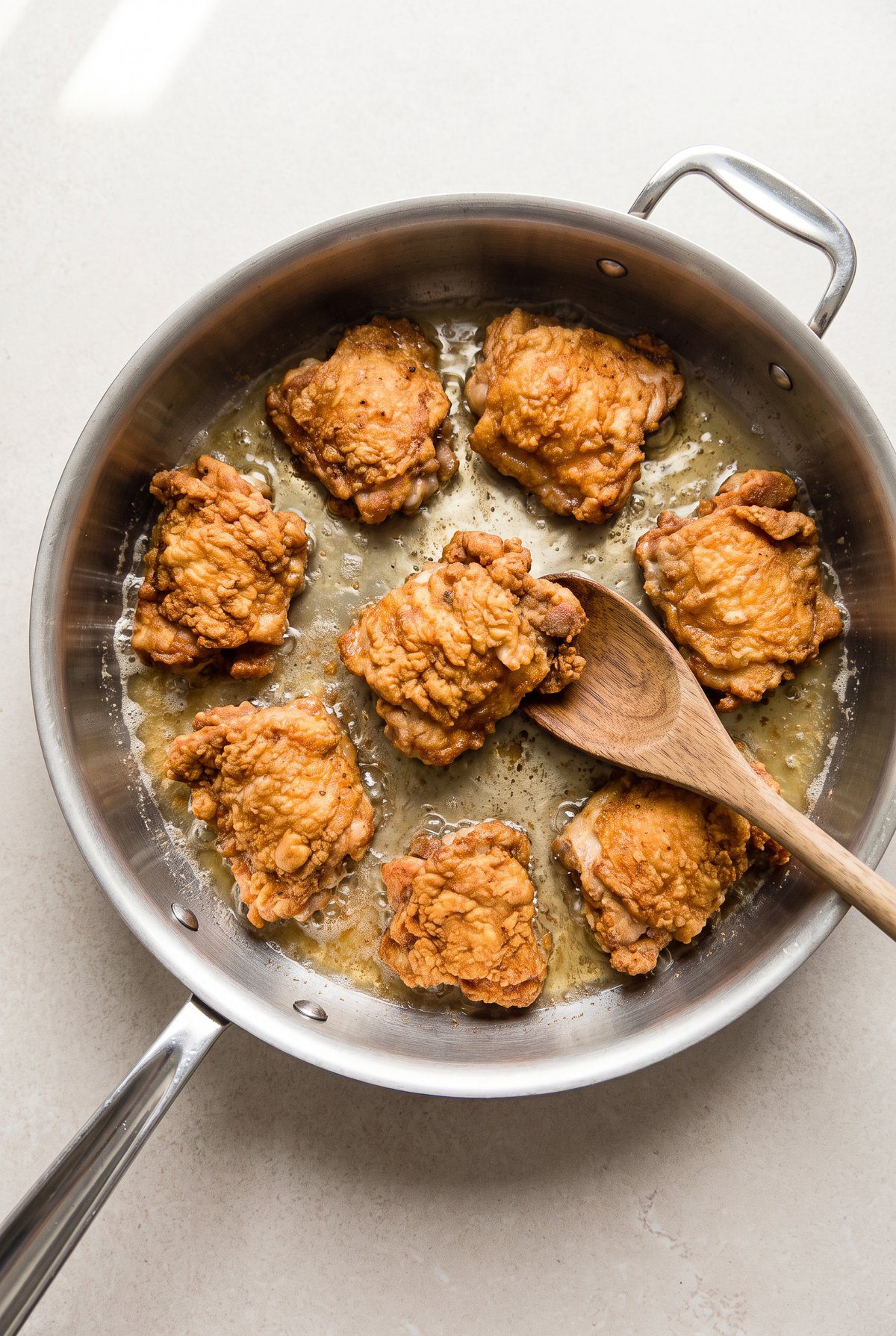
- Fry in batches: Fry the chicken in 3 batches, 4-5 minutes per batch, turning once, until deep golden and cooked through to an internal temperature of 165°F. Crowding the pan drops the oil temperature and gives you soggy coating, so leave the pieces room. Drain on a wire rack or paper towels and let the oil come back to 350°F between batches.
- Cook the aromatics: Pour off all but 1 tablespoon of the oil. Add the ginger, garlic, and red pepper flakes and cook 30 seconds over medium heat, just until fragrant. They burn fast, so keep them moving.
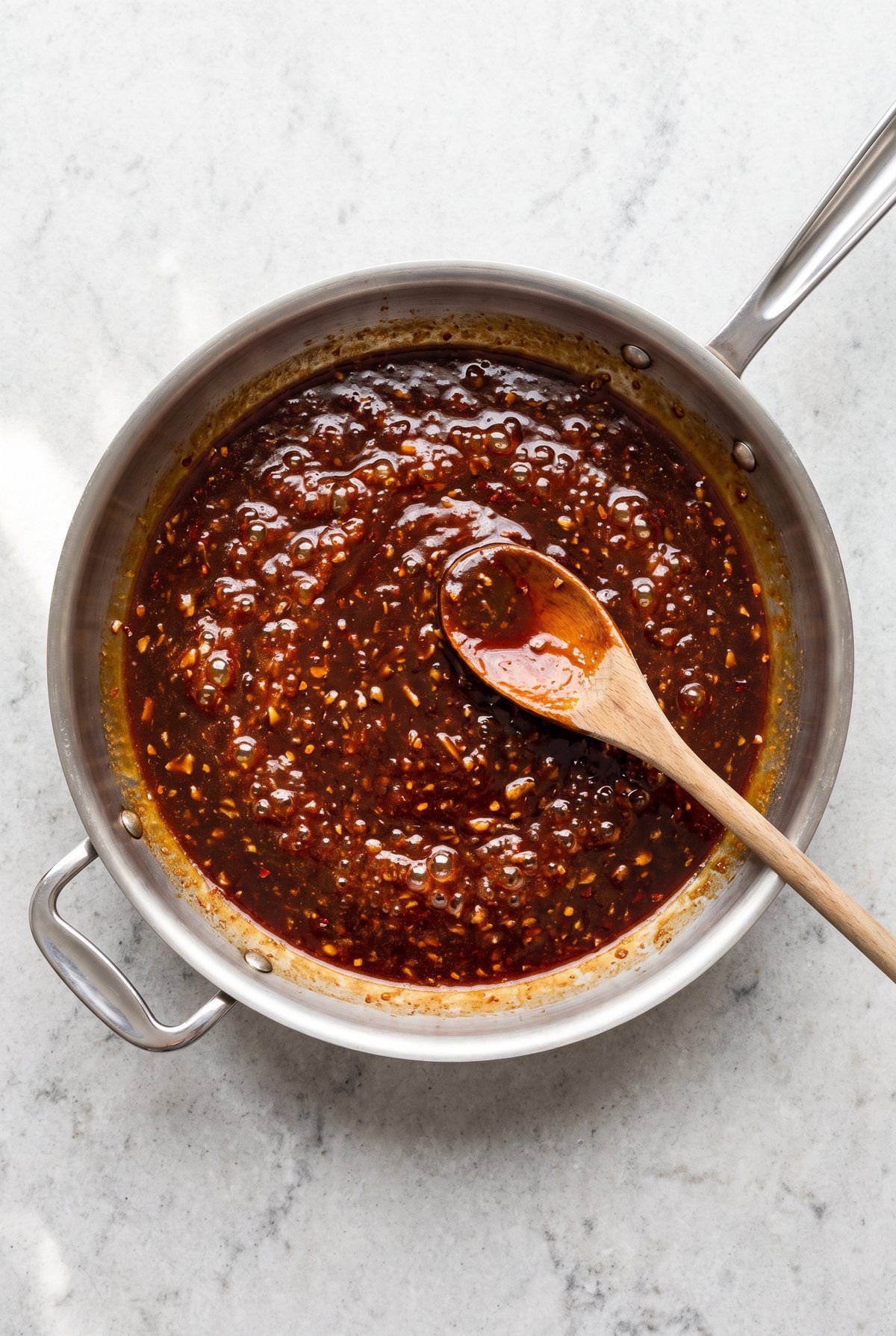
- Thicken the sauce: Whisk the sauce again and pour it into the pan. Bring it to a boil and cook 2-3 minutes, stirring, until it turns glossy and thick enough to coat a spoon.
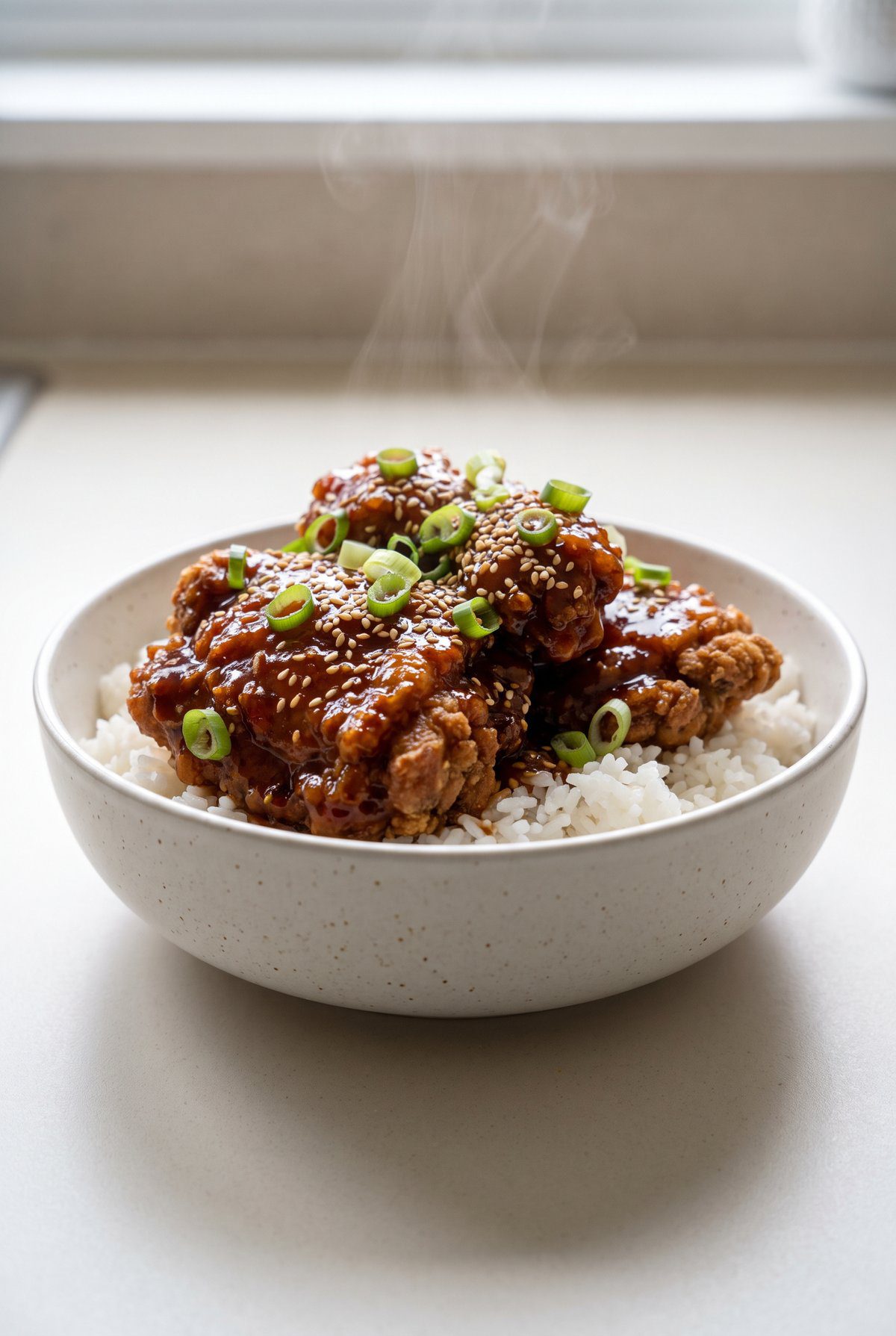
- Toss and serve: Add the fried chicken and toss about 1 minute, just long enough to coat every piece. Pull the pan off the heat, scatter the scallions and sesame seeds over the top, and serve immediately over the cooked white rice.
Recipe FAQs
What Does General Tso Chicken Taste Like?
Sweet first, then tangy and savory, with a low background heat. Brown sugar and hoisin carry the sweetness, rice vinegar brings the tang, soy sauce brings the salt, and the chili flakes sit underneath all of it.
Why Isn’t My Chicken Crispy?
Two usual causes: the oil wasn’t at 350°F when the chicken went in, or the pan was packed. Both drop the temperature and let the coating soak up oil instead of setting. Fry in three batches and let the oil recover between them.
Can I Make It Less Spicy?
Yes. Cut the red pepper flakes to 1/8 teaspoon or leave them out. The sauce is sweet and savory on its own and doesn’t need the heat to work, which is how most kids will eat it.
What’s the Difference Between General Tso Chicken and Sesame Chicken?
The sauce. General Tso’s is tangier and spicier from the vinegar and chili, while sesame chicken is sweeter and thicker and finished with a heavy shower of toasted sesame seeds. The chicken and the frying are the same.
Can I Use an Air Fryer?
Yes. Spray the cornstarch-coated pieces with oil and air fry at 400°F for 12-14 minutes, shaking the basket halfway, until golden and cooked through to 165°F. Then toss with the sauce on the stove.
Cooking Tips
- Let the coated chicken sit 5 minutes before it fries. The cornstarch pulls moisture off the surface and turns pasty, and that paste is what fries into a hard shell instead of blowing off into the oil.
- Keep a thermometer in the oil, not just in the chicken. Oil that drifts down to 300°F soaks in, and oil at 400°F browns the coating before the inside has reached 165°F.
- Sauce it at the table if you’re feeding a crowd. Chicken sitting in sauce goes soft in about ten minutes, so holding the two apart until plates are down buys you the crunch.
Storage and Freezing
To store: Refrigerate leftovers in an airtight container for up to 3 days. The coating softens overnight and no amount of reheating fully brings it back.
To freeze: Freeze the fried chicken plain, before it’s sauced, for up to 2 months. Spread the pieces on a sheet pan to freeze solid, then bag them. Reheat from frozen at 400°F for 12-15 minutes, until crisp and heated through to 165°F, then toss with fresh sauce.
To reheat: Warm leftovers in a 400°F oven or an air fryer for 6-8 minutes, until the coating firms up and the chicken reaches 165°F. The microwave heats it through in 90 seconds but turns the coating gummy.
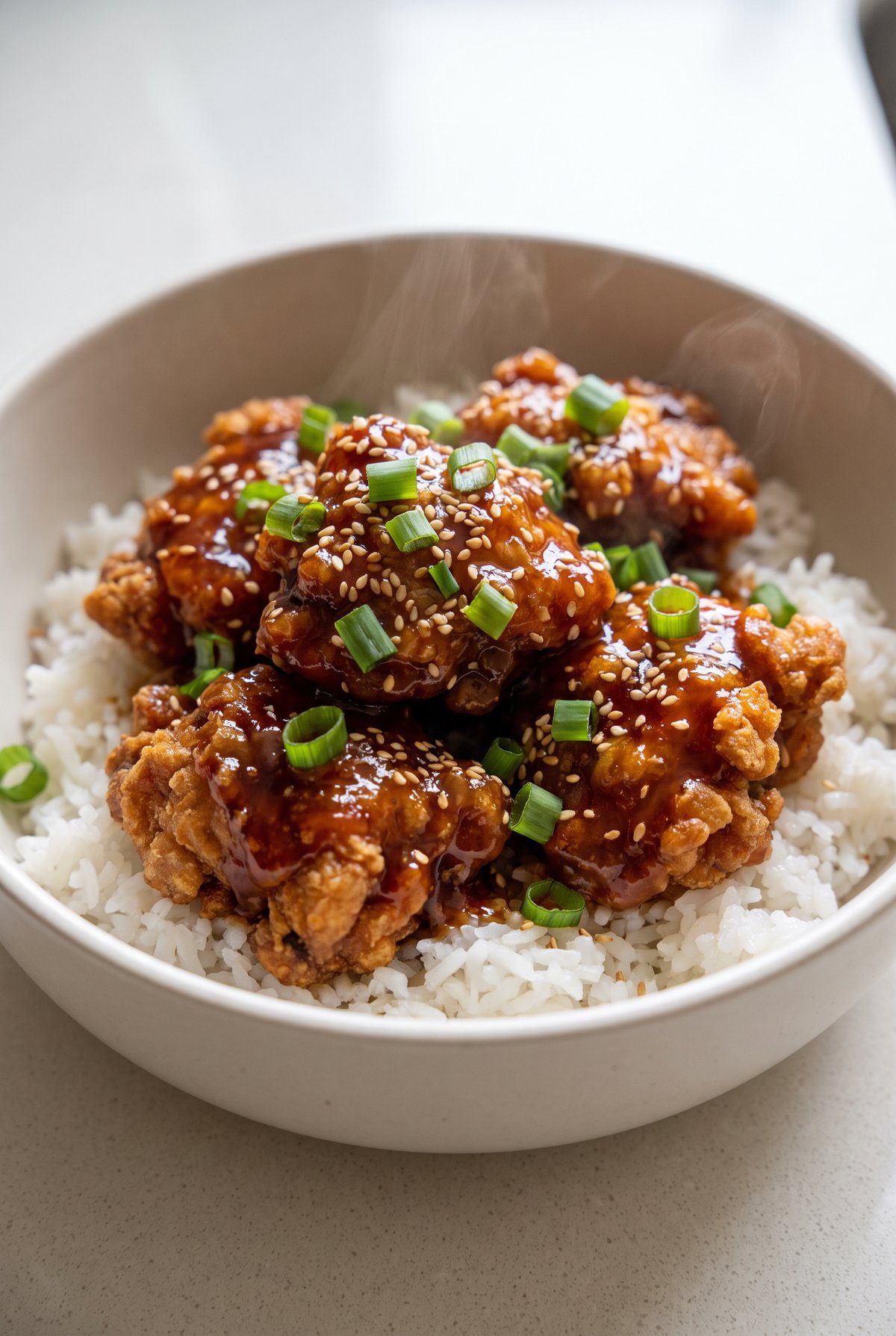
How to Serve General Tso Chicken
General Tso Chicken goes over steamed white rice with something green on the side, and steamed broccoli is the standard for a reason: it catches the extra sauce. Fried rice or lo mein turns it into a bigger takeout spread, and a quick cucumber salad dressed with rice vinegar cuts the sweetness. Egg rolls on the side make it a full order.
Loved This Recipe?
General Tso Chicken takes about 40 minutes and comes out crispier than any version that had to travel to your door.
Leave a star rating in the comments below, it helps other people find this recipe. Made it? Tag @allwellfed on Instagram, I love seeing this one in other people’s kitchens.
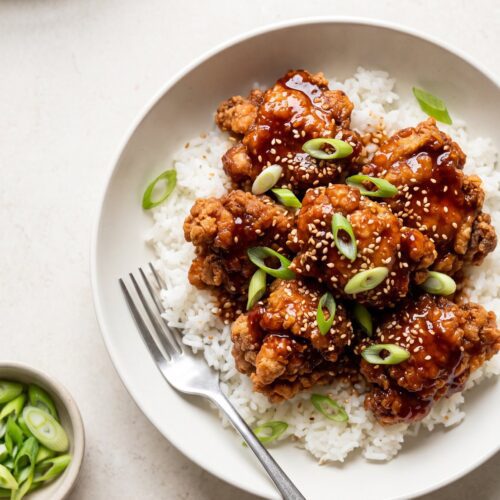
Crispy General Tso Chicken
Equipment
Ingredients
- 1 1/2 lbs boneless, skinless chicken thighs cut into 1-inch pieces
- 1/2 tsp salt
- 3/4 cup cornstarch for coating
- 1/2 cup chicken broth
- 1/4 cup low-sodium soy sauce
- 3 tbsp rice vinegar
- 2 tbsp hoisin sauce
- 3 tbsp brown sugar
- 1 1/2 tbsp cornstarch for the sauce
- 1 tsp toasted sesame oil
- 1 1/2 cups vegetable oil for frying
- 1 tbsp fresh ginger minced
- 3 cloves garlic minced
- 1/2 tsp red pepper flakes
- 3 scallions thinly sliced
- 1 tsp sesame seeds
- 4 cups cooked white rice for serving

Instructions
- Mix the sauce: Whisk the chicken broth, soy sauce, rice vinegar, hoisin, brown sugar, the 1 1/2 tablespoons of cornstarch, and the sesame oil together in a small bowl until no lumps remain. Set it next to the stove.
- Coat the chicken: Toss the chicken pieces with the salt, then add the 3/4 cup of cornstarch and toss until every piece is dusted white and dry to the touch. Shake off the loose powder as you go and let the coated chicken sit 5 minutes.
- Heat the oil: Pour the vegetable oil into a large deep skillet or wok to a depth of about 1/2 inch and heat it over medium-high to 350°F. A pinch of cornstarch dropped in should sizzle right away.
- Fry in batches: Fry the chicken in 3 batches, 4-5 minutes per batch, turning once, until deep golden and cooked through to an internal temperature of 165°F. Crowding the pan drops the oil temperature and gives you soggy coating, so leave the pieces room. Drain on a wire rack or paper towels and let the oil come back to 350°F between batches.
- Cook the aromatics: Pour off all but 1 tablespoon of the oil. Add the ginger, garlic, and red pepper flakes and cook 30 seconds over medium heat, just until fragrant. They burn fast, so keep them moving.
- Thicken the sauce: Whisk the sauce again and pour it into the pan. Bring it to a boil and cook 2-3 minutes, stirring, until it turns glossy and thick enough to coat a spoon.
- Toss and serve: Add the fried chicken and toss about 1 minute, just long enough to coat every piece. Pull the pan off the heat, scatter the scallions and sesame seeds over the top, and serve immediately over the cooked white rice.
Notes
If you made this, leave a star rating down in the comments. It takes about ten seconds, and it’s how other cooks decide whether a recipe is worth trying.