Lemon Ricotta Pasta
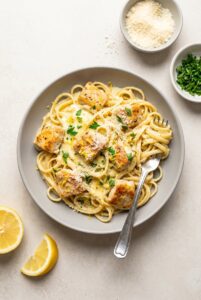
Lemon ricotta pasta with a fresh no-cook sauce of whole-milk ricotta, lemon zest, and parmesan whisked silky with pasta water. Ready in 20 minutes.
This post may contain affiliate links. See our disclosure policy.
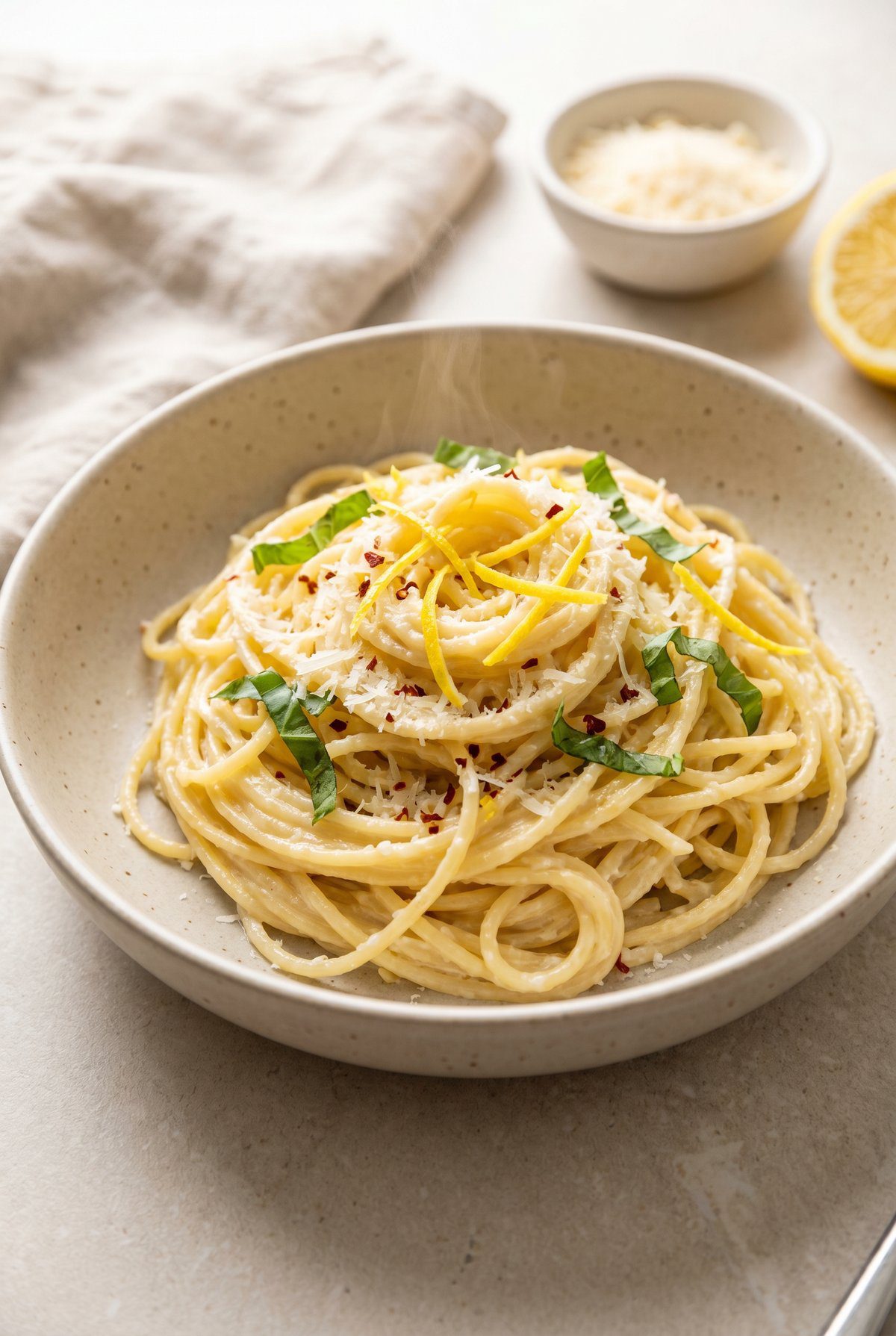
Lemon Ricotta Pasta is the dinner I reach for when it’s warm out, I’m tired, and I still want something that tastes fresh. There’s no cooking the sauce here. You whisk together whole-milk ricotta, a mountain of lemon zest, parmesan, and good olive oil, then let the hot pasta and a little of its starchy water do the rest. It comes together in the time it takes the noodles to boil, and it tastes bright and creamy at the same time.
The one thing that turns ricotta from grainy into silky is starchy pasta water. Ricotta on its own is thick and a little chalky, but a few splashes of that cloudy water loosen it and the starch helps the fat and cheese come together into a smooth sauce that clings to every noodle. Whisk the water into the ricotta first, before the pasta ever goes in, and toss hard once it does. That tossing is what emulsifies everything into a glossy coating instead of clumps sitting at the bottom of the bowl.
Because the sauce never sees the stove, this is about as fast as pasta gets. I zest and juice the lemons while the water heats, stir the ricotta mix together in the same bowl I’ll toss the pasta in, and dinner’s done the second the noodles drain. One pot, one bowl, twenty minutes.
Why You’ll Love This Recipe
- No sauce to cook. You whisk the ricotta, lemon, and parmesan together while the pasta boils, so there’s nothing simmering on the stove.
- Bright and creamy at once. The lemon keeps it fresh and the ricotta keeps it rich, so it never feels heavy.
- On the table in 20 minutes. It’s as fast as the pasta water is quick to boil, with almost no active work.
- Meatless and filling. The ricotta and parmesan give it enough staying power to be dinner on its own.
Lemon Ricotta Pasta Ingredients
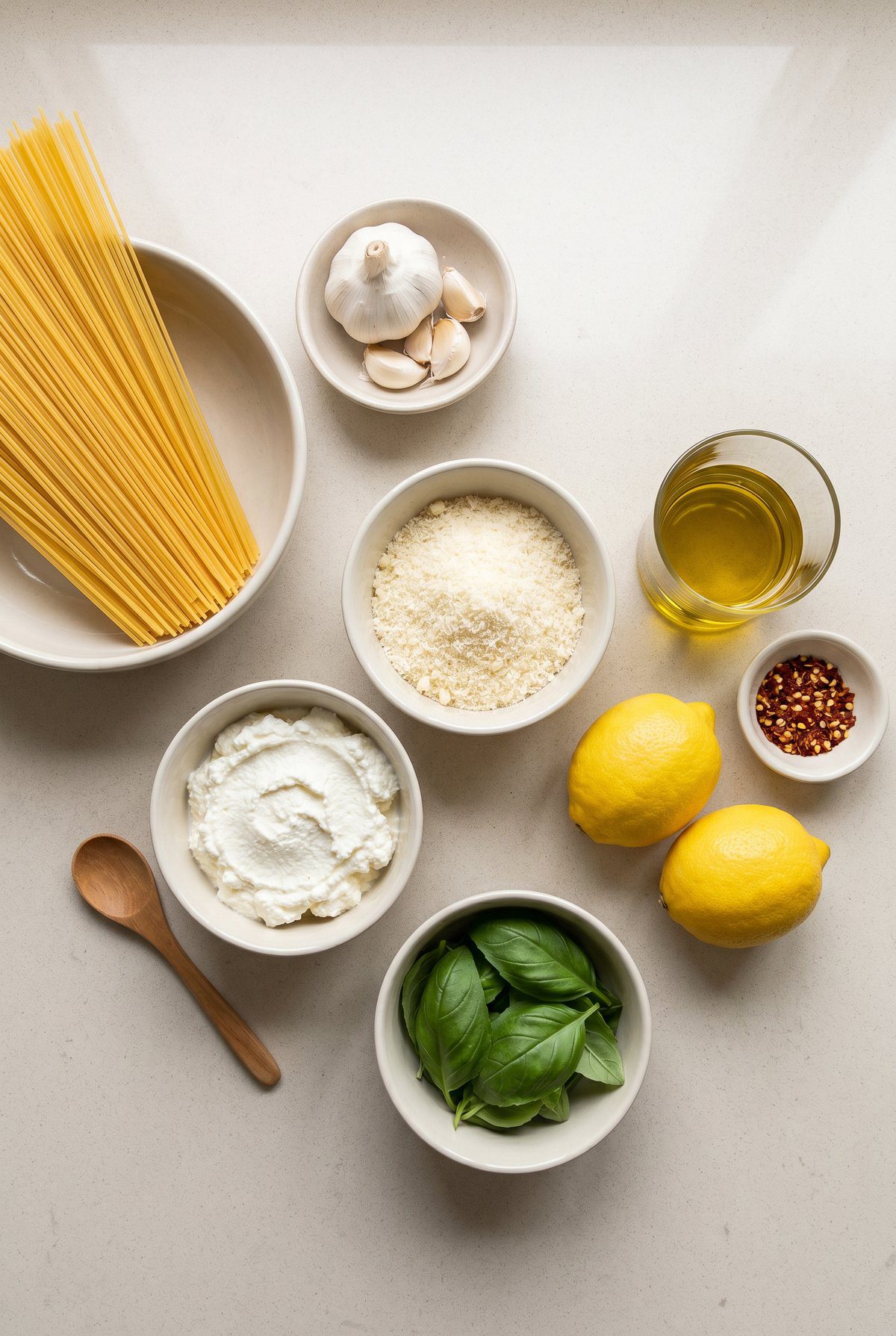
Reach for whole-milk ricotta, not part-skim. The extra fat is what makes the sauce creamy instead of watery, and it whisks smoother with the pasta water. If yours looks grainy in the tub, a quick blend or a vigorous whisk with a splash of the pasta water smooths it right out.
- 1 lb spaghetti or short pasta
- 1 1/2 cups whole-milk ricotta
- 1 cup grated parmesan, plus more for serving
- Zest of 2 lemons
- 1/4 cup fresh lemon juice (about 2 lemons)
- 3 tbsp olive oil
- 2 cloves garlic, grated
- 1 tsp salt
- 1/2 tsp black pepper
- 1/4 tsp red pepper flakes (optional)
- Fresh basil, for garnish
Recipe Variations
- Stir a couple handfuls of baby spinach or arugula into the hot pasta so it wilts from the heat for a little green.
- Add cooked, shelled peas or blanched asparagus for a spring version that turns it into more of a full meal.
- Fold in a little cooked, flaked salmon or shredded rotisserie chicken if you want a protein alongside the ricotta.
How to Make Lemon Ricotta Pasta
- Boil the pasta: Bring a large pot of well-salted water to a boil and cook the pasta according to the package directions until al dente. Before you drain it, scoop out about 1 1/2 cups of the starchy pasta water and set it aside.
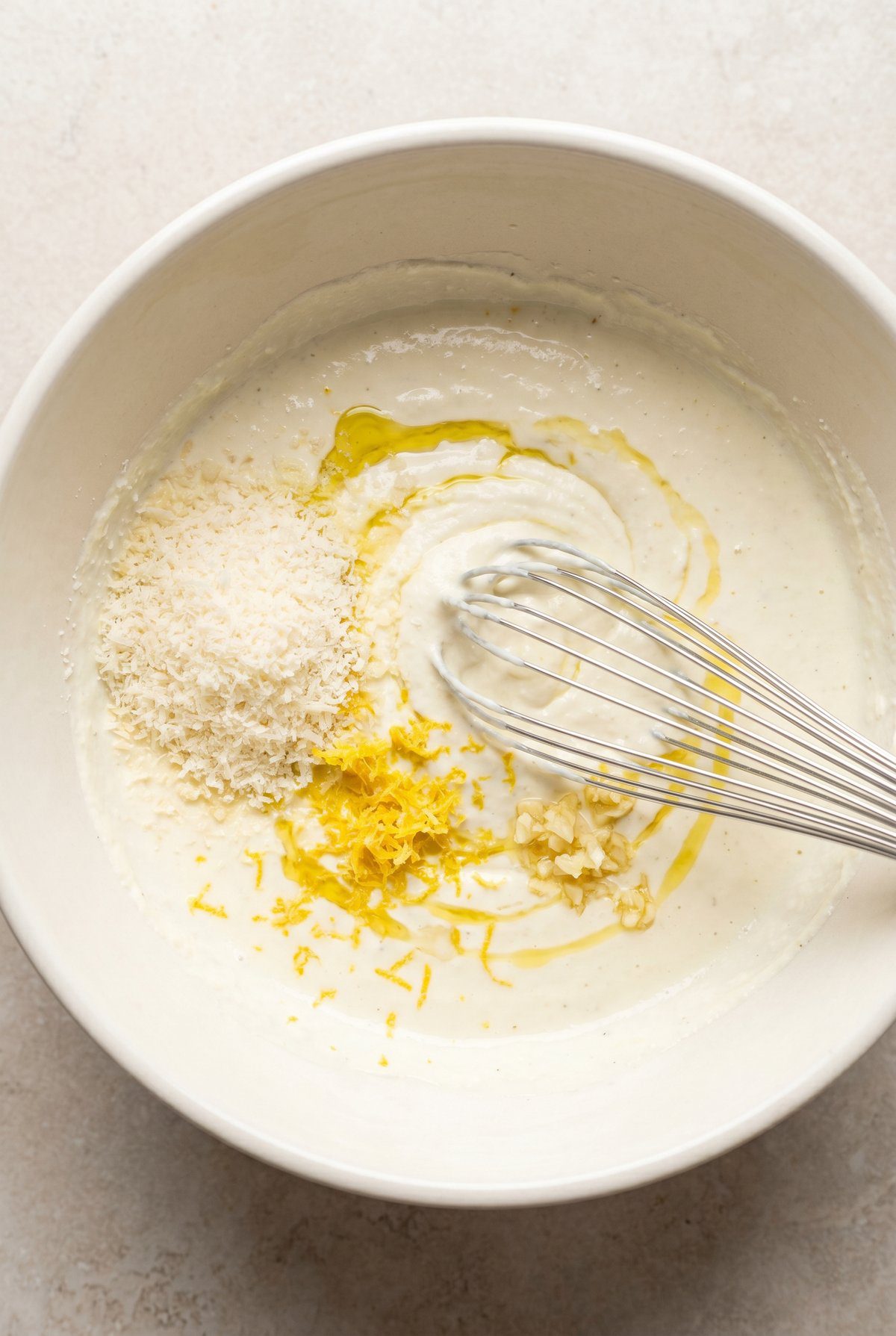
- Whisk the ricotta sauce: While the pasta cooks, whisk the ricotta, parmesan, lemon zest, lemon juice, olive oil, grated garlic, salt, and pepper together in a large bowl until smooth.
- Loosen it with pasta water: Whisk in about 1/2 cup of the hot pasta water, a little at a time, until the sauce is silky and pourable. The heat takes the raw edge off the garlic and helps the ricotta smooth out.
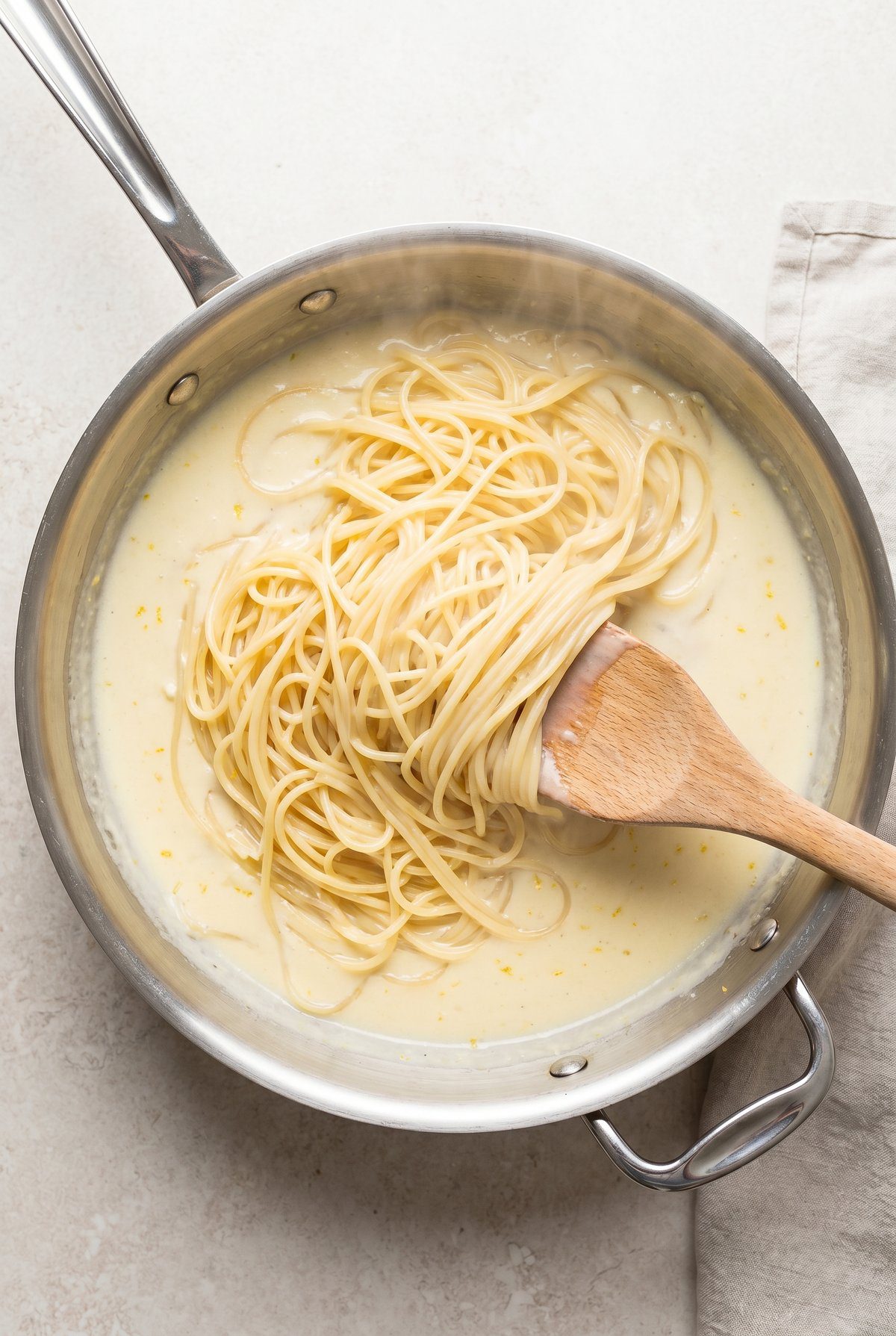
- Toss the pasta in: Add the hot drained pasta to the bowl and toss hard with tongs for a full minute. Keep adding pasta water a splash at a time until the sauce turns glossy and coats every noodle instead of clumping.
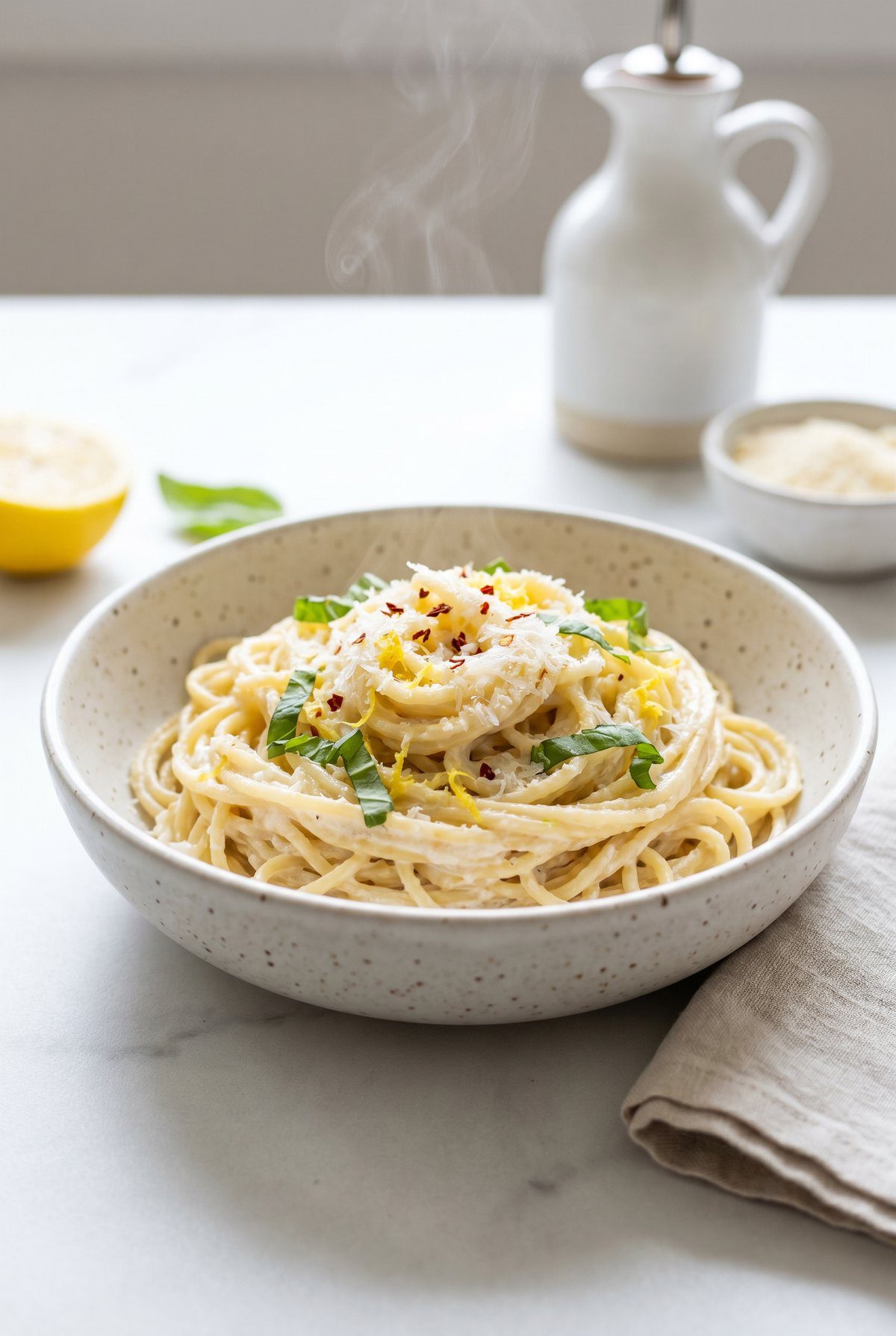
- Finish and serve: Taste and adjust the salt and lemon. Top with fresh basil, extra parmesan, and red pepper flakes if you like a little heat, and serve right away while it’s warm and creamy.
Why Whole-Milk Ricotta Matters Here
This sauce is not cooked. It is ricotta, parmesan, lemon and oil loosened with hot pasta water, which means the ricotta’s texture straight out of the tub is the texture on the plate. There is no simmering step to fix it.
- Whole-milk ricotta is creamy and mild. Part-skim is grainy and slightly sour, and both come through.
- Fresh ricotta from a deli counter is noticeably better than the tub kind if you can get it.
- Let it come to room temperature first. Cold ricotta seizes when it meets hot pasta and goes lumpy.
- If yours looks watery, drain it in a sieve for 20 minutes.
A quarter cup of lemon juice is a lot of acid for a dairy sauce, and it works only because nothing here gets hot enough to curdle. Toss off the heat, always.
Grate the garlic rather than mincing it. Raw garlic in an uncooked sauce is sharp, and grating breaks it down fine enough to disperse instead of landing in hot bites.
Recipe FAQs
Why Is My Ricotta Sauce Grainy?
Part-skim ricotta and skipping the pasta water are the usual culprits. Use whole-milk ricotta and whisk in the hot, starchy water until the sauce looks smooth before the pasta goes in. A quick spin in a blender fixes a stubbornly grainy tub.
Can I Make It Ahead?
The sauce is best whisked fresh, but you can mix the ricotta, lemon, parmesan, and oil an hour or two ahead and keep it in the fridge. Just wait to add the pasta water and hot noodles until you’re ready to eat, since the sauce tightens as it sits.
What Pasta Shape Works Best?
Long strands like spaghetti or bucatini are classic, but short shapes like shells or rigatoni catch the creamy sauce in their nooks. Use whatever you have on hand.
It Tastes Flat. What’s Missing?
Almost always salt or acid. Season the pasta water well, and add another squeeze of lemon and a pinch of salt at the end. Lemon-forward sauces need both to taste bright instead of dull.
Is This Dish Vegetarian, and What Can I Serve with It?
Yes, it’s meatless as written. A simple arugula salad and garlic bread round it out, or add peas or spinach right into the pasta to bulk it up.
Cooking Tips
- Zest the lemons before you juice them. It’s nearly impossible to zest a squeezed lemon half, and the zest carries most of the bright, floral flavor.
- Don’t dump the pasta water. That cloudy, starchy liquid is what emulsifies the ricotta into a real sauce, so save more than you think you need.
- Grate your parmesan off a block. The pre-shredded kind is coated to keep it from clumping, and that coating keeps it from melting smoothly into the sauce.
Storage and Freezing
To store: Keep leftovers in an airtight container in the fridge for up to 3 days.
To freeze: This one’s better fresh. Ricotta sauces turn watery and grainy once frozen and thawed, so freezing isn’t recommended.
To reheat: Warm gently in a skillet over low heat with a good splash of water or milk, tossing until the sauce loosens back up. A hard, high reheat will make it grainy.
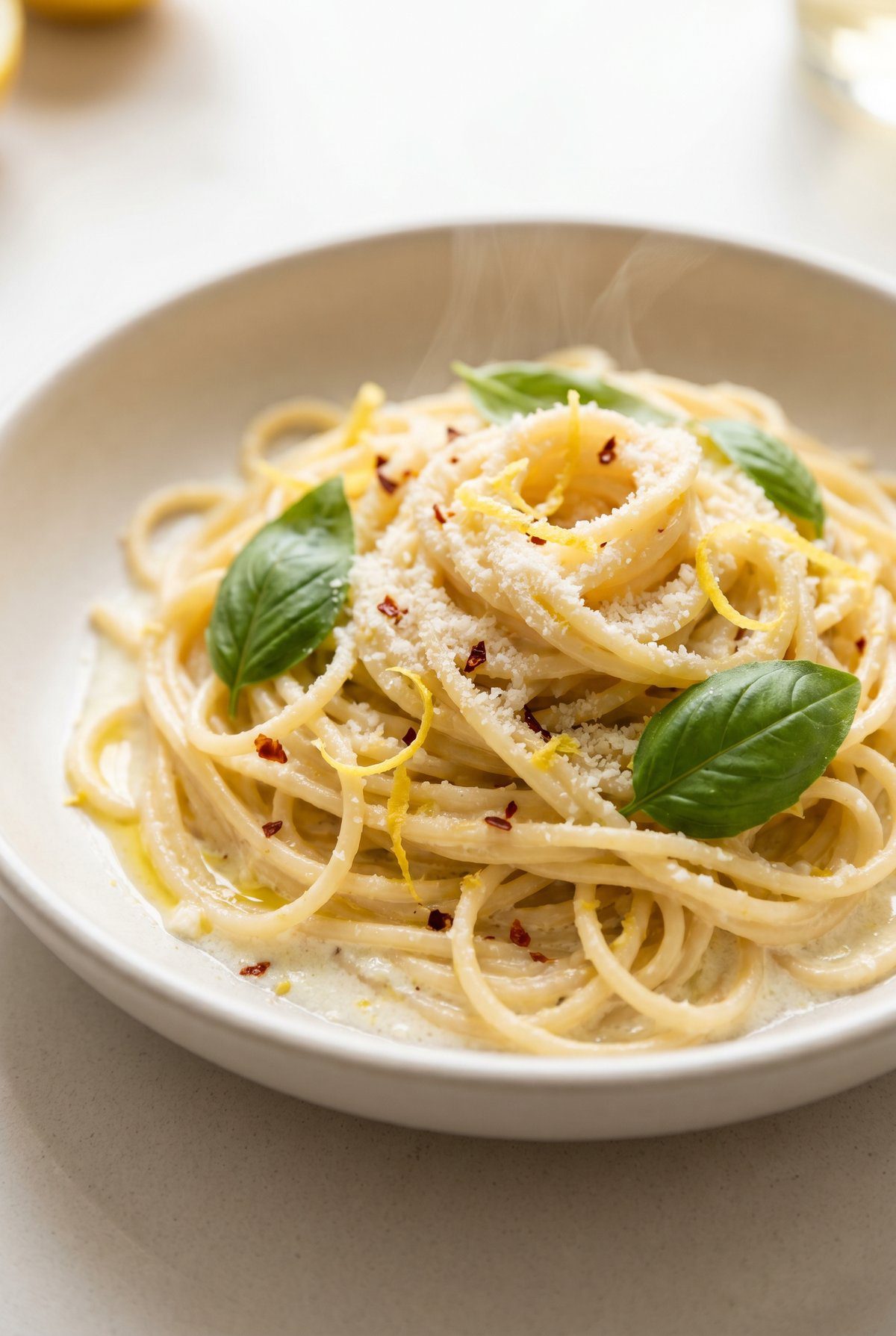
How to Serve Lemon Ricotta Pasta
Lemon Ricotta Pasta is light enough to serve as a main with just a green salad and crusty bread, or as a side next to grilled chicken or salmon. This is one of the recipes in our New Pastas collection, and more fresh, easy pasta dinners like it are on the way.
Loved This Recipe?
Lemon Ricotta Pasta is proof that a no-cook sauce can taste like you fussed over it, when really you just whisked a bowl while the water boiled.
Leave a star rating in the comments below, it helps other people find this recipe. Made it? Tag @allwellfed on Instagram, I love seeing this one in other people’s kitchens.
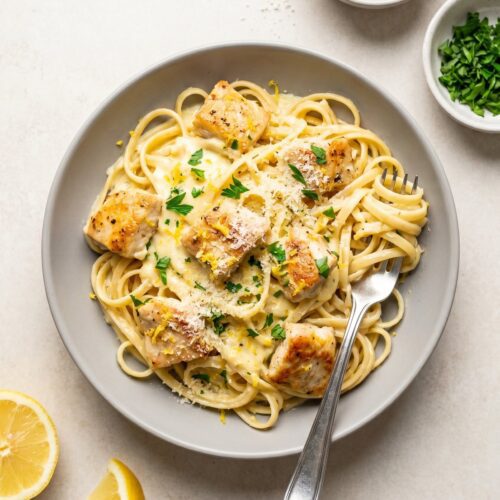
More like this: If simple pasta is your speed, these three belong on the meal plan too. Try Creamy Lemon Chicken Pasta, Mushroom Garlic Spaghetti, or One-Pot Creamy Garlic Pasta.
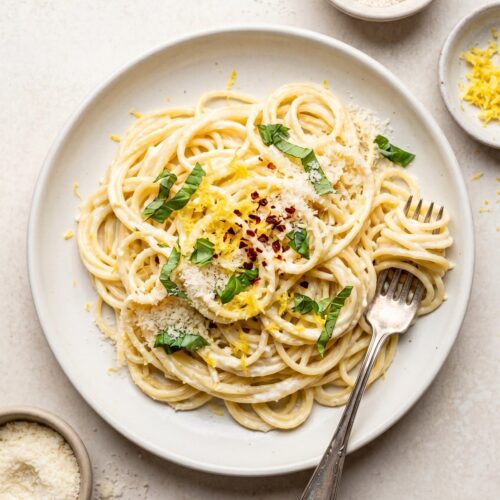
Lemon Ricotta Pasta
Equipment
Ingredients
- 1 lb spaghetti or short pasta
- 1 1/2 cups whole-milk ricotta
- 1 cup grated parmesan plus more for serving
- zest of 2 lemons
- 1/4 cup fresh lemon juice about 2 lemons
- 3 tbsp olive oil
- 2 cloves garlic grated
- 1 tsp salt
- 1/2 tsp black pepper
- 1/4 tsp red pepper flakes optional
- fresh basil for garnish

Instructions
- Boil the pasta: Bring a large pot of well-salted water to a boil and cook the pasta according to the package directions until al dente. Before you drain it, scoop out about 1 1/2 cups of the starchy pasta water and set it aside.
- Whisk the ricotta sauce: While the pasta cooks, whisk the ricotta, parmesan, lemon zest, lemon juice, olive oil, grated garlic, salt, and pepper together in a large bowl until smooth.
- Loosen it with pasta water: Whisk in about 1/2 cup of the hot pasta water, a little at a time, until the sauce is silky and pourable. The heat takes the raw edge off the garlic and helps the ricotta smooth out.
- Toss the pasta in: Add the hot drained pasta to the bowl and toss hard with tongs for a full minute. Keep adding pasta water a splash at a time until the sauce turns glossy and coats every noodle instead of clumping.
- Finish and serve: Taste and adjust the salt and lemon. Top with fresh basil, extra parmesan, and red pepper flakes if you like a little heat, and serve right away while it’s warm and creamy.
Notes
If you made this, leave a star rating down in the comments. It takes about ten seconds, and it’s how other cooks decide whether a recipe is worth trying.