Classic Swiss Steak with Tomato Gravy
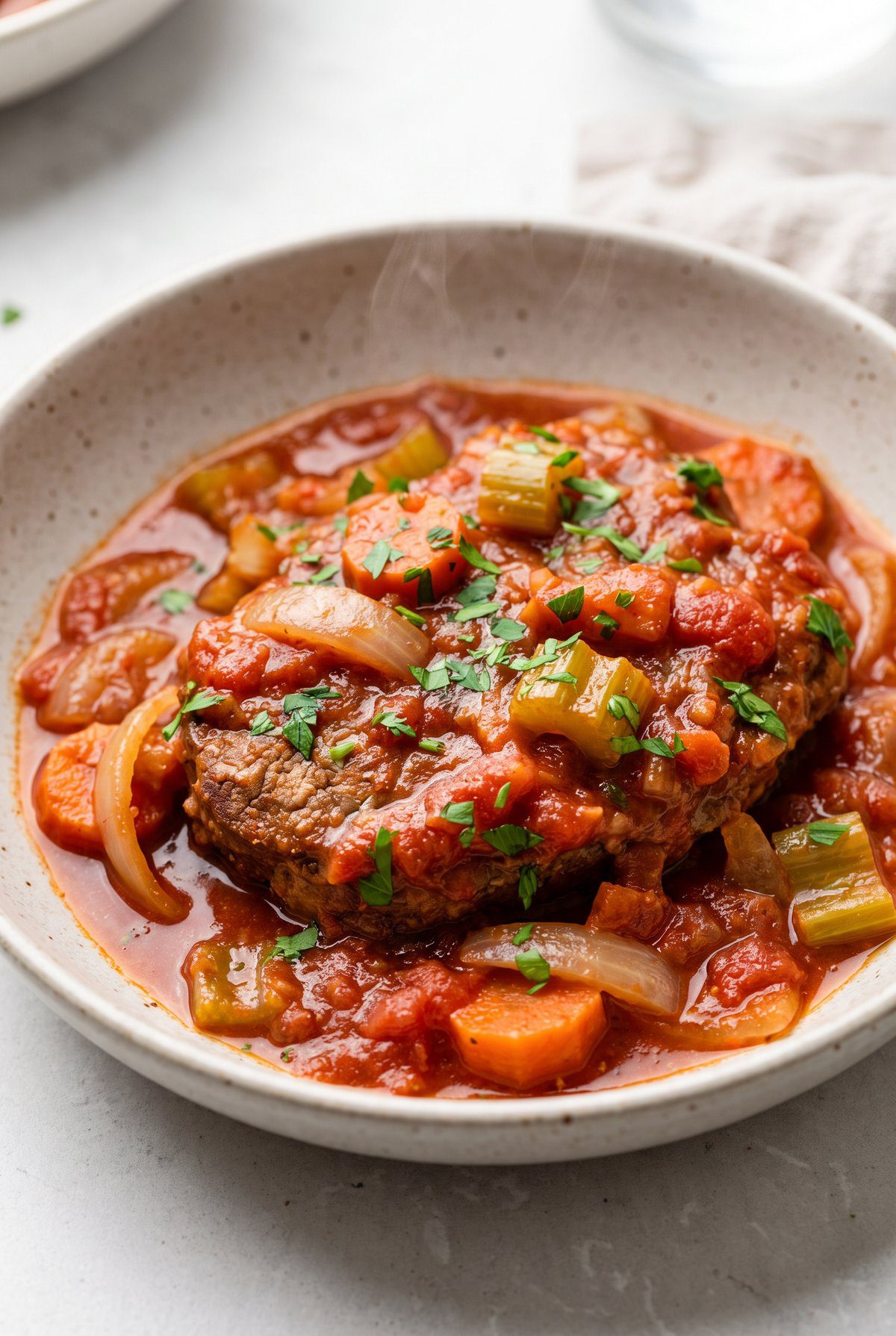
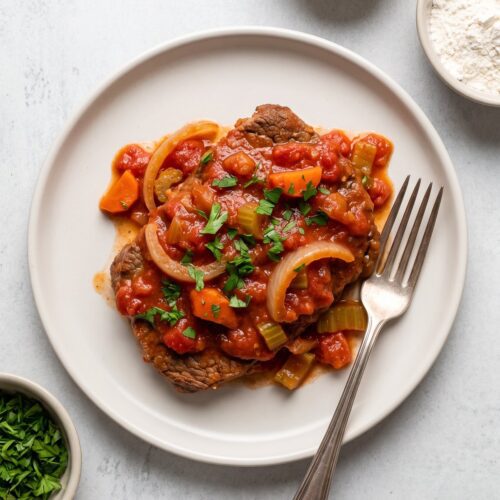
Swiss steak braised low and slow in a rich tomato gravy with onions, carrots and celery until the round steak is fall-apart fork tender.
This post may contain affiliate links. See our disclosure policy.
Swiss steak turns one of the cheapest cuts in the meat case into a fork-tender dinner, and it has nothing to do with Switzerland. The name comes from swissing, an old term for running meat through rollers to flatten and tenderize it. At home that means a mallet, some seasoned flour, a hard sear, and two slow hours in a tomato and onion gravy.
Two hours is the number that matters. Round steak is a hardworking muscle packed with connective tissue, and that tissue only turns silky somewhere north of 195°F, which takes real time at a low oven temperature. Pull it at 90 minutes and you get tough beef sitting in good gravy. Give it the full two hours and it gives way against the side of a spoon.
The flour does double duty. It gives the beef a crust that browns properly in the pan, and whatever shakes loose into the pot thickens the gravy while everything braises. So you never have to whisk together a slurry at the end.
Why You’ll Love This Swiss Steak Recipe
- Cheap beef, expensive results. Round steak costs a fraction of what a chuck roast or short ribs run, and two hours of low braising gets it just as tender.
- The gravy makes itself. Flour from the dredge thickens the braising liquid as it cooks, so the sauce is done the moment the beef is.
- Hands-off for two hours. Once the lid goes on and the pot goes in the oven, there’s nothing left to stir, flip or watch.
- Better the next day. The gravy keeps thickening in the fridge and the beef keeps soaking it up, which makes leftovers worth planning for.
Swiss Steak Ingredients
Bottom round or top round is the traditional cut, and it’s usually the cheapest thing at the counter. Cube steak works too since the butcher has already tenderized it, but it’s thinner, so start checking it at 90 minutes.
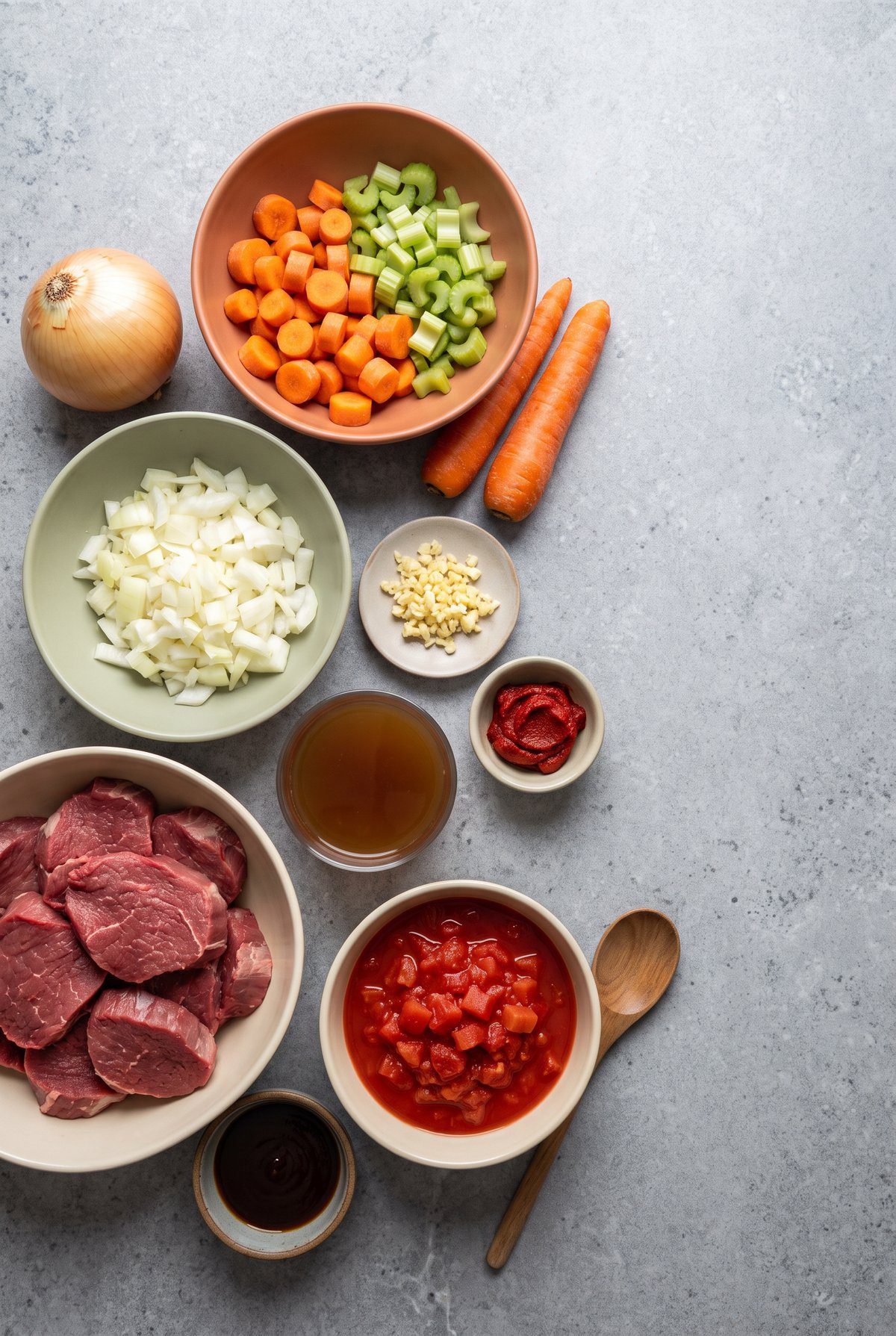
- 2 lbs bottom round steak, about 1/2 inch thick
- 1 1/2 tsp salt
- 3/4 tsp black pepper
- 1/2 cup all-purpose flour
- 3 tbsp vegetable oil
- 1 large yellow onion, sliced into half moons
- 3 medium carrots, cut into 1-inch pieces
- 2 ribs celery, sliced
- 4 cloves garlic, minced
- 2 tbsp tomato paste
- 1 (28 oz) can diced tomatoes, undrained
- 2 cups low-sodium beef broth
- 1 tbsp Worcestershire sauce
- 1 tsp dried marjoram
- 1/2 tsp dried thyme
- 1/2 tsp paprika
- 2 tbsp fresh parsley, chopped, for garnish
Recipe Variations
- Make it in the slow cooker. Brown the beef and cook the vegetables on the stove exactly as written, then move everything to the crock and cook on low for 8 hours or on high for 4 to 5 hours, until a fork slides through the beef with no resistance.
- Add 8 ounces of sliced cremini mushrooms with the onion and carrots. Cook them an extra 3 minutes so their liquid evaporates before the tomatoes go in, or the gravy comes out thin.
- Use cube steak instead of round. It’s already been tenderized and run thinner, so skip the pounding and start checking for fork-tender at the 90 minute mark.
How to Make Swiss Steak
- Pound and season the beef: Heat the oven to 325°F. Cut the round steak into 4 to 6 serving pieces. Lay them between two sheets of plastic wrap and pound to an even 1/2 inch with a mallet or the bottom of a heavy skillet. Pat both sides dry, then season all over with the salt and pepper.
- Dredge and brown: Spread the flour on a plate and press each piece into it on both sides, shaking off the loose flour. Heat the oil in a large Dutch oven over medium-high heat and brown the beef for 3-4 minutes per side, working in two batches so the pieces never touch. Move the browned beef to a plate.
- Cook the vegetables: Pour off all but about 2 tablespoons of fat. Add the onion, carrots and celery and cook for 5-6 minutes over medium heat, scraping up the browned bits stuck to the bottom. Stir in the garlic and tomato paste and cook 1-2 minutes more, until the paste darkens to brick red.
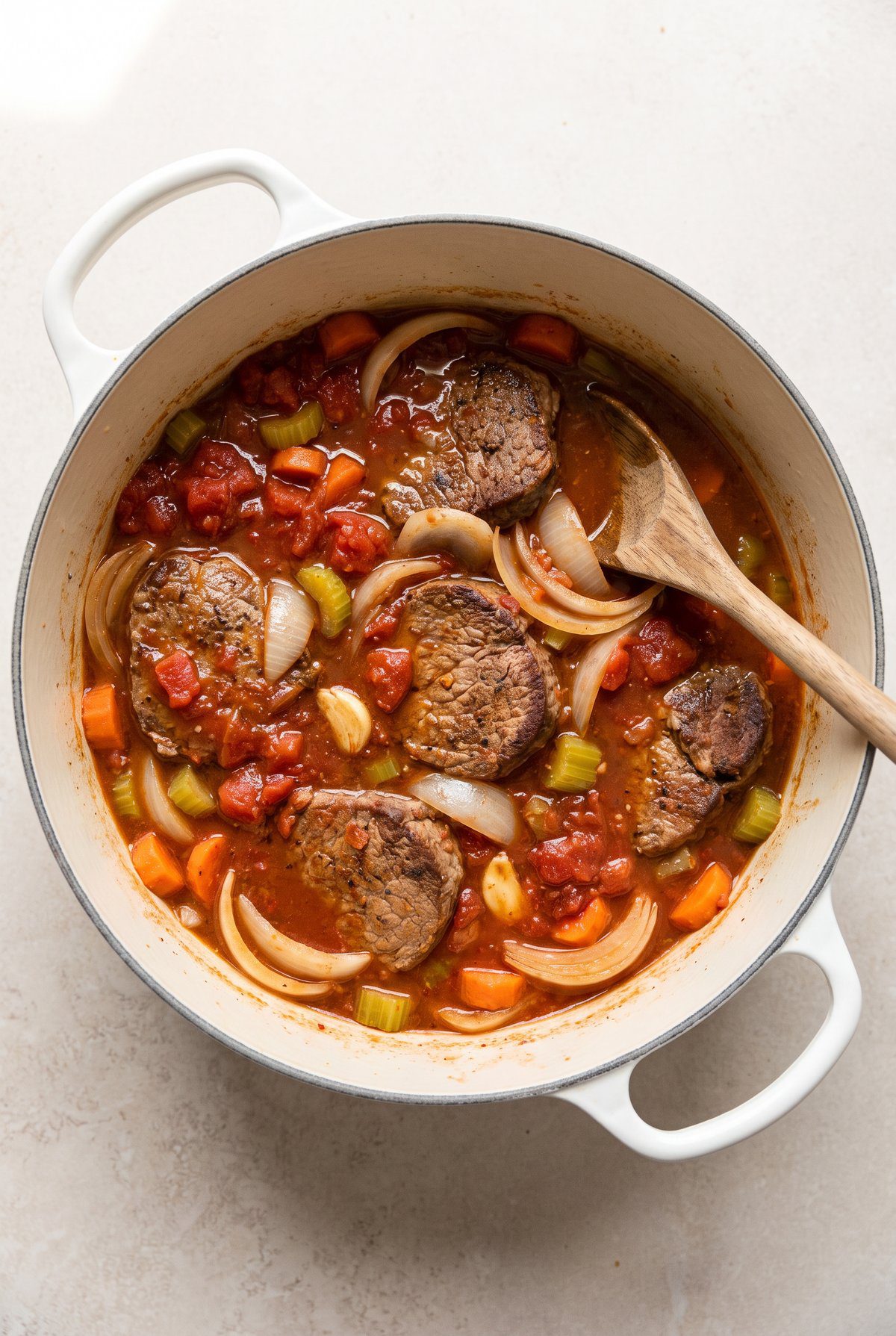
- Build the braising liquid: Add the diced tomatoes with their juice, the beef broth, Worcestershire sauce, marjoram, thyme and paprika. Bring it to a simmer and scrape the bottom of the pot clean.
- Braise for two full hours: Nestle the beef and any juices from the plate back into the pot, tucking the pieces under the liquid. Cover tightly and slide the pot into the 325°F oven for 2 hours. It’s done when a fork twists through the meat with no pull, which lands around 200°F internally, well past the 145°F USDA minimum for beef. If it still fights the fork, cover it and give it another 20-30 minutes.
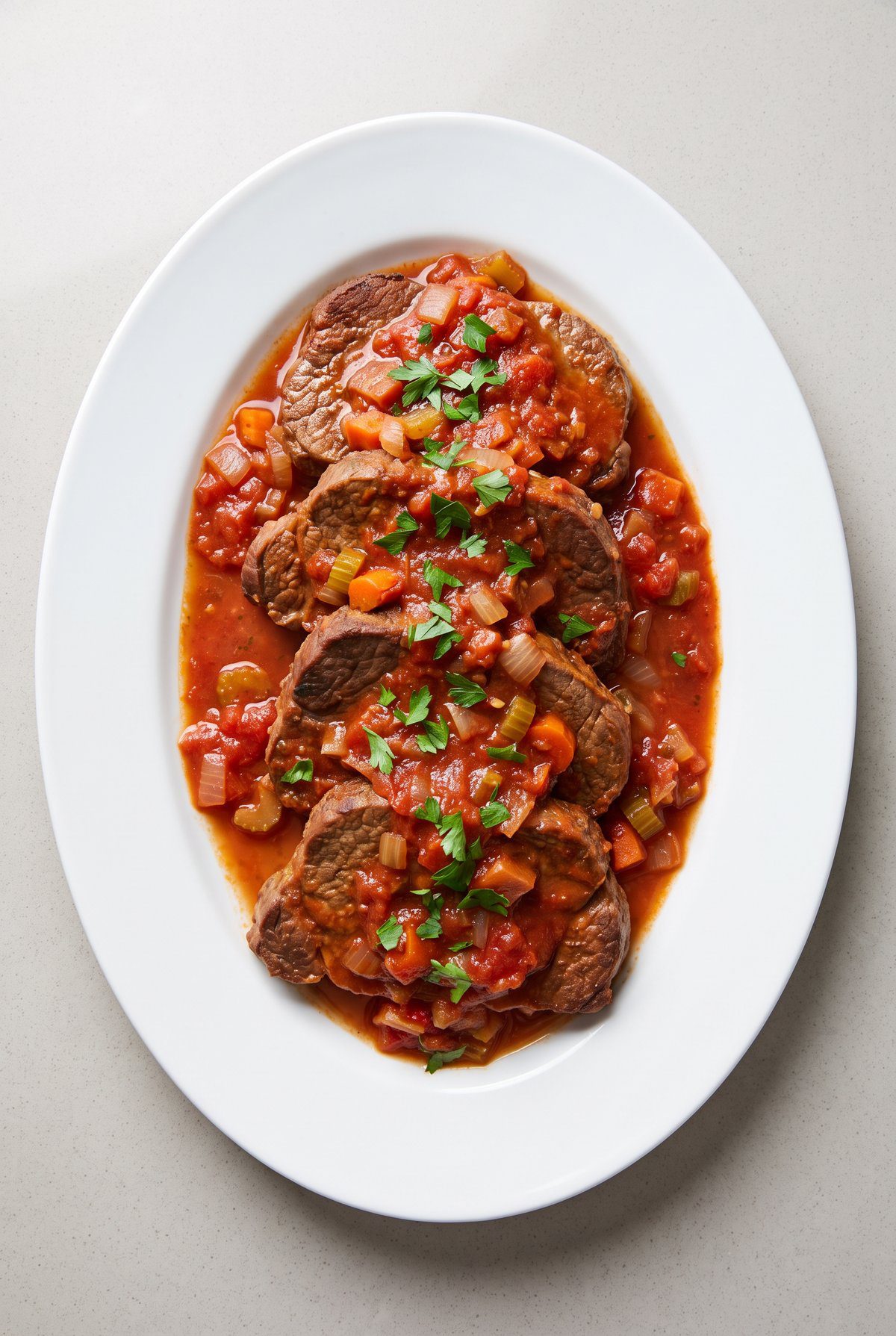
- Finish the gravy: Lift the beef onto a platter and let it rest while you finish the gravy, which covers the 3 minute rest USDA guidance calls for on cuts of beef. If the gravy is thinner than you want, simmer the pot uncovered on the stovetop for 5-10 minutes until it coats a spoon. Taste for salt, spoon it over the beef and scatter the parsley on top.

Recipe FAQs
What Cut of Beef Is Best for Swiss Steak?
Bottom round or top round, cut about 1/2 inch thick. Both are lean and full of connective tissue, which is exactly what a long braise is built to break down. Cube steak is the shortcut version since it comes pre-tenderized.
Why Is My Swiss Steak Still Tough?
It almost always needs more time, not less. Round steak goes through a stubborn stage around the 1 hour mark where it feels tougher than when it went in. Put the lid back on and keep braising in 20 minute stretches until a fork turns easily.
Can I Make Swiss Steak in a Slow Cooker?
Yes, and it’s a good fit. Brown the beef and cook the vegetables on the stove first, since that step is where most of the flavor comes from, then transfer everything and cook 8 hours on low or 4 to 5 hours on high.
Do I Really Have to Pound the Meat?
It helps two ways. Pounding breaks up muscle fiber so the beef gets tender faster, and it evens out the thickness so every piece finishes at the same time. If you buy cube steak, the pounding is already done for you.
Can I Use Canned Tomato Soup Instead of Diced Tomatoes?
You can, and plenty of old church cookbooks do. Use two 10.5 ounce cans plus 1 cup of broth in place of the diced tomatoes and 2 cups of broth. The gravy comes out sweeter and smoother, with less texture.
Cooking Tips
- Pat the beef completely dry before it hits the flour. Damp meat turns the dredge into paste, and paste steams gray instead of browning.
- Brown in two batches even though it costs you an extra five minutes. A crowded pot drops in temperature and the beef releases liquid and boils, which costs you the whole flavor base for the gravy.
- Trust the fork, not the timer. Two hours is right for most 1/2 inch round steak, but thickness and age of the beef both move the number, and a braise is only finished when it feels finished.
Storage and Freezing
To store: Refrigerate the beef in its gravy in an airtight container for up to 4 days. Keeping it submerged is what stops the edges from drying out.
To freeze: Braises freeze beautifully. Cool completely, then freeze the beef and gravy together for up to 3 months and thaw overnight in the fridge.
To reheat: Warm it covered in a 325°F oven for 20-25 minutes or in a covered pan over low heat, adding a splash of broth if the gravy has tightened. Heat until it reaches 165°F throughout.
How to Serve Swiss Steak
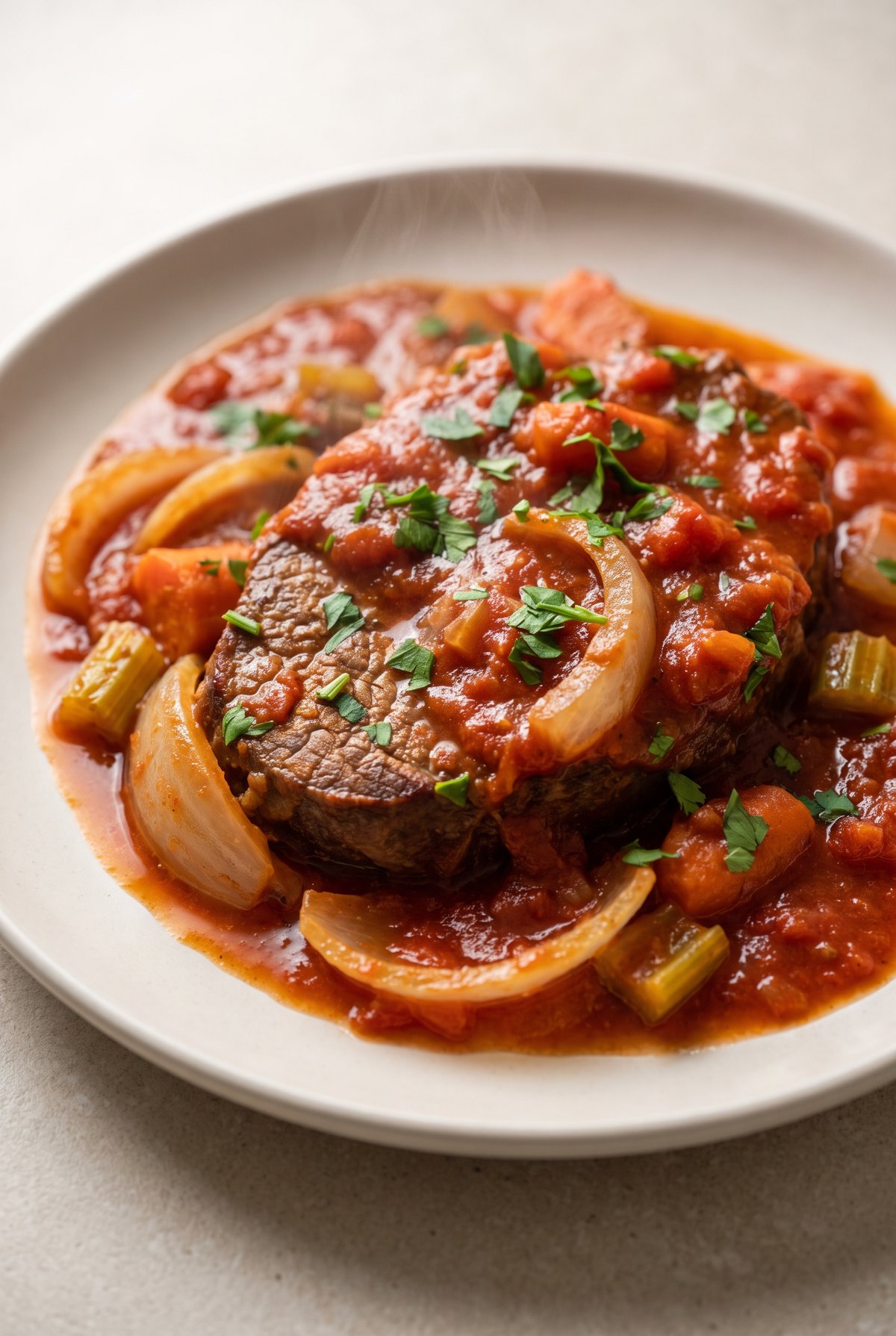
Swiss Steak needs something underneath it to catch the gravy, so mashed potatoes, buttered egg noodles or white rice are all standard. Green beans, roasted carrots or a simple salad round out the plate, and a hunk of crusty bread is not optional if you like mopping. It also holds well on the stove, which makes it a decent option when everyone eats at a different hour.
Loved This Recipe?
Swiss Steak asks for about forty-five minutes of hands-on work and two quiet hours in the oven, and it turns a cheap cut of beef into a dinner people ask about later.
Leave a star rating in the comments below, it helps other people find this recipe. Made it? Tag @allwellfed on Instagram, I love seeing this one in other people’s kitchens.
Classic Swiss Steak with Tomato Gravy
Equipment
Ingredients
- 2 lbs bottom round steak about 1/2 inch thick
- 1 1/2 tsp salt
- 3/4 tsp black pepper
- 1/2 cup all-purpose flour
- 3 tbsp vegetable oil
- 1 large yellow onion sliced into half moons
- 3 medium carrots cut into 1-inch pieces
- 2 ribs celery sliced
- 4 cloves garlic minced
- 2 tbsp tomato paste
- 1 (28 oz) can diced tomatoes undrained
- 2 cups low-sodium beef broth
- 1 tbsp Worcestershire sauce
- 1 tsp dried marjoram
- 1/2 tsp dried thyme
- 1/2 tsp paprika
- 2 tbsp fresh parsley chopped, for garnish

Instructions
- Pound and season the beef: Heat the oven to 325°F. Cut the round steak into 4 to 6 serving pieces. Lay them between two sheets of plastic wrap and pound to an even 1/2 inch with a mallet or the bottom of a heavy skillet. Pat both sides dry, then season all over with the salt and pepper.
- Dredge and brown: Spread the flour on a plate and press each piece into it on both sides, shaking off the loose flour. Heat the oil in a large Dutch oven over medium-high heat and brown the beef for 3-4 minutes per side, working in two batches so the pieces never touch. Move the browned beef to a plate.
- Cook the vegetables: Pour off all but about 2 tablespoons of fat. Add the onion, carrots and celery and cook for 5-6 minutes over medium heat, scraping up the browned bits stuck to the bottom. Stir in the garlic and tomato paste and cook 1-2 minutes more, until the paste darkens to brick red.
- Build the braising liquid: Add the diced tomatoes with their juice, the beef broth, Worcestershire sauce, marjoram, thyme and paprika. Bring it to a simmer and scrape the bottom of the pot clean.
- Braise for two full hours: Nestle the beef and any juices from the plate back into the pot, tucking the pieces under the liquid. Cover tightly and slide the pot into the 325°F oven for 2 hours. It’s done when a fork twists through the meat with no pull, which lands around 200°F internally, well past the 145°F USDA minimum for beef. If it still fights the fork, cover it and give it another 20-30 minutes.
- Finish the gravy: Lift the beef onto a platter and let it rest while you finish the gravy, which covers the 3 minute rest USDA guidance calls for on cuts of beef. If the gravy is thinner than you want, simmer the pot uncovered on the stovetop for 5-10 minutes until it coats a spoon. Taste for salt, spoon it over the beef and scatter the parsley on top.
Notes

If you made this, leave a star rating down in the comments. It takes about ten seconds, and it’s how other cooks decide whether a recipe is worth trying.