Turkey Gravy Recipe from Drippings
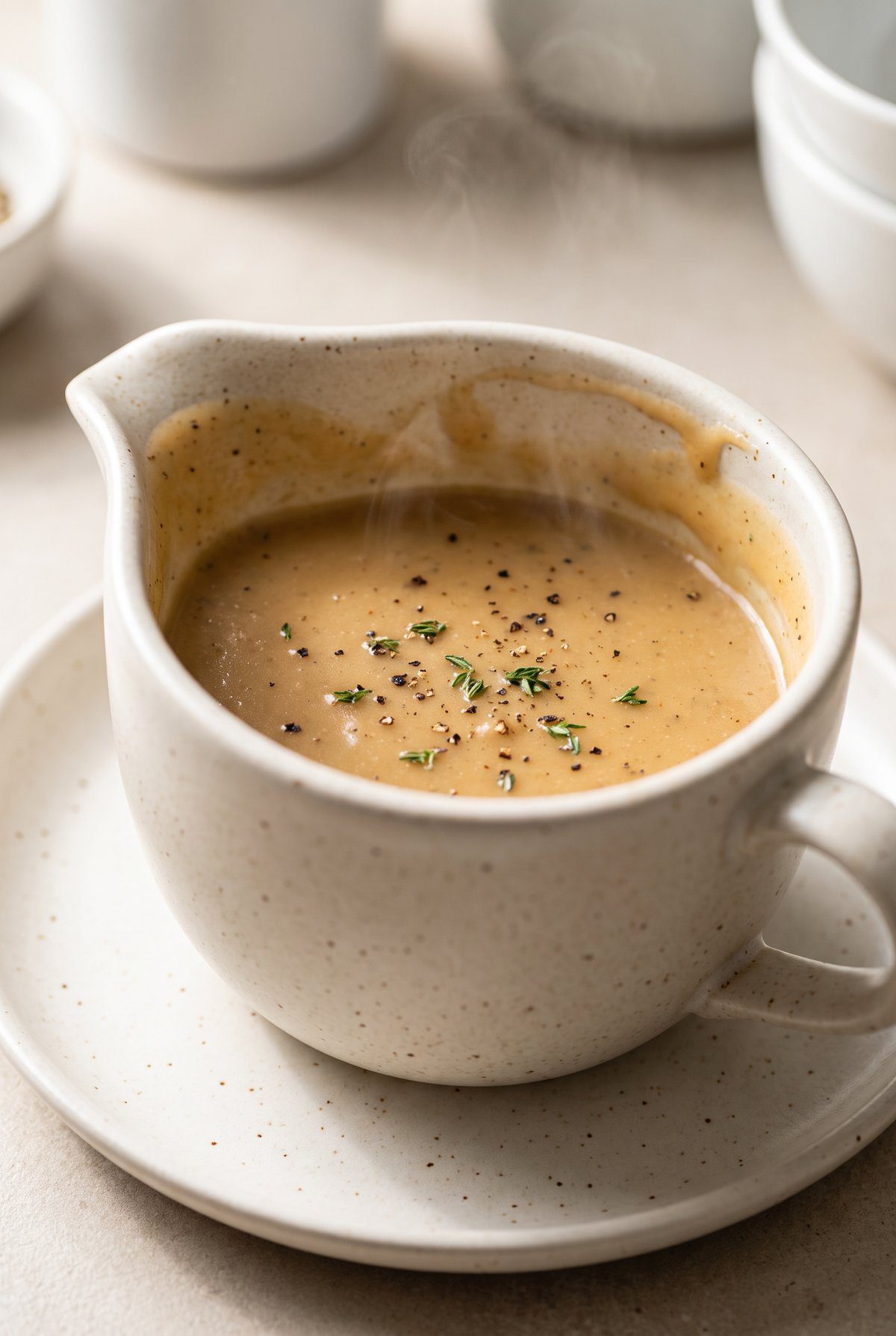
Turkey gravy recipe made from the pan drippings with a simple flour roux. Smooth, glossy, and on the table 20 minutes after the bird comes out.
This post may contain affiliate links. See our disclosure policy.
A turkey gravy recipe should take twenty minutes and four ingredients, and this one does. Fat skimmed off the drippings, flour, the drippings themselves stretched with broth, and salt and pepper. That’s the entire list.
The ratio is what people get wrong. A quarter cup of fat and a quarter cup of flour thickens about three cups of liquid into gravy that pours in a ribbon and coats the potatoes instead of sliding off them. Use less flour and you get turkey-flavored broth. Use much more and it sets up like paste on the plate.
Pour the liquid in slowly. That’s the whole anti-lump strategy. A cup at a time, whisking hard until the pan is smooth again before the next cup goes in, and you’ll never need a strainer.
Why You’ll Love This Turkey Gravy Recipe
- Twenty minutes, start to finish. The roux takes two minutes and the gravy simmers for five, so it fits neatly in the window while the turkey rests.
- Four ingredients. Fat, flour, drippings, and salt and pepper. Nothing else is required.
- No lumps. Warm liquid added a cup at a time to a hot roux is the entire technique.
- Works without a turkey. Use butter for the fat and broth for the drippings and you’ve got gravy any night of the week.
Turkey Gravy Ingredients
One roasted turkey rarely gives you a full three cups of drippings, and that’s normal. Top it up with turkey or low-sodium chicken broth. Go low-sodium if you can, because the drippings are already carrying all the salt from the bird.
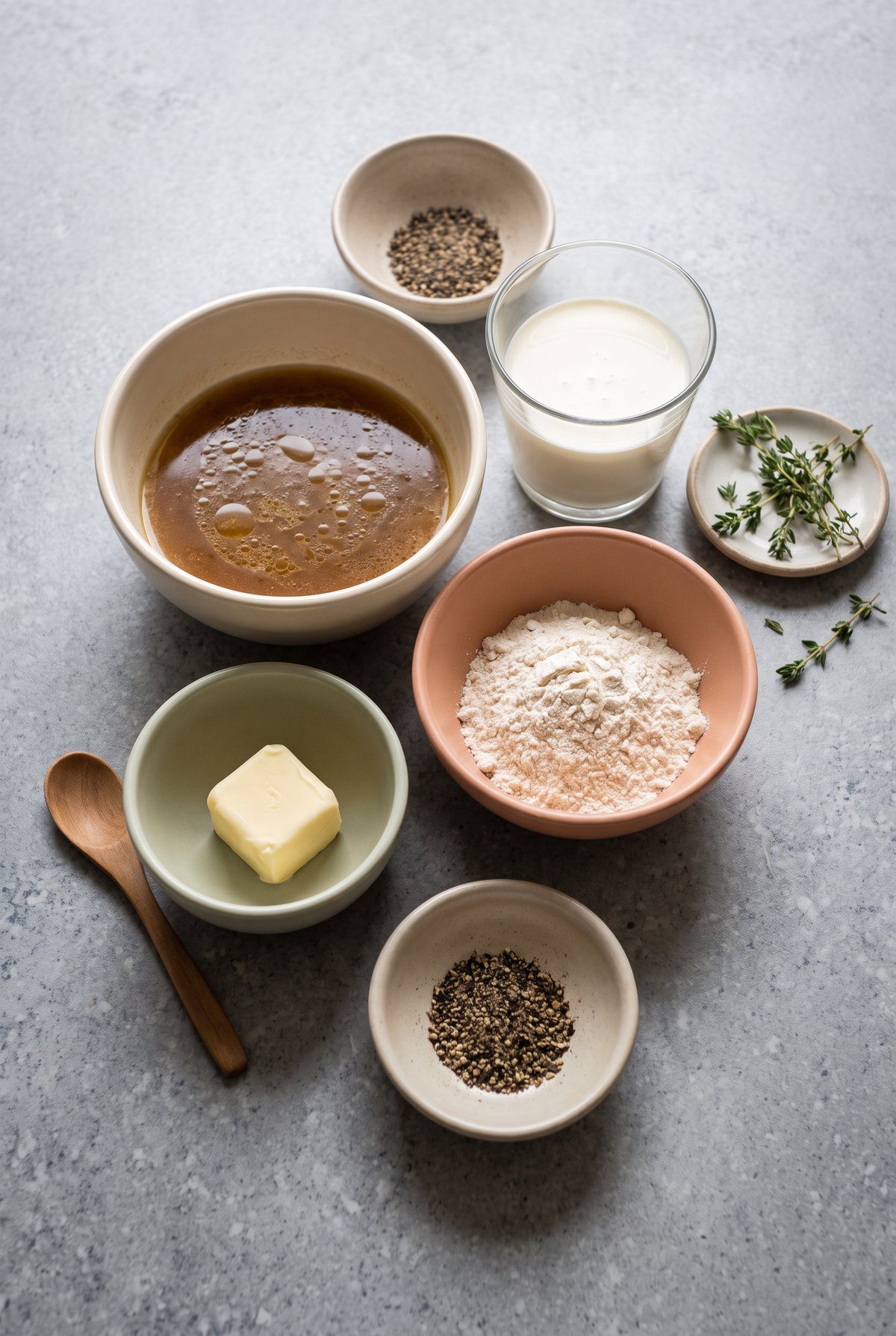
- 1/4 cup turkey fat, skimmed from the pan drippings (or unsalted butter)
- 1/4 cup all-purpose flour
- 3 cups defatted pan drippings, topped up with turkey or low-sodium chicken broth as needed
- 1/4 tsp black pepper
- Salt, to taste
- 1 tsp fresh thyme leaves, chopped (optional)
- 2 tbsp heavy cream (optional)
Recipe Variations
- Make it without drippings. Melt 1/4 cup unsalted butter in place of the turkey fat and use 3 cups of turkey or chicken broth as the liquid. Everything else is identical, and it’s how you make gravy on a Tuesday or get a head start a week before Thanksgiving.
- Make giblet gravy. Simmer the neck and giblets (leave out the liver, it turns the gravy bitter) in 4 cups of water with half an onion for 1 hour, then strain and use that broth as your liquid. Chop the cooked neck meat and giblets fine and stir them in at the end. Poultry giblets need to reach 165°F, and an hour at a simmer takes them well past it.
- Add herbs. Stir 1 teaspoon of chopped fresh sage or 1/2 teaspoon of poultry seasoning into the roux along with the flour, so the herbs bloom in the hot fat instead of sitting on top of the finished gravy.
How to Make Turkey Gravy
- Strain the drippings: Tip everything from the roasting pan through a fine mesh strainer into a large measuring cup or a fat separator. Press the solids to get the last of the liquid out of them, then throw them away.
- Skim the fat: Let the liquid sit about 10 minutes. The fat rises into a clear yellow layer on top. Spoon off 1/4 cup of that fat and set it aside, then discard the rest. If the bird didn’t render 1/4 cup, make up the difference with unsalted butter.
- Measure the liquid: Measure what’s left under the fat. You want 3 cups. Top it up with turkey or low-sodium chicken broth if you’re short, and warm it in the microwave or a small pan so it isn’t cold when it hits the roux.
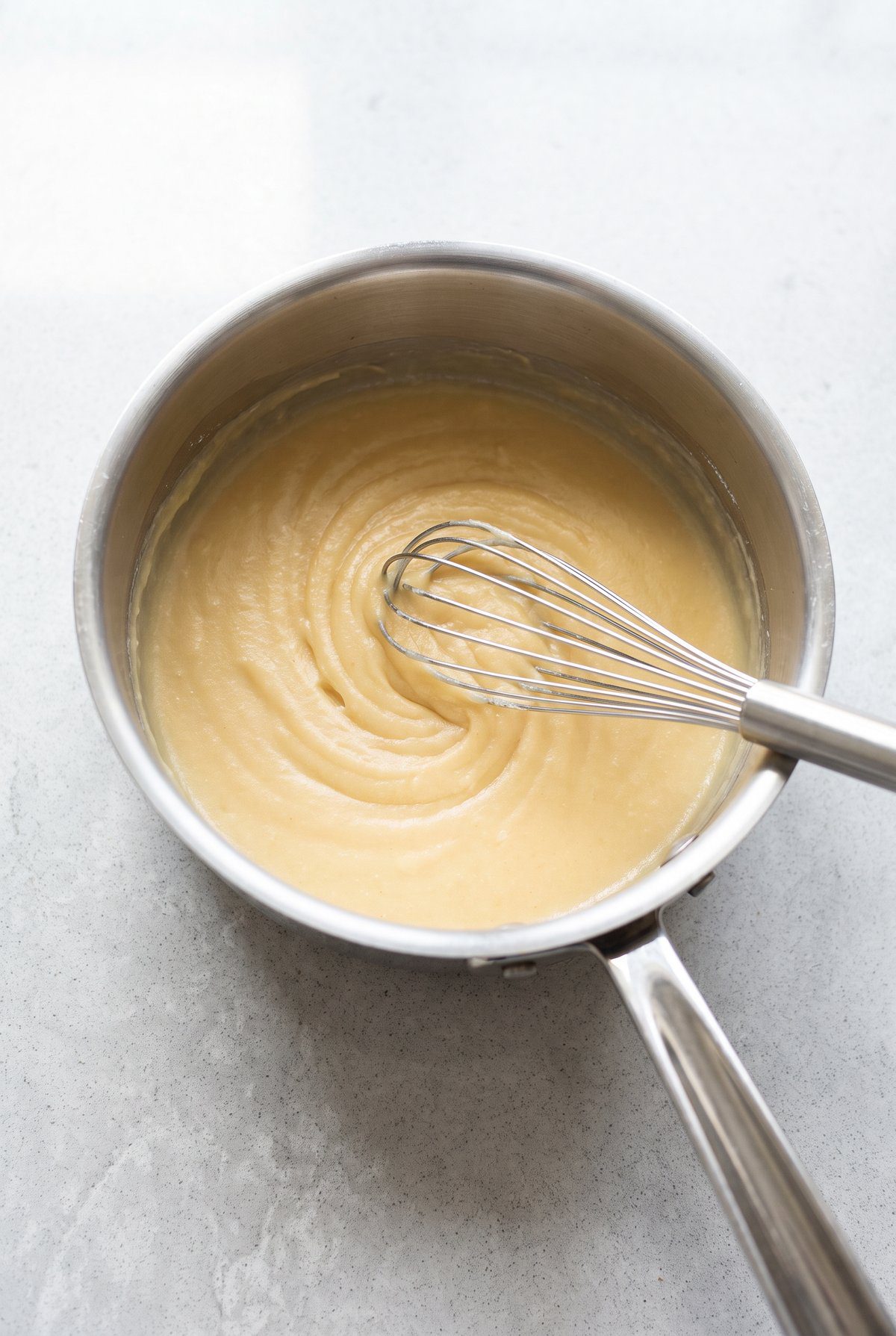
- Cook the roux: Heat the reserved 1/4 cup fat in a large skillet or saucepan over medium heat. Whisk in the flour and keep whisking 2-3 minutes, until the paste turns pale golden and smells toasty instead of raw.
- Add the liquid slowly: Pour in about 1 cup of the warm liquid and whisk hard until the pan is completely smooth, then add the rest in a steady stream, whisking the whole time.
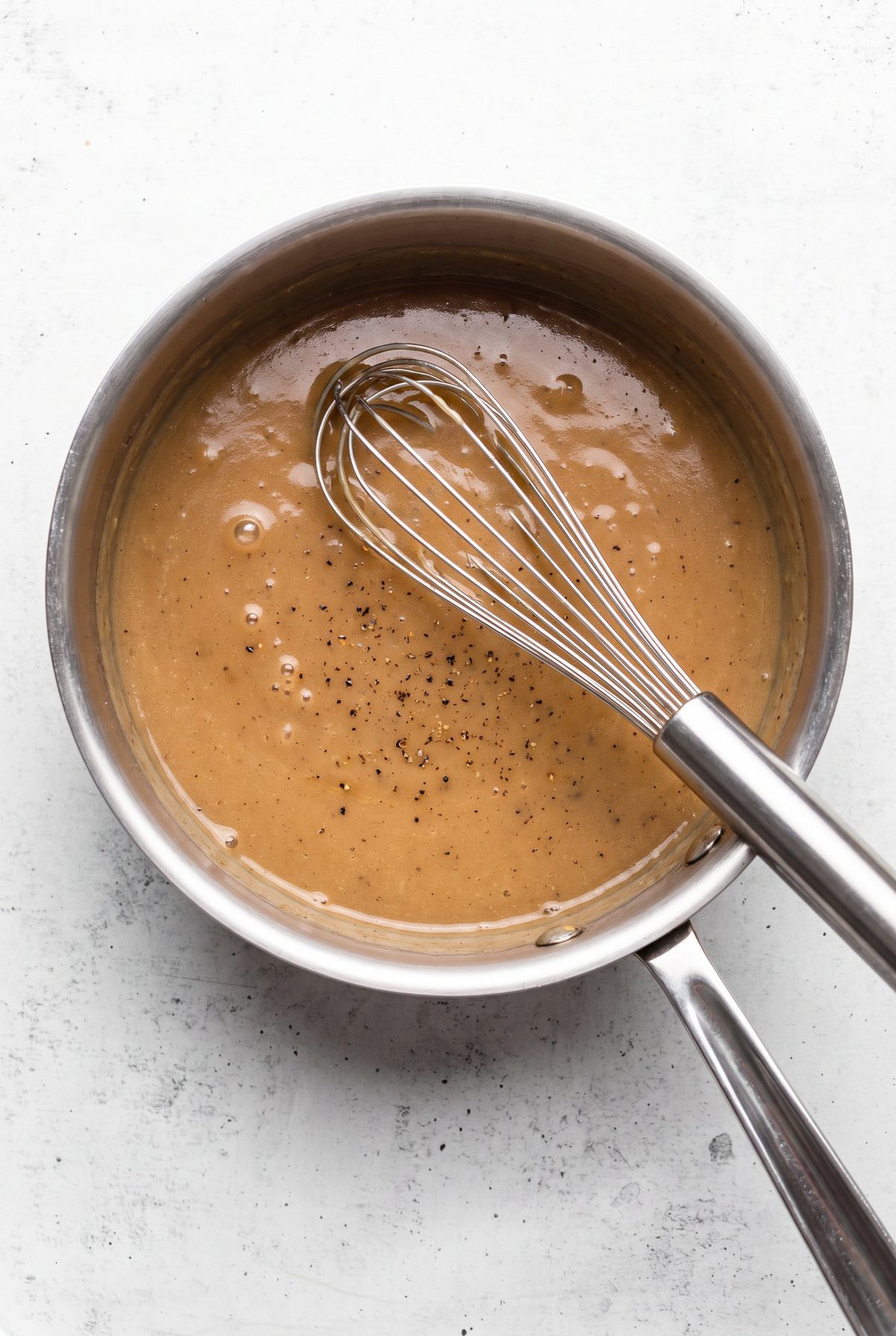
- Boil, then simmer: Bring the gravy to a full boil, then drop the heat and simmer 5-8 minutes, whisking now and then, until it coats the back of a spoon and holds a clean line when you swipe a finger through it.
- Season and serve: Stir in the pepper, plus the thyme and cream if you’re using them, then taste and add salt. Drippings and broth are both salty already, so taste before you reach for the shaker. Pour into a warmed gravy boat and serve right away.
Recipe FAQs
How Do I Fix Lumpy Gravy?
Pour it through a fine mesh strainer, pressing the lumps against the mesh with a spoon. An immersion blender right in the pan works too. Either one fixes it completely, so don’t start over.
What If I Don’t Have Enough Drippings?
Top up whatever you have with turkey or low-sodium chicken broth until you hit 3 cups. Most turkeys give you 1 to 2 cups of usable liquid, so this is normal rather than a failure.
Can I Make This Turkey Gravy Recipe Ahead of Time?
Yes. Make it with butter and broth up to 3 days ahead and refrigerate it. On the day, reheat it gently to 165°F and whisk in a few spoonfuls of the fresh drippings for that roasted flavor.
How Do I Make Gravy Thicker?
Simmer it a few more minutes uncovered first, since a lot of thin gravy just needs to reduce. If it’s still loose, whisk 1 tablespoon of cornstarch into 2 tablespoons of cold water, stir that in, and boil 1 minute.
Can I Make Gluten-Free Turkey Gravy?
Yes. Skip the roux entirely. Bring the 3 cups of liquid to a simmer, whisk in a slurry of 3 tablespoons cornstarch dissolved in 1/4 cup cold water, and boil 1-2 minutes until it thickens.
Cooking Tips
- Warm the liquid before it goes into the roux. Cold liquid seizes the flour paste into lumps you then have to whisk back out, while warm liquid goes smooth on its own.
- Cook the roux until it changes color. Raw flour tastes like raw flour, and two or three minutes over medium heat is what turns it nutty.
- Taste before you salt, every single time. Drippings from a brined or heavily seasoned bird can be salty enough that the gravy needs nothing at all.
Storage and Freezing
To store: Refrigerate in an airtight container for up to 4 days. It sets into a firm jelly when it’s cold, which is exactly what it should do.
To freeze: Freeze for up to 3 months in a zip-top bag laid flat. Flour-thickened gravy can separate a little on thawing, so thaw it in the fridge and whisk it hard as it warms.
To reheat: Warm it in a saucepan over medium-low heat, whisking, until it reaches 165°F. Add broth a tablespoon at a time to loosen it back to a pourable consistency.
How to Serve Turkey Gravy
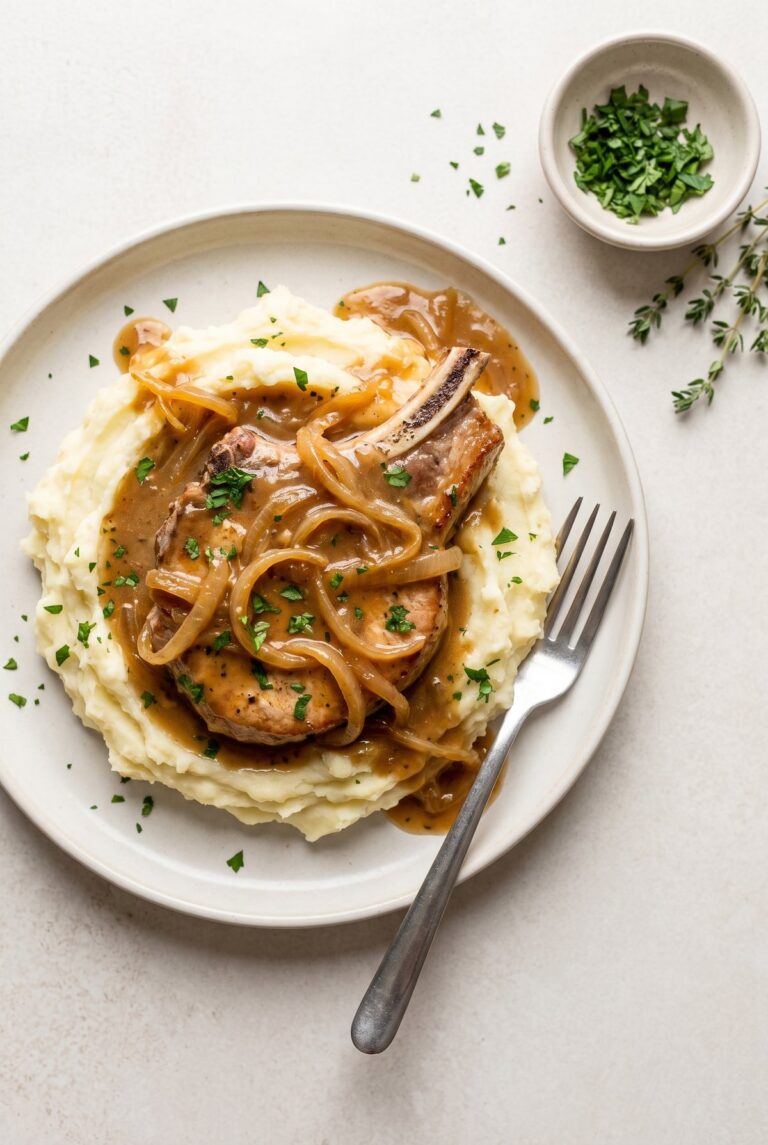
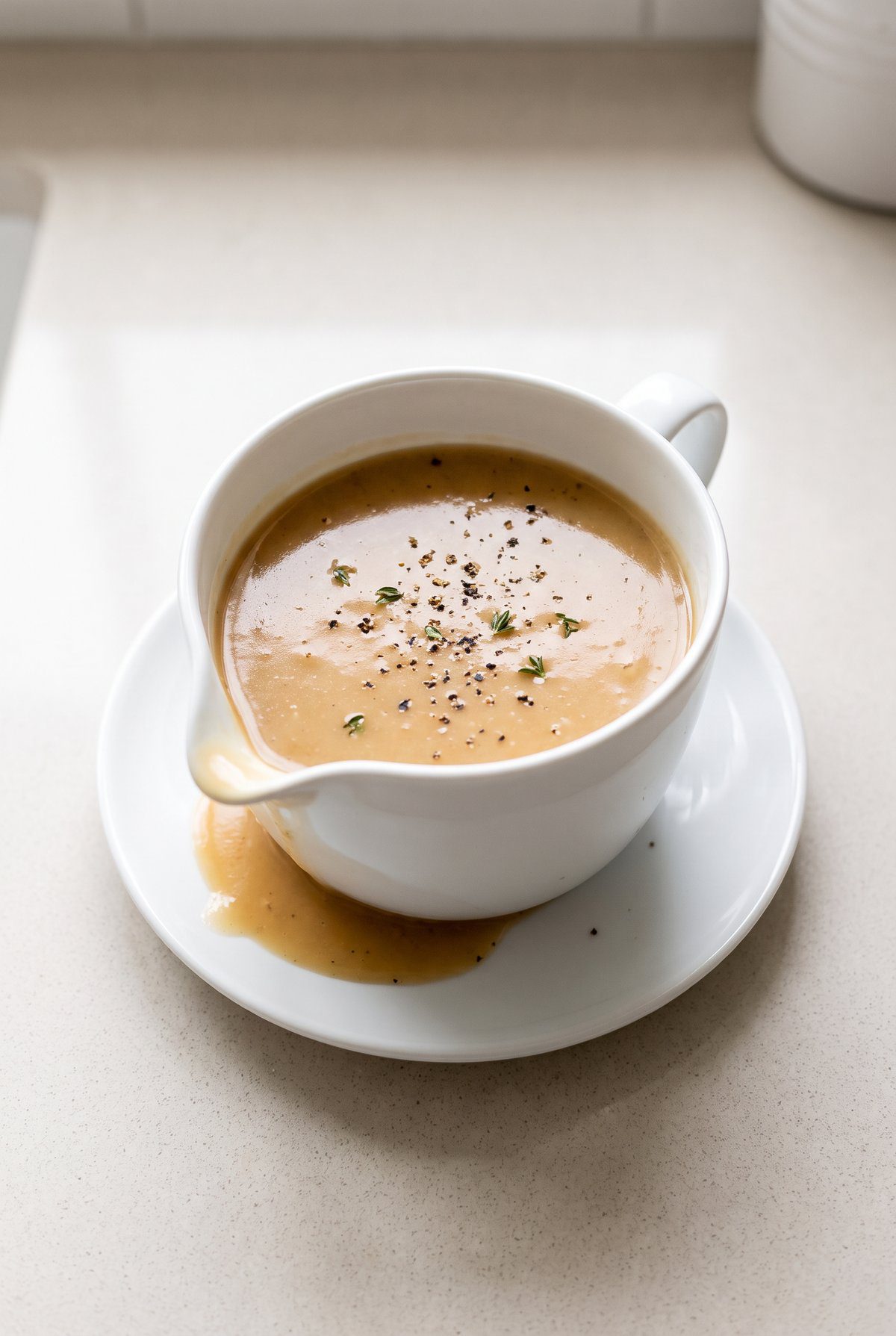
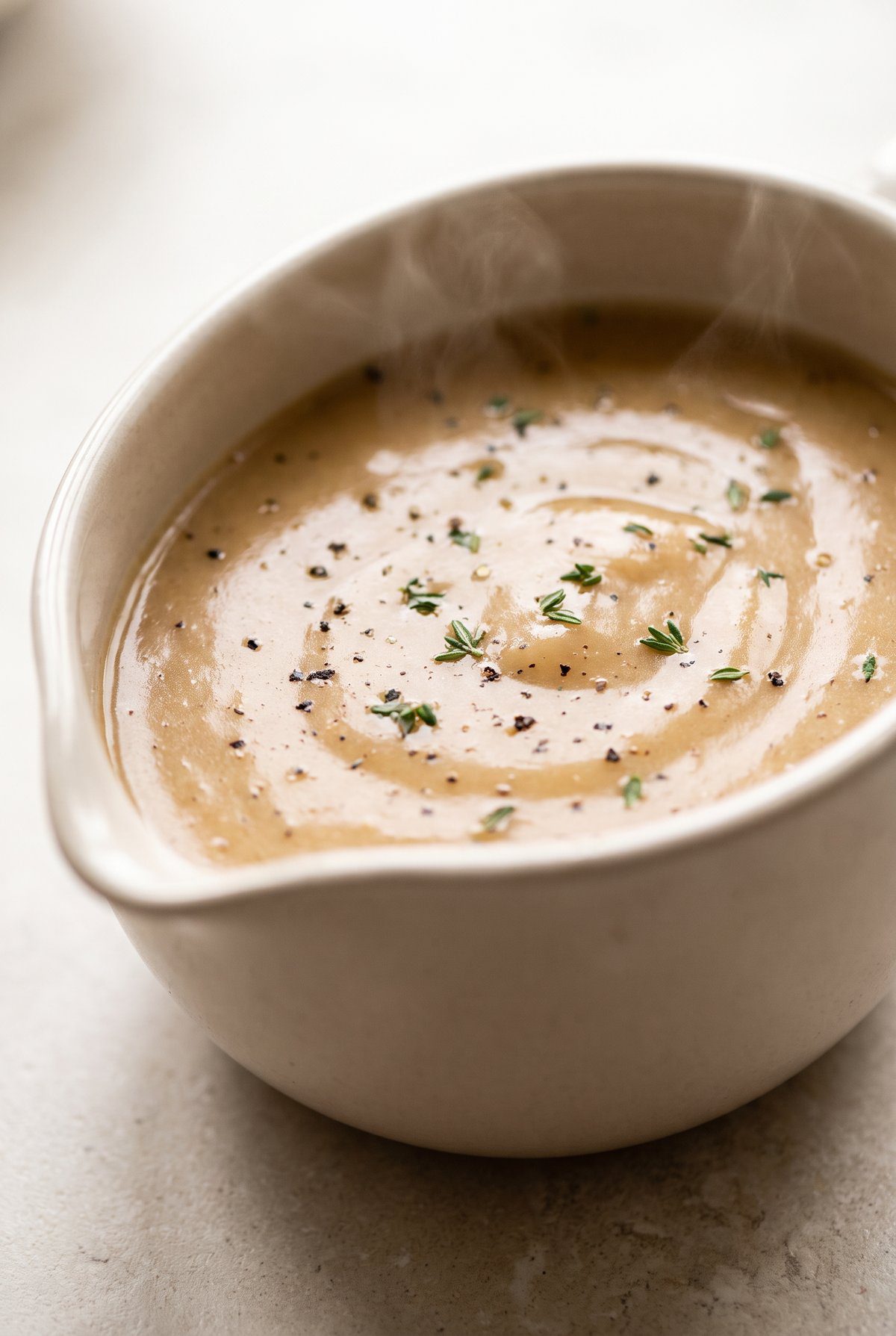
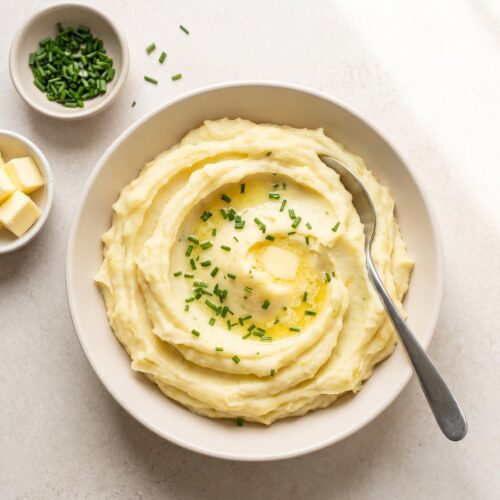
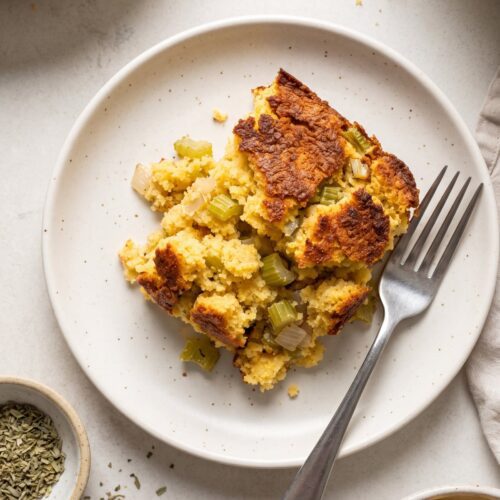
Turkey Gravy belongs on mashed potatoes first and everything else second: roast turkey, stuffing, dinner rolls, even the green bean casserole. Send it to the table in a warmed gravy boat, because gravy poured into a cold vessel skins over in about five minutes. Leftovers make an excellent hot turkey sandwich the next day, poured straight over the bread.
Loved This Recipe?
Turkey Gravy is the twenty minutes at the end of Thanksgiving that decides how the whole plate tastes.
Leave a star rating in the comments below, it helps other people find this recipe. Made it? Tag @allwellfed on Instagram, I love seeing this one in other people’s kitchens.
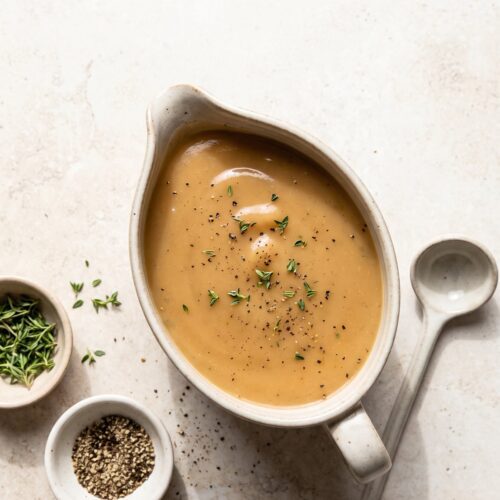
Turkey Gravy Recipe from Drippings
Equipment
Ingredients
- 1/4 cup turkey fat skimmed from the pan drippings, or unsalted butter
- 1/4 cup all-purpose flour
- 3 cups defatted pan drippings topped up with turkey or low-sodium chicken broth as needed
- 1/4 tsp black pepper
- salt to taste
- 1 tsp fresh thyme leaves chopped, optional
- 2 tbsp heavy cream optional

Instructions
- Strain the drippings: Tip everything from the roasting pan through a fine mesh strainer into a large measuring cup or a fat separator. Press the solids to get the last of the liquid out of them, then throw them away.
- Skim the fat: Let the liquid sit about 10 minutes. The fat rises into a clear yellow layer on top. Spoon off 1/4 cup of that fat and set it aside, then discard the rest. If the bird didn’t render 1/4 cup, make up the difference with unsalted butter.
- Measure the liquid: Measure what’s left under the fat. You want 3 cups. Top it up with turkey or low-sodium chicken broth if you’re short, and warm it in the microwave or a small pan so it isn’t cold when it hits the roux.
- Cook the roux: Heat the reserved 1/4 cup fat in a large skillet or saucepan over medium heat. Whisk in the flour and keep whisking 2-3 minutes, until the paste turns pale golden and smells toasty instead of raw.
- Add the liquid slowly: Pour in about 1 cup of the warm liquid and whisk hard until the pan is completely smooth, then add the rest in a steady stream, whisking the whole time.
- Boil, then simmer: Bring the gravy to a full boil, then drop the heat and simmer 5-8 minutes, whisking now and then, until it coats the back of a spoon and holds a clean line when you swipe a finger through it.
- Season and serve: Stir in the pepper, plus the thyme and cream if you’re using them, then taste and add salt. Drippings and broth are both salty already, so taste before you reach for the shaker. Pour into a warmed gravy boat and serve right away.
Notes

If you made this, leave a star rating down in the comments. It takes about ten seconds, and it’s how other cooks decide whether a recipe is worth trying.