Classic Pot Roast Recipe with Potatoes and Carrots
Pot roast recipe braised low and slow in one Dutch oven with a 3 pound chuck roast, baby potatoes, carrots, and a rich red wine gravy.
This post may contain affiliate links. See our disclosure policy.
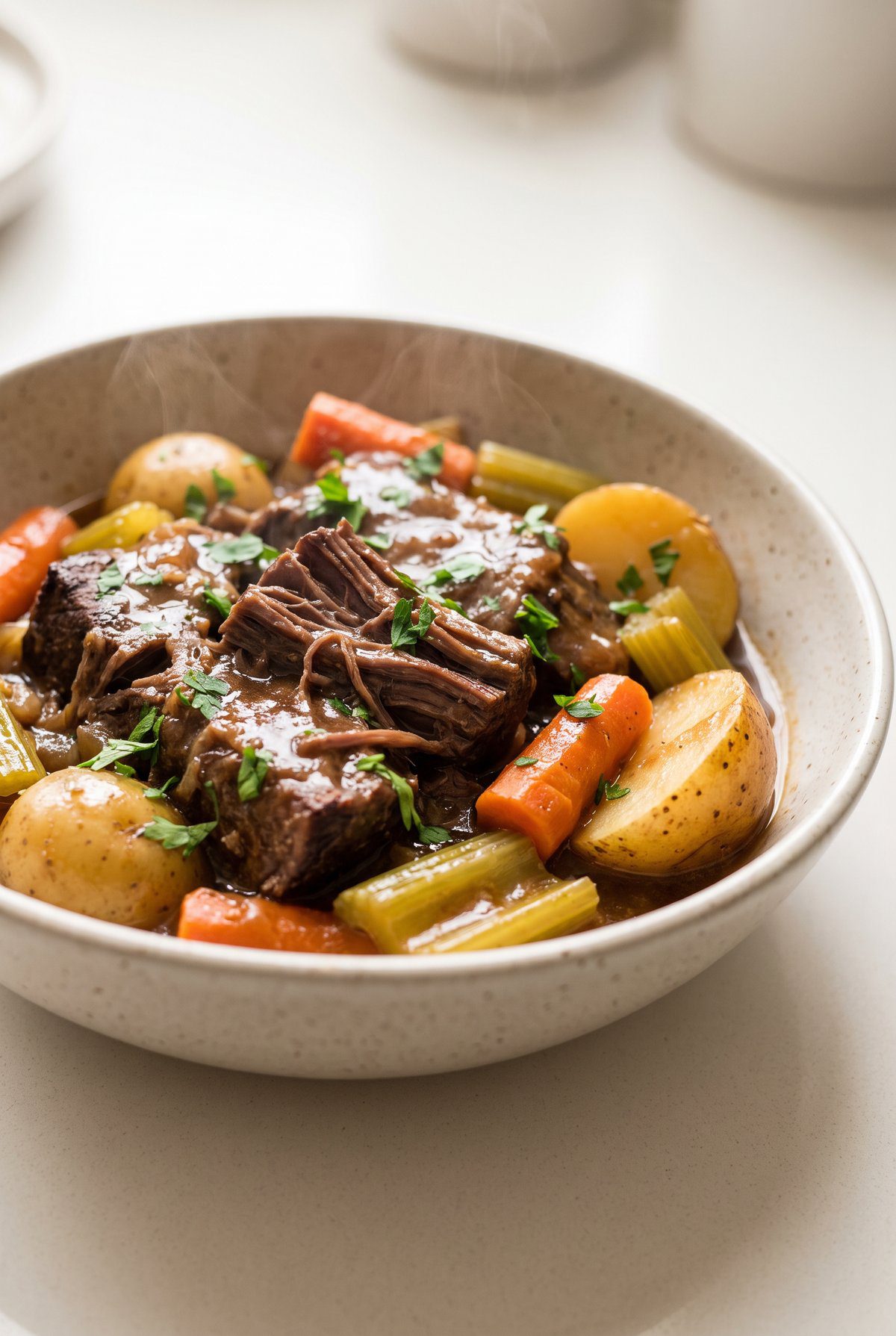
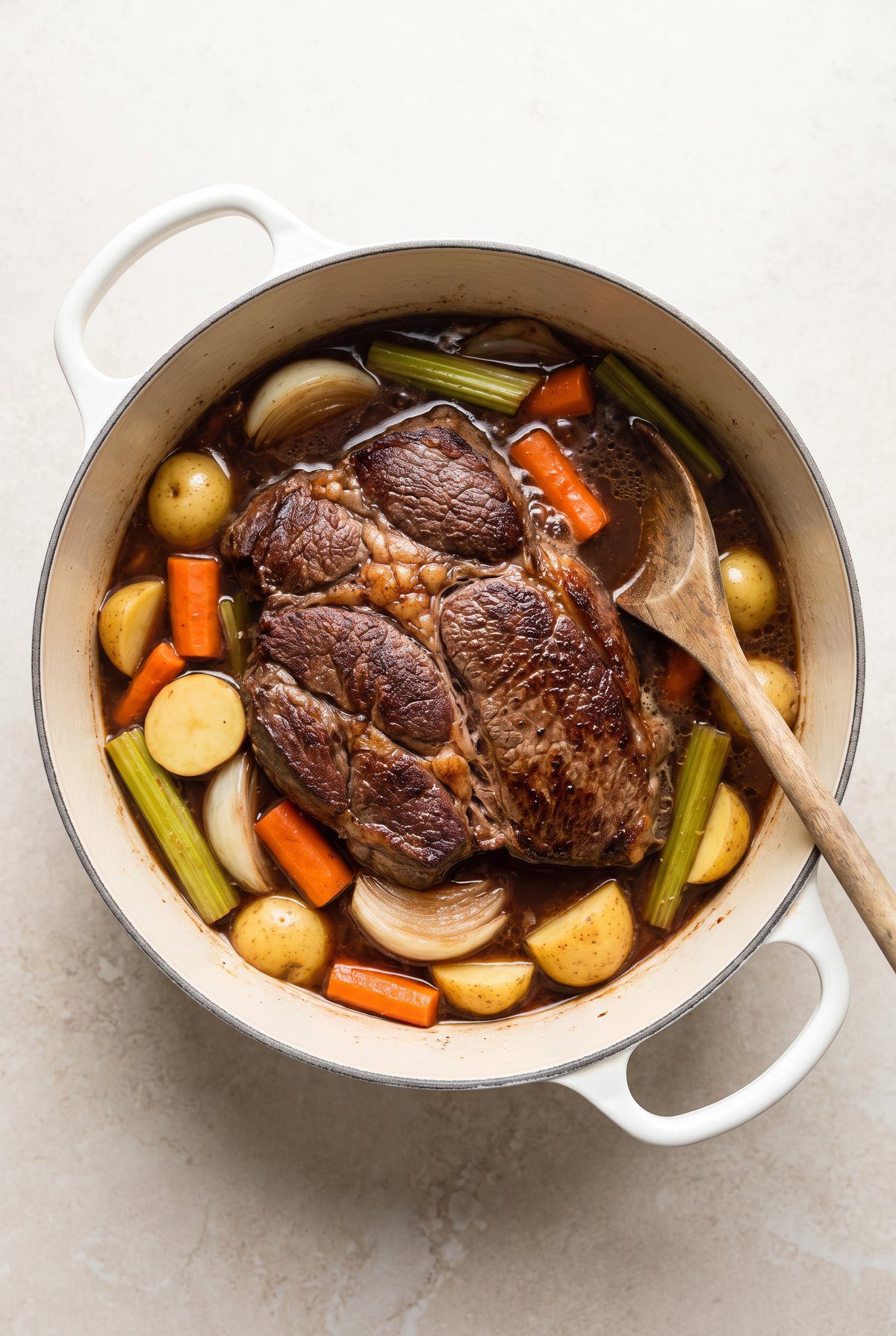
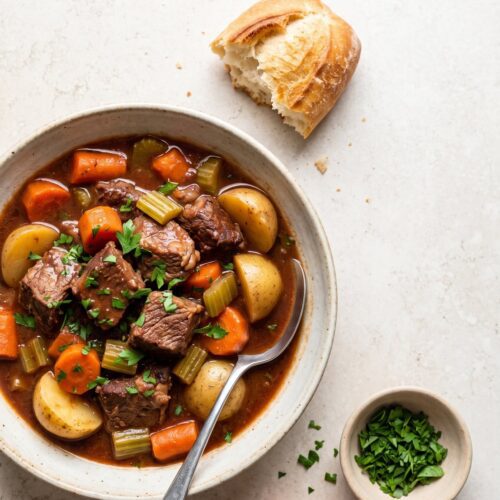
This pot roast recipe turns a cheap chuck roast into the kind of Sunday dinner people remember, and it all happens in one Dutch oven. The beef gets a hard sear, then four quiet hours in a low oven with red wine, broth, and herbs until it falls apart under a fork. Potatoes and carrots go in halfway through so they come out tender instead of dissolved.
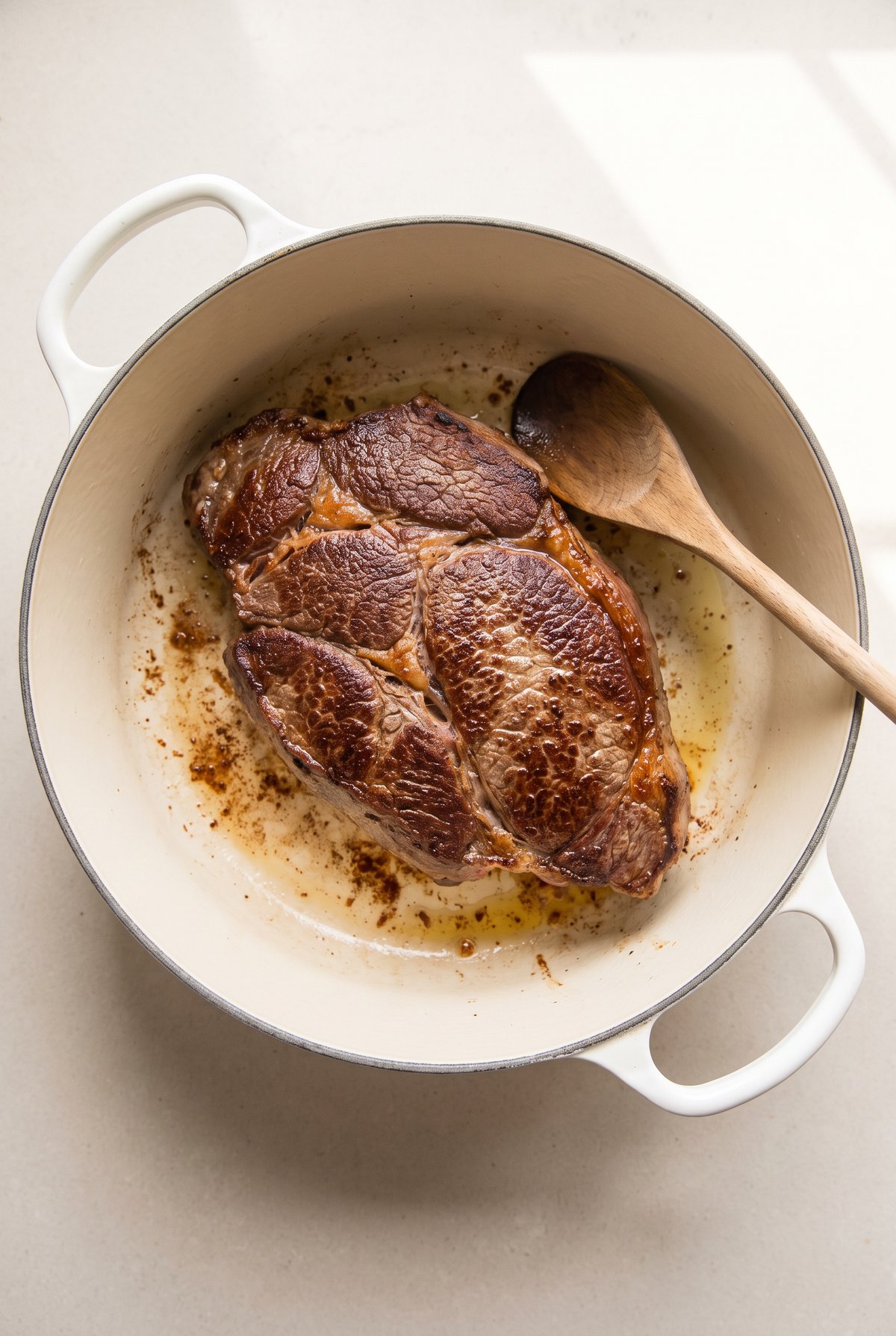
The sear is not optional. Those dark crusty patches on the outside of the roast are where most of the flavor in the finished gravy comes from, and there’s no way to add them back later. Give the roast a full 5 to 6 minutes a side and let it release from the pot on its own instead of prying it up with tongs.
The other thing worth knowing is that a pot roast is done twice. It passes 145°F, the USDA’s number for whole cuts of beef, about an hour in, and at that point it’s perfectly safe and tough as a boot. Keep going. The connective tissue doesn’t melt into gelatin until the meat is up around 200°F, and that’s the shreddable, spoon-tender stage everybody is actually after.
Why You’ll Love This Pot Roast Recipe
- One pot, start to finish. The sear, the braise, the vegetables, and the gravy all happen in the same Dutch oven, so cleanup is one pot and a cutting board.
- Cheap beef, expensive results. Chuck roast is one of the least expensive cuts at the counter, and four slow hours turn it into something that tastes like a restaurant plate.
- Hands off after the first 25 minutes. Once the lid goes on, the oven does everything. You get your afternoon back.
- Better the next day. The meat sits in its own gravy overnight and comes back even more tender, which makes it a genuinely good make-ahead dinner.
Pot Roast Ingredients
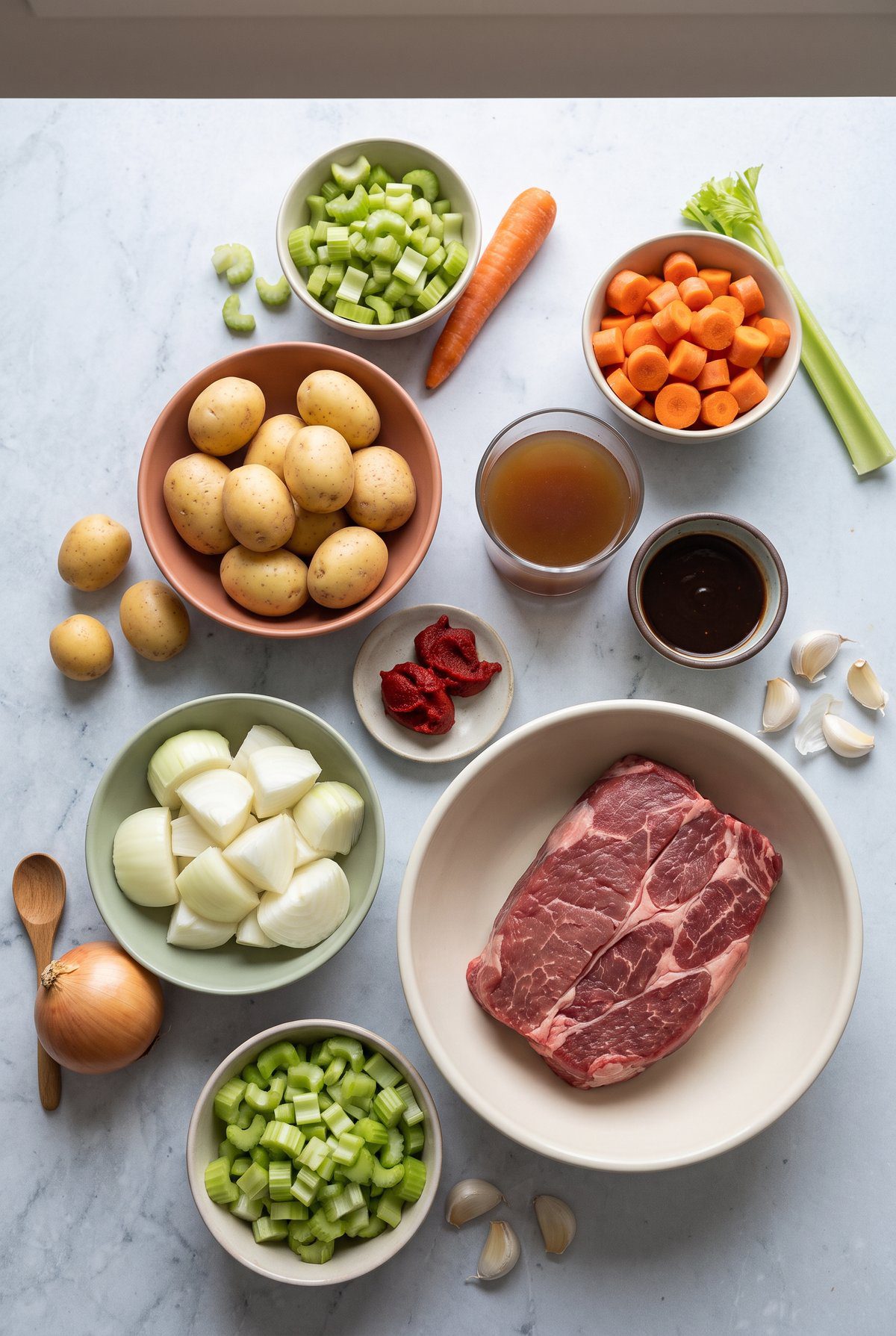
Buy a chuck roast, not a lean cut like eye of round or sirloin tip. Chuck is full of connective tissue and marbling, and that’s exactly what breaks down into a silky gravy over four hours. Lean roasts dry out and go stringy no matter how long you braise them.
- 3 1/2 lbs boneless beef chuck roast
- 2 tsp salt
- 1 tsp black pepper
- 2 tbsp vegetable oil
- 1 large yellow onion, cut into wedges
- 5 cloves garlic, smashed
- 3 tbsp tomato paste
- 1 cup dry red wine
- 3 cups beef broth
- 1 tbsp Worcestershire sauce
- 1 tsp dried thyme
- 1 tsp dried rosemary
- 2 bay leaves
- 1 1/2 lbs baby potatoes, halved if large
- 1 lb carrots, cut into 2-inch pieces
- 3 ribs celery, cut into 2-inch pieces
- 2 tbsp cornstarch
- 2 tbsp cold water
- 2 tbsp fresh parsley, chopped, for garnish
Recipe Variations
- Skip the wine and use 4 cups of beef broth total. Add an extra tablespoon of Worcestershire and a teaspoon of balsamic vinegar to make up for the acidity and depth the wine was carrying.
- Swap the baby potatoes for 2 pounds of Yukon Golds cut into 2-inch chunks. Keep the pieces big or they’ll fall apart over two hours in the pot.
- Use a 3 1/2 pound boneless pork shoulder instead of beef. Braise it exactly the same way and take it to the same fall-apart stage, which is well past the 145°F plus 3-minute rest the USDA sets for whole cuts of pork.
How to Make Pot Roast
- Season and sear the roast: Pat the chuck roast dry and season it all over with the salt and pepper. Heat the vegetable oil in a large Dutch oven over medium-high heat until it shimmers, then sear the roast for 5-6 minutes per side, until a deep brown crust forms and the meat releases from the pot on its own. Move it to a plate.
- Cook the onion and tomato paste: Turn the heat down to medium. Add the onion wedges and cook for 4-5 minutes, until the edges brown. Stir in the garlic and tomato paste and cook 1 minute more, until the paste darkens from bright red to brick.
- Deglaze with the wine: Pour in the red wine and scrape the bottom of the pot with a wooden spoon until every browned bit lifts. Simmer for 3 minutes to cook off the sharp alcohol edge.
- Build the braise: Heat the oven to 300°F. Stir in the beef broth, Worcestershire, thyme, rosemary, and bay leaves. Return the roast and any juices from the plate to the pot, cover with the lid, and slide it into the oven. Braise for 2 hours.
- Add the vegetables: Tuck the potatoes, carrots, and celery around the roast, cover again, and braise 2 hours more. The roast is ready when a fork twists in it with almost no resistance, around 200°F on an instant-read thermometer. That is well past the USDA’s 145°F plus a 3-minute rest for whole cuts of beef, which this roast clears in the first hour, but chuck stays tough until the connective tissue breaks down up near 200°F. If it still fights you, give it another 30 minutes and check again.
- Rest and make the gravy: Move the roast and vegetables to a platter and let them rest 15 minutes. Skim the fat off the liquid left in the pot, set it over medium heat, and whisk in the cornstarch stirred together with the cold water. Simmer 2-3 minutes, until it thickens into a glossy gravy. Fish out the bay leaves.
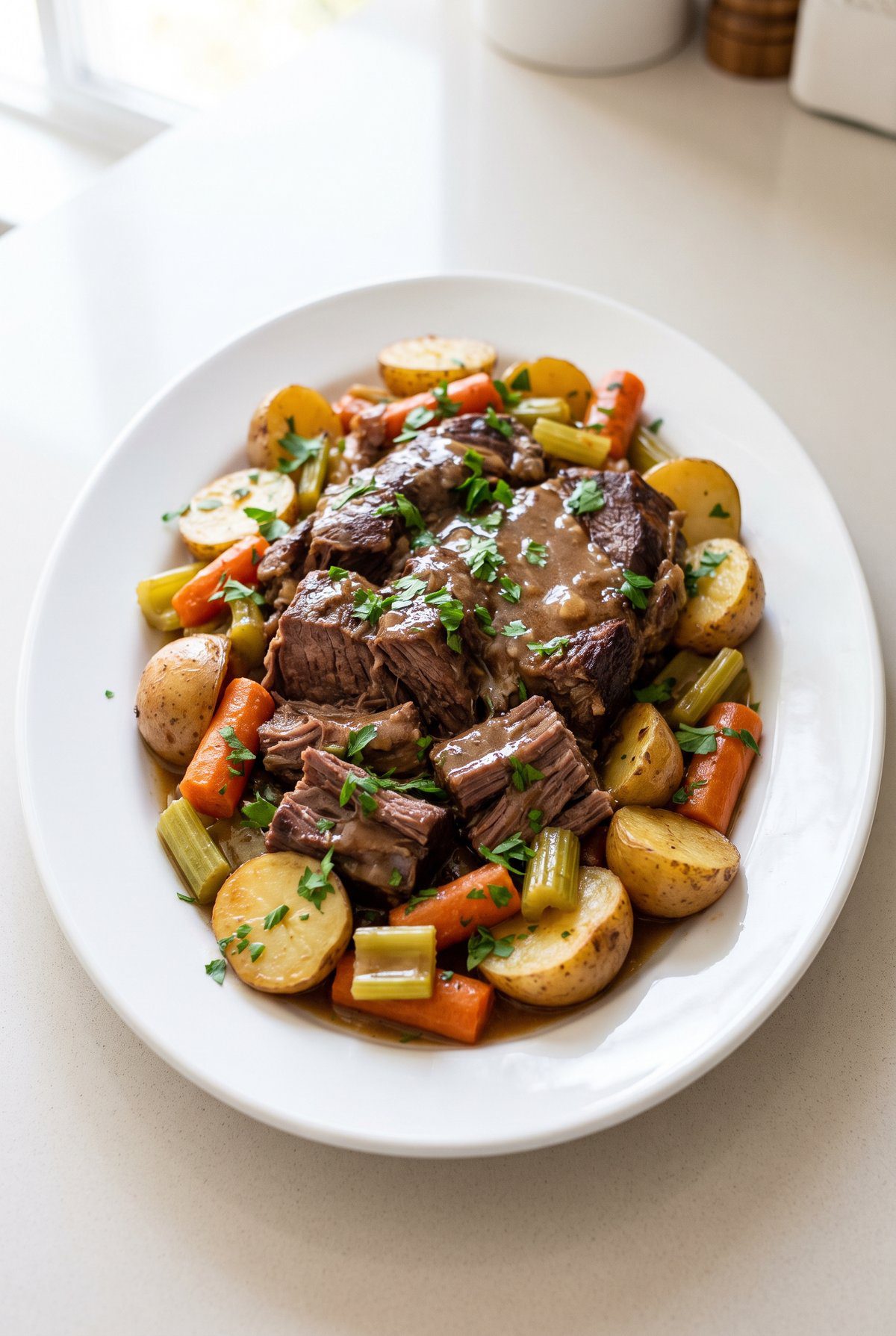
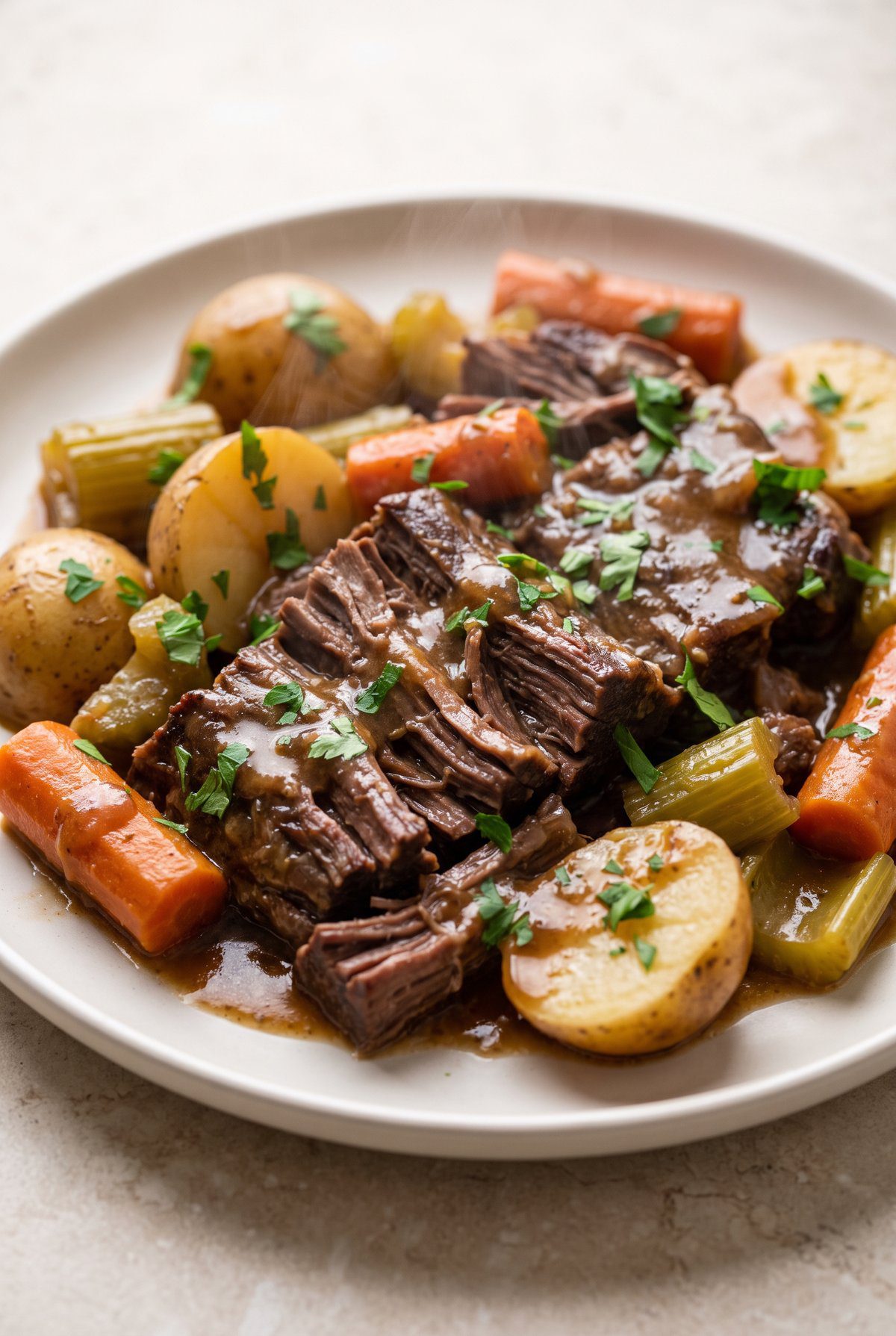
- Shred and serve: Pull the roast apart into big chunks with two forks, spoon the gravy over the meat and vegetables, and scatter the parsley on top.
Recipe FAQs
What Cut of Beef Is Best for a Pot Roast Recipe?
Boneless chuck roast, every time. It has the marbling and connective tissue that turn into gelatin over a long braise. Brisket flat and boneless short rib also work. Lean roasts like eye of round stay tough no matter how long you cook them.
Why Is My Pot Roast Tough?
It’s almost always undercooked, not overcooked. Chuck goes from tough to tender somewhere between 195°F and 205°F internal, and that takes hours. If a fork won’t twist in it easily, put the lid back on and give it another 30 minutes.
Can I Make Pot Roast in a Slow Cooker?
Yes. Sear the roast and cook the onion and tomato paste on the stove first, then move everything to a slow cooker with the liquid. Cook on low for 8 hours, adding the potatoes, carrots, and celery for the last 3 hours.
Do I Have to Use Red Wine?
No. Replace it with an extra cup of beef broth plus a teaspoon of balsamic vinegar. The wine brings acidity and depth, and the vinegar covers part of that.
When Should I Add the Vegetables?
Halfway through, at the 2 hour mark. Potatoes and carrots added at the start turn to mush over four hours. Two hours in the braise gets them tender and still holding their shape.
Cooking Tips
- Take the roast out of the fridge 30 minutes before it hits the pan. A cold surface drops the pot temperature the moment it lands, and the meat steams gray instead of browning.
- Keep the braising liquid at about halfway up the roast rather than covering it. The exposed top browns while the bottom braises, and you get a more concentrated gravy than a fully submerged roast gives you.
- Use a Dutch oven with a heavy, tight-fitting lid. A loose lid lets steam escape all afternoon, and you end up with less gravy and drier meat than you started out aiming for.
Storage and Freezing
To store: Refrigerate the meat, vegetables, and gravy together in an airtight container for up to 4 days. Storing everything in the liquid is what keeps the beef from drying out.
To freeze: Freezes well for up to 3 months. Freeze the meat and gravy together and leave the potatoes out if you can, since they turn grainy and mealy after thawing. Thaw overnight in the fridge.
To reheat: Warm gently in a covered pot over low heat, or in a 325°F oven for 20-25 minutes, until the beef reaches 165°F. Add a splash of broth if the gravy has tightened up too much.
How to Serve Pot Roast
Pot Roast already brings its own potatoes and carrots, so all it really needs is something to catch the gravy. Crusty bread, buttered egg noodles, or a scoop of mashed potatoes all work. A green salad with a sharp vinaigrette cuts through how rich the gravy is. Leftovers make very good sandwiches on soft rolls the next day.
Loved This Recipe?
Pot Roast takes an afternoon and almost no attention, and it turns the cheapest roast at the counter into the best dinner of the week.
Leave a star rating in the comments below, it helps other people find this recipe. Made it? Tag @allwellfed on Instagram, I love seeing this one in other people’s kitchens.
Classic Pot Roast Recipe with Potatoes and Carrots
Equipment
- Instant-Read Thermometer Done here is 200°F, which is well past safe. That is where the connective tissue gives up and it pulls apart with a fork.
Ingredients
- 3 1/2 lbs boneless beef chuck roast
- 2 tsp salt
- 1 tsp black pepper
- 2 tbsp vegetable oil
- 1 large yellow onion cut into wedges
- 5 cloves garlic smashed
- 3 tbsp tomato paste
- 1 cup dry red wine
- 3 cups beef broth
- 1 tbsp Worcestershire sauce
- 1 tsp dried thyme
- 1 tsp dried rosemary
- 2 bay leaves
- 1 1/2 lbs baby potatoes halved if large
- 1 lb carrots cut into 2-inch pieces
- 3 ribs celery cut into 2-inch pieces
- 2 tbsp cornstarch
- 2 tbsp cold water
- 2 tbsp fresh parsley chopped, for garnish

Instructions
- Season and sear the roast: Pat the chuck roast dry and season it all over with the salt and pepper. Heat the vegetable oil in a large Dutch oven over medium-high heat until it shimmers, then sear the roast for 5-6 minutes per side, until a deep brown crust forms and the meat releases from the pot on its own. Move it to a plate.
- Cook the onion and tomato paste: Turn the heat down to medium. Add the onion wedges and cook for 4-5 minutes, until the edges brown. Stir in the garlic and tomato paste and cook 1 minute more, until the paste darkens from bright red to brick.
- Deglaze with the wine: Pour in the red wine and scrape the bottom of the pot with a wooden spoon until every browned bit lifts. Simmer for 3 minutes to cook off the sharp alcohol edge.
- Build the braise: Heat the oven to 300°F. Stir in the beef broth, Worcestershire, thyme, rosemary, and bay leaves. Return the roast and any juices from the plate to the pot, cover with the lid, and slide it into the oven. Braise for 2 hours.
- Add the vegetables: Tuck the potatoes, carrots, and celery around the roast, cover again, and braise 2 hours more. The roast is ready when a fork twists in it with almost no resistance, around 200°F on an instant-read thermometer. That is well past the USDA’s 145°F plus a 3-minute rest for whole cuts of beef, which this roast clears in the first hour, but chuck stays tough until the connective tissue breaks down up near 200°F. If it still fights you, give it another 30 minutes and check again.
- Rest and make the gravy: Move the roast and vegetables to a platter and let them rest 15 minutes. Skim the fat off the liquid left in the pot, set it over medium heat, and whisk in the cornstarch stirred together with the cold water. Simmer 2-3 minutes, until it thickens into a glossy gravy. Fish out the bay leaves.
- Shred and serve: Pull the roast apart into big chunks with two forks, spoon the gravy over the meat and vegetables, and scatter the parsley on top.
Notes
If you made this, leave a star rating down in the comments. It takes about ten seconds, and it’s how other cooks decide whether a recipe is worth trying.