Classic Pozole Rojo with Pork and Hominy
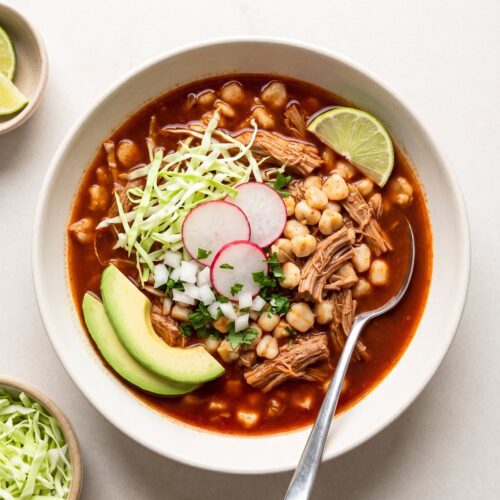
Pozole rojo made the traditional way with tender simmered pork shoulder, a toasted guajillo and ancho chile broth, and plenty of hominy.
This post may contain affiliate links. See our disclosure policy.
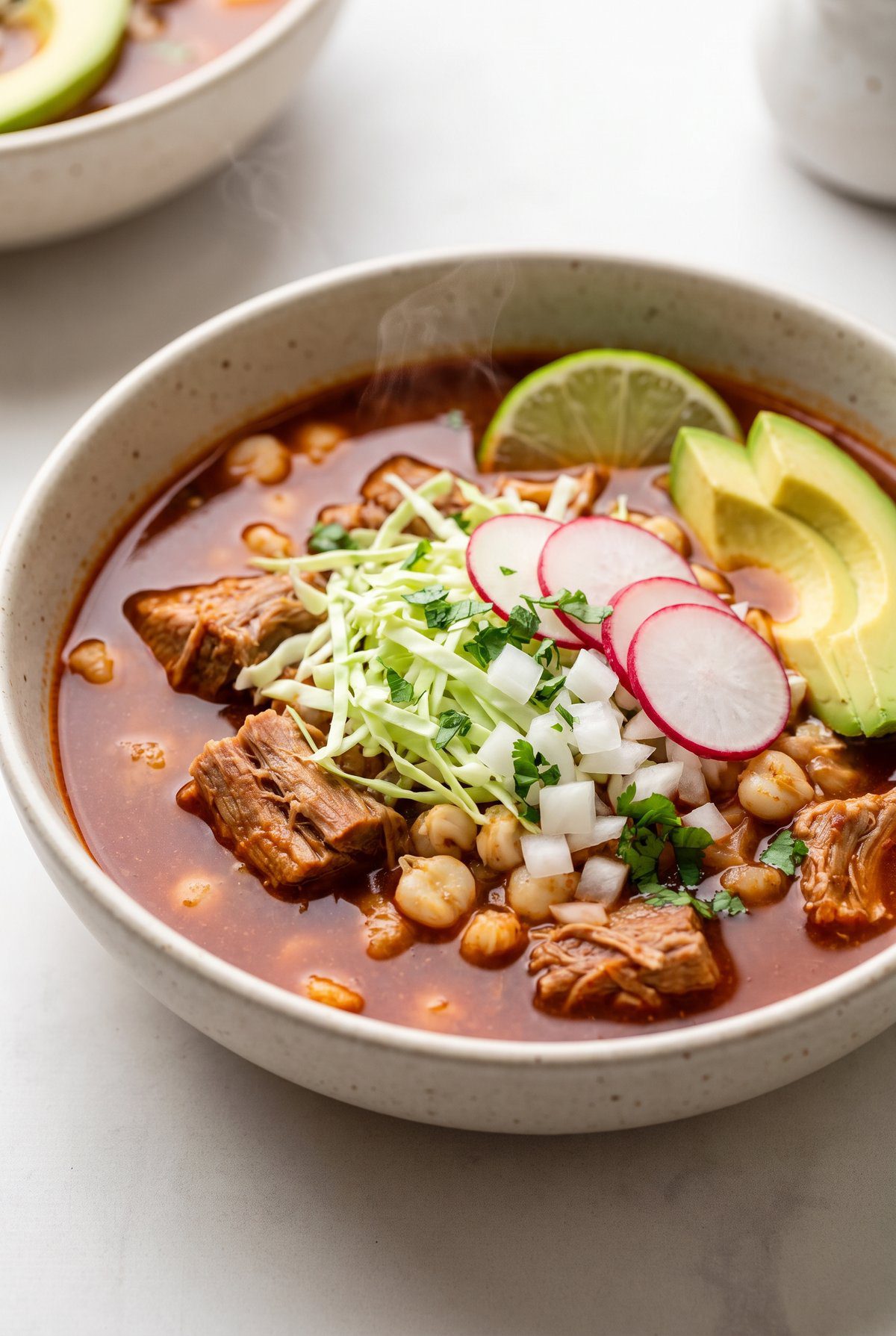
Pozole is the big pot of soup that turns an ordinary Sunday into an occasion. This pozole rojo is the classic red version: pork shoulder simmered until it falls apart, a broth built on toasted guajillo and ancho chiles, and hominy that stays chewy and a little sweet in every spoonful. Everyone builds their own bowl at the table from a tray of cabbage, radish, onion and lime.
The chiles are the whole personality of the dish. Toasting the dried pods in a dry skillet for about thirty seconds a side wakes them up before they soak, and blending them into a smooth red sauce is what gives the broth its deep brick color. Skip the toasting and the soup comes out flat and vaguely dusty, which is the most common thing that goes wrong.
Give the pork its time. Cubes of shoulder need close to two hours at a bare simmer before the collagen melts and the meat shreds under a fork. It’s mostly hands-off, so start it early, chop the garnishes while it works, and let the kitchen fill up with the smell.
Why You’ll Love This Pozole Recipe
- A broth with real chile flavor. Toasted guajillos and anchos blended smooth give the soup its deep red color and a mild, fruity warmth rather than a sharp burn.
- Pork that shreds under a fork. Almost two hours at a low simmer melts the collagen in pork shoulder into something silky.
- Everyone builds their own bowl. A tray of cabbage, radish, onion, lime and avocado lets picky eaters keep it plain while everyone else piles it on.
- It feeds a crowd cheaply. Pork shoulder and canned hominy are two of the least expensive things at the store, and this makes 8 big bowls.
Pozole Ingredients
Look for whole dried guajillo and ancho pods in the Mexican aisle or at a Latin grocery. They should still bend without cracking. Brittle, faded chiles have sat on the shelf too long and won’t give you much color or flavor no matter how long you soak them.
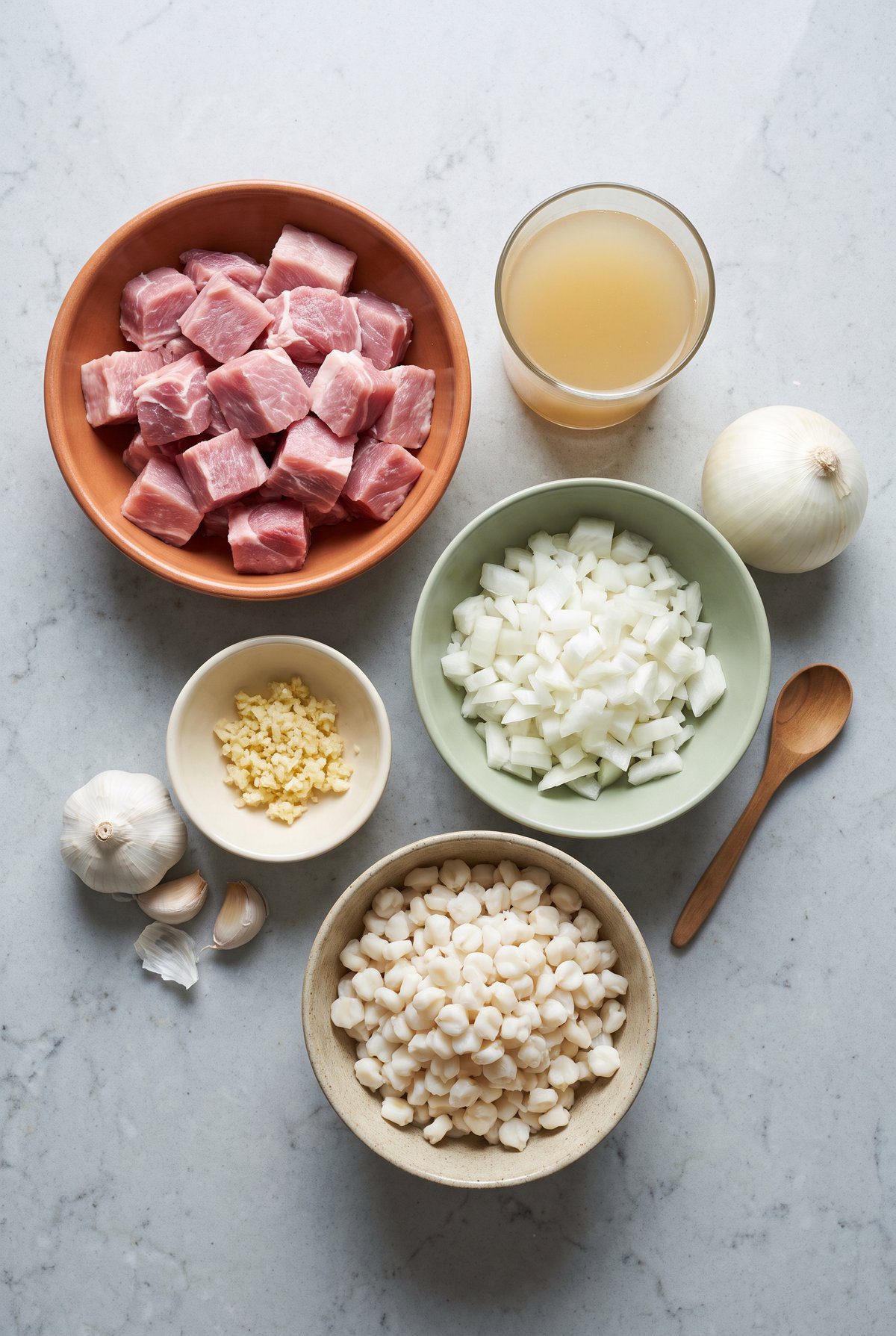
- 3 lbs boneless pork shoulder, cut into 1 1/2-inch cubes
- 2 tsp salt, for the pork
- 1 tbsp vegetable oil
- 1 large white onion, quartered
- 6 cloves garlic, peeled
- 2 bay leaves
- 1 tbsp dried Mexican oregano
- 1 tsp ground cumin
- 8 cups chicken broth
- 6 dried guajillo chiles, stems and seeds removed
- 3 dried ancho chiles, stems and seeds removed
- 2 dried chiles de arbol, stems removed (optional)
- 1 tsp salt, for the chile sauce
- 2 (15.5 oz) cans white hominy, drained and rinsed
- 3 cups shredded green cabbage, for serving
- 6 radishes, thinly sliced, for serving
- 1/2 white onion, finely diced, for serving
- 1/4 cup fresh cilantro, chopped, for serving
- 2 limes, cut into wedges, for serving
- 1 avocado, sliced, for serving
- Tostadas or tortilla chips, for serving
Recipe Variations
- Make it with chicken instead of pork. Use 3 pounds of bone-in chicken thighs, simmer them 45 minutes until the meat pulls off the bone and reaches 165°F on a thermometer, then shred it and return it to the pot.
- Pozole verde swaps the red chile sauce for a green one. Blend 1 pound of husked tomatillos with 2 poblanos, 2 jalapeños, a handful of cilantro and 1/2 cup of pumpkin seeds, then stir that in instead of the guajillo and ancho puree.
- Add the chiles de arbol if your family likes heat. Two pods make the broth warm rather than hot, and four will have people reaching for their drinks.
How to Make Pozole
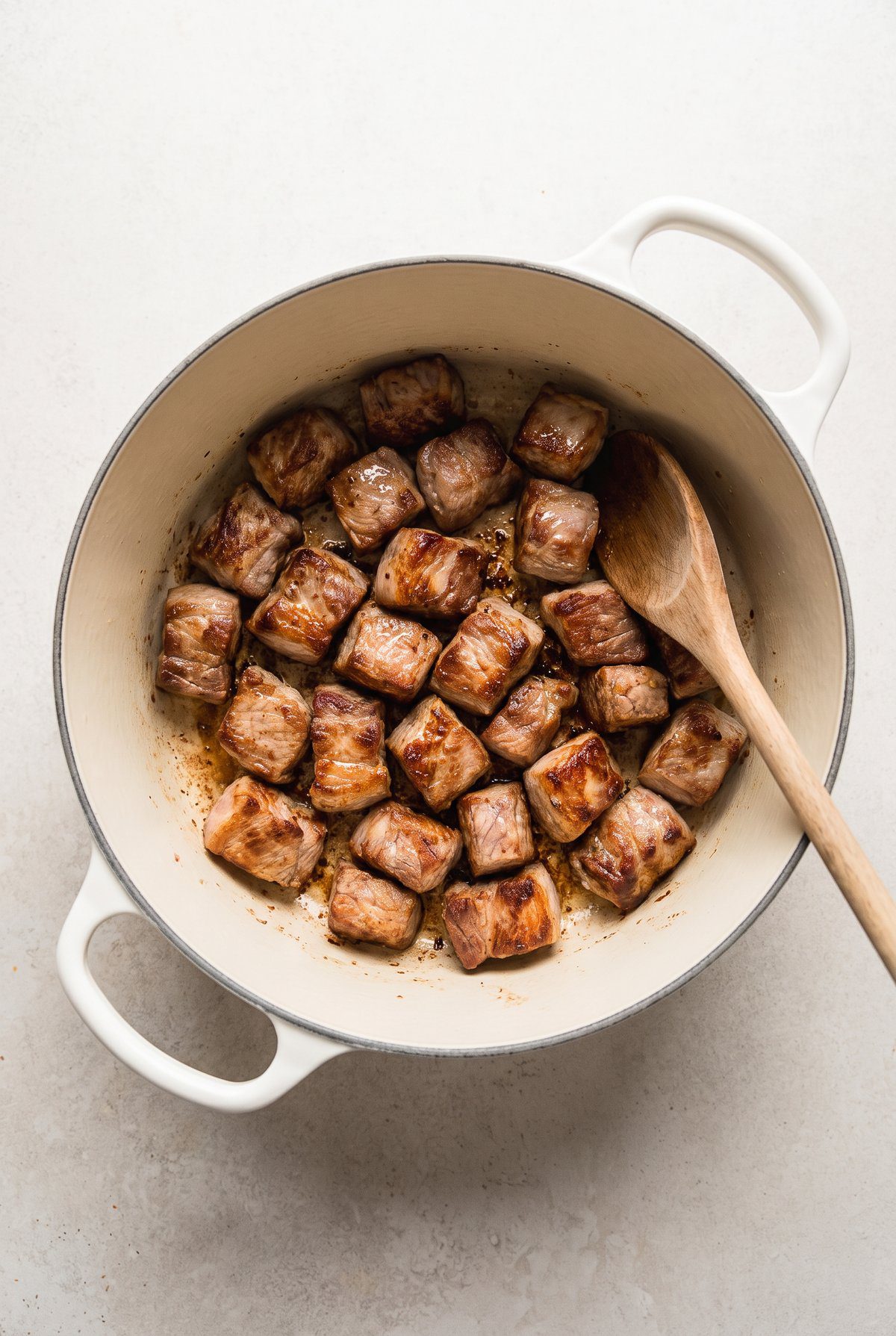
- Sear the pork: Pat the pork cubes dry and season them with the 2 teaspoons of salt. Heat the oil in a large Dutch oven or stockpot over medium-high heat and brown the pork in two batches, about 5 minutes per batch, until the outsides are deeply colored. Don’t crowd the pot or the meat steams instead of browning.
- Start the simmer: Return all the pork to the pot with the quartered onion, garlic cloves, bay leaves, Mexican oregano, cumin and chicken broth. Bring it to a boil, then drop the heat to low, cover, and simmer 1 hour and 45 minutes. Skim the foam off the top during the first 20 minutes.
- Toast and soak the chiles: While the pork simmers, heat a dry skillet over medium. Toast the guajillo and ancho chiles, plus the arbol chiles if you’re using them, about 30 seconds per side, just until they smell warm and a little smoky. Pull them before they darken or the sauce turns bitter. Cover them with 3 cups of hot water and soak 20 minutes, until soft and pliable.
- Blend the red chile sauce: Lift the softened chiles into a blender with 1 1/2 cups of their soaking liquid and the 1 teaspoon of salt. Blend on high for a full minute, until completely smooth. Pour it through a fine mesh strainer, pressing on the solids, and discard the skins left behind. That strain is what makes the broth silky instead of gritty.
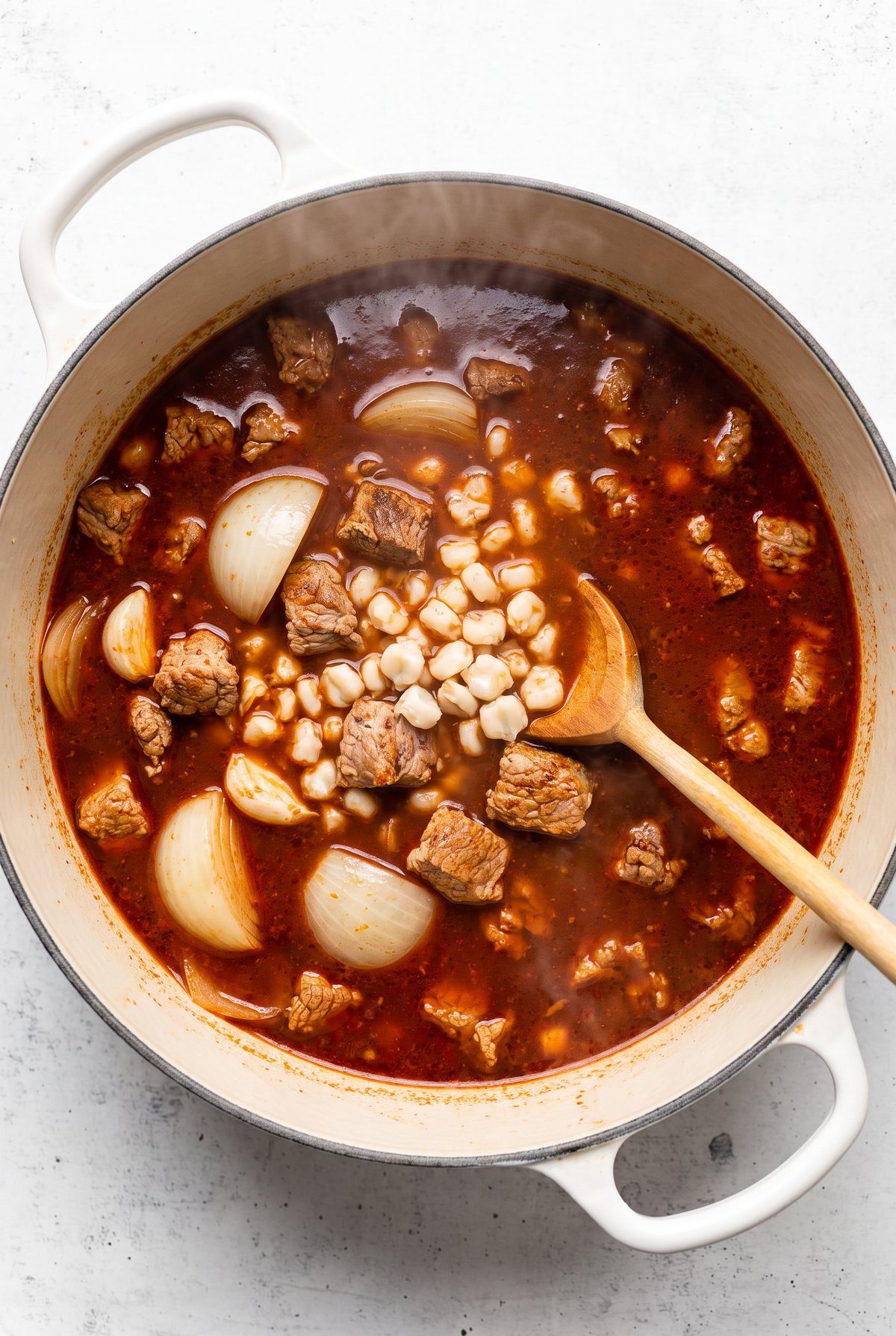
- Add the sauce and hominy: Stir the strained chile sauce and the drained hominy into the pot. Simmer uncovered for 35 minutes, until the broth turns deep brick red and a cube of pork pulls apart under a fork with no resistance, around 195°F on a thermometer. Pork clears the USDA’s 145°F minimum well before this point, and the extra time is what melts the collagen and makes the meat tender.
- Fish out the aromatics and season: Remove the bay leaves and the onion quarters. Taste the broth and add salt until it tastes seasoned rather than flat. A pot this size usually takes another teaspoon or two.
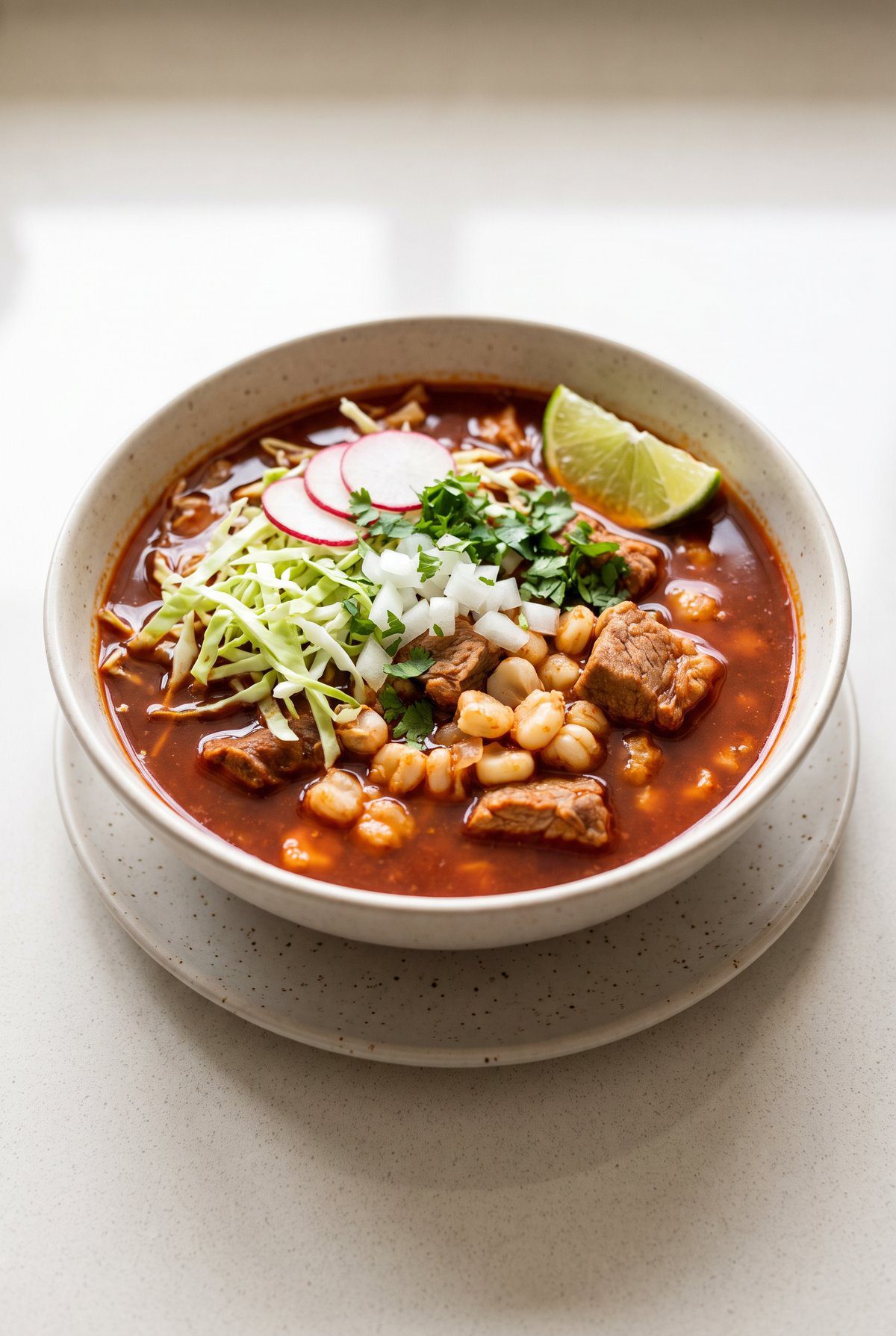
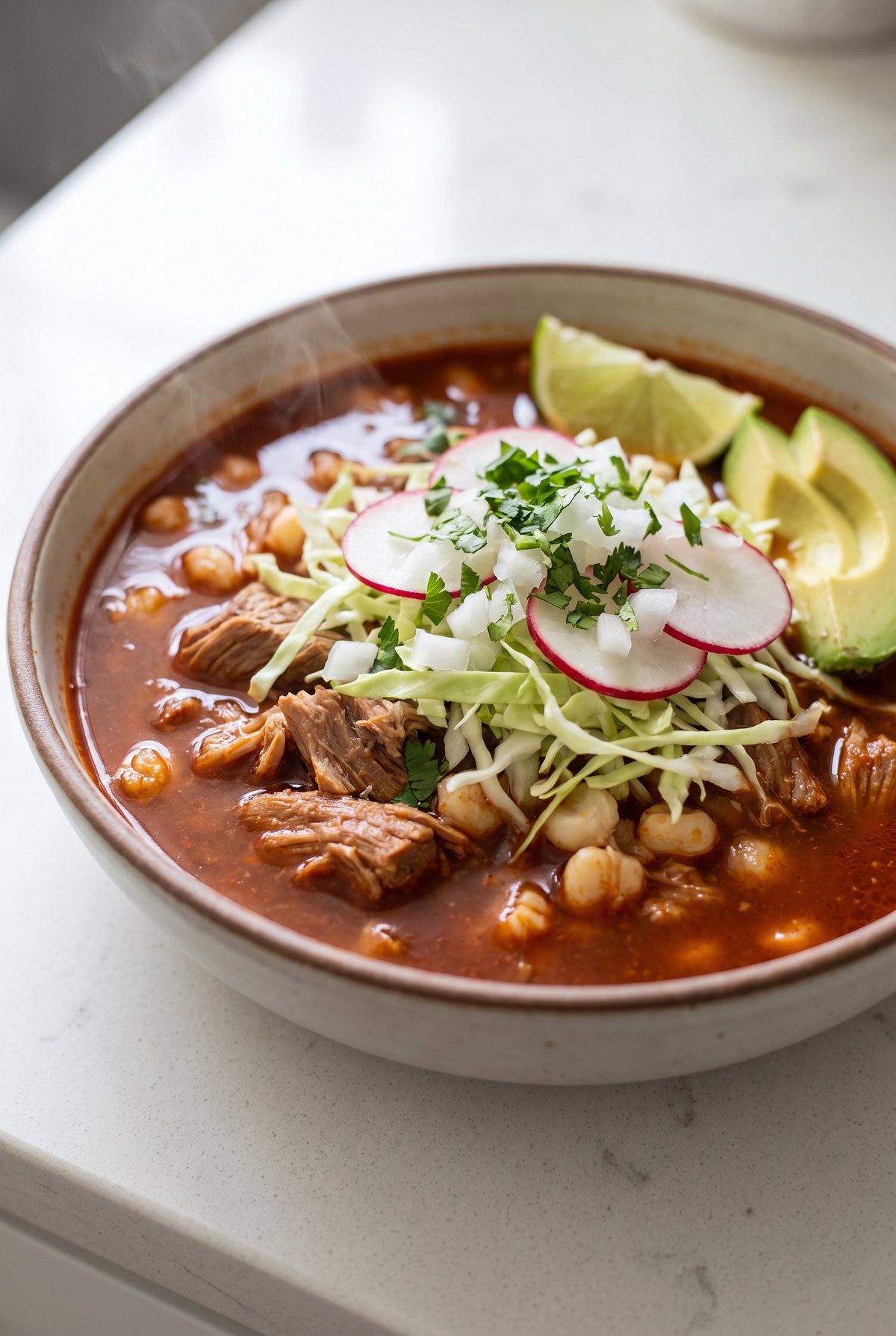
- Set out the garnishes and serve: Put the shredded cabbage, radishes, diced onion, cilantro, lime wedges and avocado in bowls on the table. Ladle the pozole into wide bowls and let everyone top their own, with tostadas or tortilla chips alongside.
Recipe FAQs
What Is Pozole?
Pozole is a Mexican soup built on hominy and slow-simmered meat, most often pork. The red version, pozole rojo, gets its color from dried guajillo and ancho chiles blended into the broth. It’s traditionally made for celebrations, with a tray of raw garnishes on the table so everyone finishes their own bowl.
Is It Spelled Pozole or Posole?
Both spellings show up. Pozole is the standard Mexican spelling and posole is common in New Mexico. Same soup either way.
Can I Use Canned Hominy Instead of Dried?
Canned works and is what most home cooks use. Drain and rinse it well before it goes in. Dried hominy needs an overnight soak plus 2 to 3 hours of its own simmering, so start it a day ahead if you want to go that route.
Is Pozole Spicy?
Not very. Guajillo and ancho chiles are mild, so the base broth tastes fruity and deep rather than hot. The heat comes from the optional chiles de arbol and from whatever hot sauce people add at the table.
Can I Make Pozole in a Slow Cooker?
Yes. Sear the pork first, then move it to a slow cooker with the aromatics and broth and cook on low for 7 to 8 hours, until it shreds easily. Stir in the strained chile sauce and the hominy for the last hour so the flavors come together.
Cooking Tips
- Keep a cup of the chile soaking water in a jar even after you blend. If the finished broth tastes thin, that liquid adds chile flavor back without watering down the pot the way plain broth would.
- Pull the toasted chiles off the heat the second they smell fragrant. Dried chiles go from toasted to scorched in about ten seconds, and one burnt pod makes the whole batch of sauce taste bitter.
- Chill the pot overnight if you have the time. The fat rises and sets into a cap you can lift off in one piece, and the broth tastes noticeably better on day two.
Storage and Freezing
To store: Refrigerate the pozole in an airtight container for up to 4 days. Store the garnishes separately so the cabbage and radishes stay crisp.
To freeze: It freezes well for up to 3 months. Freeze the soup without the garnishes and thaw it overnight in the fridge. Hominy holds its texture through a freeze better than most things do.
To reheat: Warm it on the stove over medium heat, stirring now and then, until it’s steaming and reaches 165°F. Add a splash of broth if it thickened in the fridge, and cut fresh garnishes.
How to Serve Pozole
Pozole is a whole meal in a bowl, so all it really needs is the garnish tray and something to scoop with. Tostadas, tortilla chips or warm corn tortillas all work. The squeeze of lime right before the first bite is the step people skip and then regret, since that acid is what cuts through all the rich pork broth.
Loved This Recipe?
Pozole takes an afternoon of mostly hands-off simmering and turns into the kind of dinner people still talk about the next day.
Leave a star rating in the comments below, it helps other people find this recipe. Made it? Tag @allwellfed on Instagram, I love seeing this one in other people’s kitchens.
Classic Pozole Rojo with Pork and Hominy
Equipment
- Instant-Read Thermometer Done here is 195°F, which is well past safe. That is where the connective tissue gives up and it pulls apart with a fork.
Ingredients
- 3 lbs boneless pork shoulder cut into 1 1/2-inch cubes
- 2 tsp salt for the pork
- 1 tbsp vegetable oil
- 1 large white onion quartered
- 6 cloves garlic peeled
- 2 bay leaves
- 1 tbsp dried Mexican oregano
- 1 tsp ground cumin
- 8 cups chicken broth
- 6 dried guajillo chiles stems and seeds removed
- 3 dried ancho chiles stems and seeds removed
- 2 dried chiles de arbol stems removed, optional
- 1 tsp salt for the chile sauce
- 2 (15.5 oz) cans white hominy drained and rinsed
- 3 cups shredded green cabbage for serving
- 6 radishes thinly sliced, for serving
- 1/2 white onion finely diced, for serving
- 1/4 cup fresh cilantro chopped, for serving
- 2 limes cut into wedges, for serving
- 1 avocado sliced, for serving
- tostadas or tortilla chips for serving

Instructions
- Sear the pork: Pat the pork cubes dry and season them with the 2 teaspoons of salt. Heat the oil in a large Dutch oven or stockpot over medium-high heat and brown the pork in two batches, about 5 minutes per batch, until the outsides are deeply colored. Don’t crowd the pot or the meat steams instead of browning.
- Start the simmer: Return all the pork to the pot with the quartered onion, garlic cloves, bay leaves, Mexican oregano, cumin and chicken broth. Bring it to a boil, then drop the heat to low, cover, and simmer 1 hour and 45 minutes. Skim the foam off the top during the first 20 minutes.
- Toast and soak the chiles: While the pork simmers, heat a dry skillet over medium. Toast the guajillo and ancho chiles, plus the arbol chiles if you’re using them, about 30 seconds per side, just until they smell warm and a little smoky. Pull them before they darken or the sauce turns bitter. Cover them with 3 cups of hot water and soak 20 minutes, until soft and pliable.
- Blend the red chile sauce: Lift the softened chiles into a blender with 1 1/2 cups of their soaking liquid and the 1 teaspoon of salt. Blend on high for a full minute, until completely smooth. Pour it through a fine mesh strainer, pressing on the solids, and discard the skins left behind. That strain is what makes the broth silky instead of gritty.
- Add the sauce and hominy: Stir the strained chile sauce and the drained hominy into the pot. Simmer uncovered for 35 minutes, until the broth turns deep brick red and a cube of pork pulls apart under a fork with no resistance, around 195°F on a thermometer. Pork clears the USDA’s 145°F minimum well before this point, and the extra time is what melts the collagen and makes the meat tender.
- Fish out the aromatics and season: Remove the bay leaves and the onion quarters. Taste the broth and add salt until it tastes seasoned rather than flat. A pot this size usually takes another teaspoon or two.
- Set out the garnishes and serve: Put the shredded cabbage, radishes, diced onion, cilantro, lime wedges and avocado in bowls on the table. Ladle the pozole into wide bowls and let everyone top their own, with tostadas or tortilla chips alongside.
Notes


If you made this, leave a star rating down in the comments. It takes about ten seconds, and it’s how other cooks decide whether a recipe is worth trying.