Classic Eggplant Parmesan
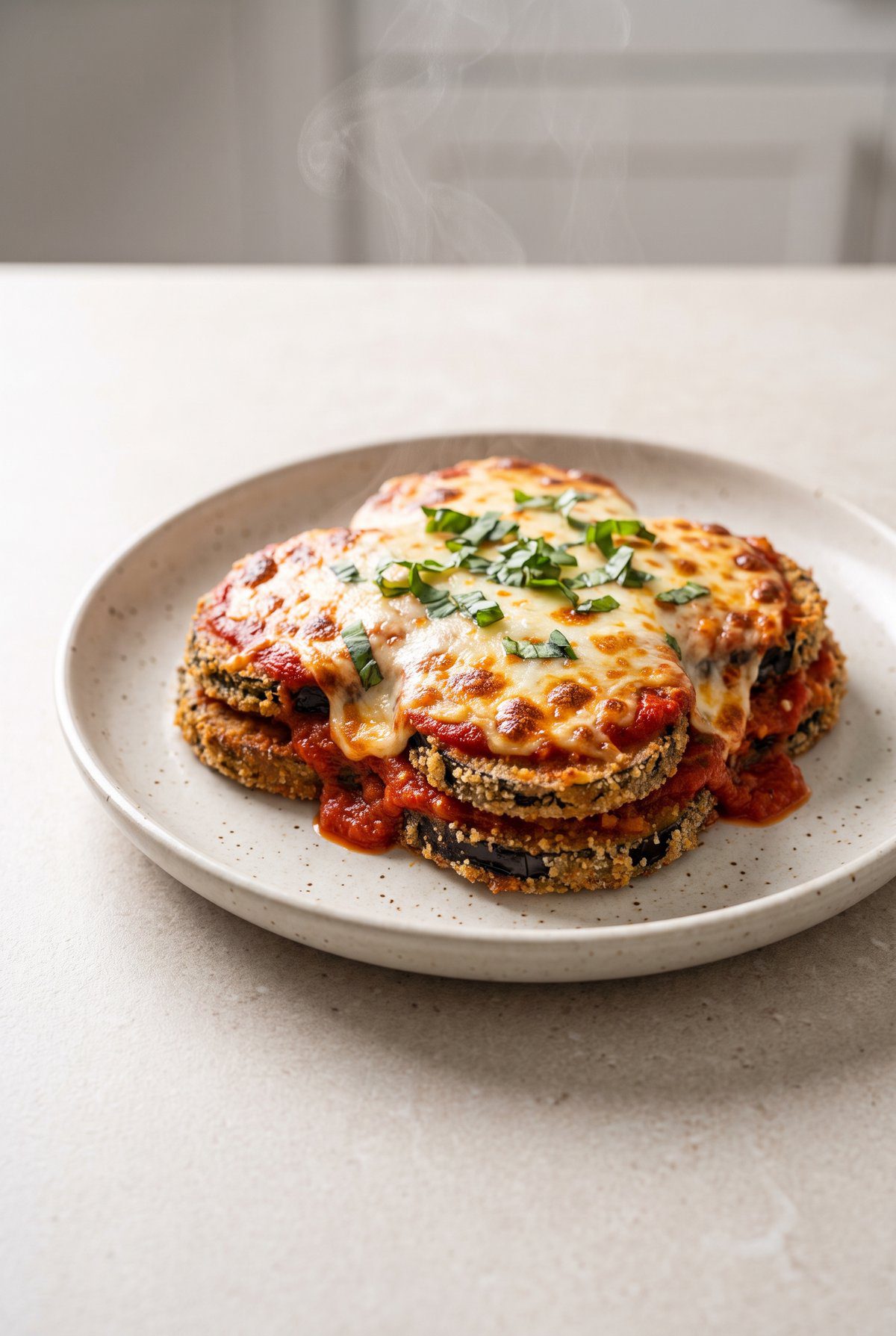
Eggplant parmesan made the classic way with salted fried eggplant, marinara, and melted mozzarella, baked at 400°F until bubbling and golden.
This post may contain affiliate links. See our disclosure policy.
Eggplant parmesan is the dish that got eggplant onto my regular rotation, and this is the classic version: rounds salted until they weep, breaded and fried until golden, then layered in a 9×13 with marinara and mozzarella and baked until the whole pan bubbles at the edges.
Salting is the step people skip, and then they wonder why the middle came out watery. Eggplant is mostly water. Thirty minutes under a heavy sprinkle of kosher salt pulls a surprising amount of it to the surface, and blotting the slices bone dry after that is what lets the flour grab hold. Wet eggplant sheds its breading in the oil.
Two layers is the right number in a 9×13. Stack it higher and the center never gets hot enough to set, so you end up spooning it out instead of cutting squares. And give the pan ten minutes on the counter before you cut into it. The cheese needs that time to firm up.
Why You’ll Love This Eggplant Parmesan Recipe
- A crust that survives the bake. Frying the rounds first and saucing between the layers instead of drowning them keeps the breading crisp under the cheese.
- Feeds eight for the price of two eggplants. Two pounds of eggplant, a jar of marinara, and a block of mozzarella cover a full 9×13 pan.
- A meatless dinner nobody argues about. Breaded, fried, red sauce, melted cheese. It hits every note a chicken parm does without any meat in it.
- Assemble now, bake later. The whole pan can be built a day ahead and go into the oven straight from the fridge with about 10 extra minutes.
Eggplant Parmesan Ingredients
Pick eggplants that feel heavy for their size with tight, glossy skin and no soft spots. A light, spongy one is old, and old eggplant is where the bitterness people complain about comes from. Leaving the skin on is fine and actually helps the rounds hold together in the hot oil.
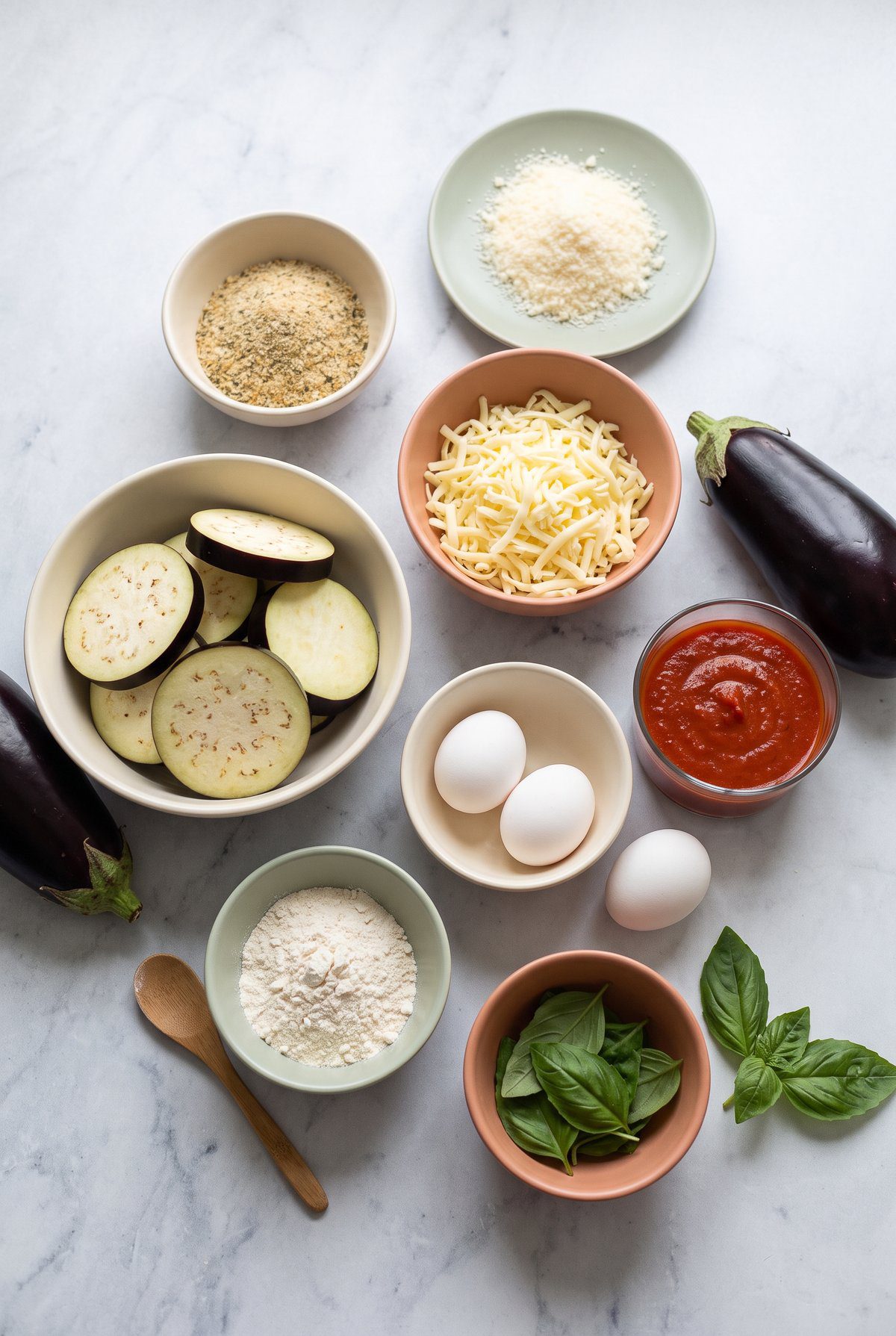
- 2 lbs eggplant (2 large or 3 medium), cut into 1/3-inch rounds
- 1 tbsp kosher salt, for drawing out moisture
- 3/4 cup all-purpose flour
- 1/2 tsp black pepper
- 3 large eggs, beaten
- 2 cups Italian-seasoned breadcrumbs
- 1 cup grated parmesan, divided
- 2 cups vegetable oil, for frying
- 1 (28 oz) jar marinara sauce (about 3 cups)
- 3 cups shredded low-moisture mozzarella (12 oz), divided
- 1/4 cup fresh basil, chopped, for garnish
Recipe Variations
- Swap the eggplant for chicken breasts pounded to 1/2 inch to make chicken parmesan. Bread and fry them exactly the same way, then bake until the chicken reaches an internal temperature of 165°F.
- Skip the skillet and crisp the breaded rounds in the oven instead. Spray both sides with oil, lay them on a wire rack over a sheet pan, and bake at 425°F for 5 minutes per side before layering. The crust is drier but you lose the frying mess.
- Add a ricotta layer for a richer, lasagna-style pan. Stir 15 ounces of whole milk ricotta with one egg and 1/4 cup of the parmesan, then spread half of it over each eggplant layer before the sauce goes on.
How to Make Eggplant Parmesan
- Salt the eggplant: Cut the eggplant into 1/3-inch rounds and lay them on a rack or a double layer of paper towels. Sprinkle both sides with the kosher salt and leave them for 30 minutes. Beads of water will collect on the surface. Wipe off the salt and press each round dry with paper towels until it stops feeling damp.
- Set up the breading station: Line up three shallow dishes: the flour whisked with the black pepper in the first, the beaten eggs in the second, and the breadcrumbs mixed with 1/2 cup of the parmesan in the third.
- Bread the rounds: Coat each round in flour and shake off the excess, dip it in egg and let the extra drip away, then press it firmly into the crumb mixture on both sides. Set the breaded rounds on a sheet pan in a single layer.
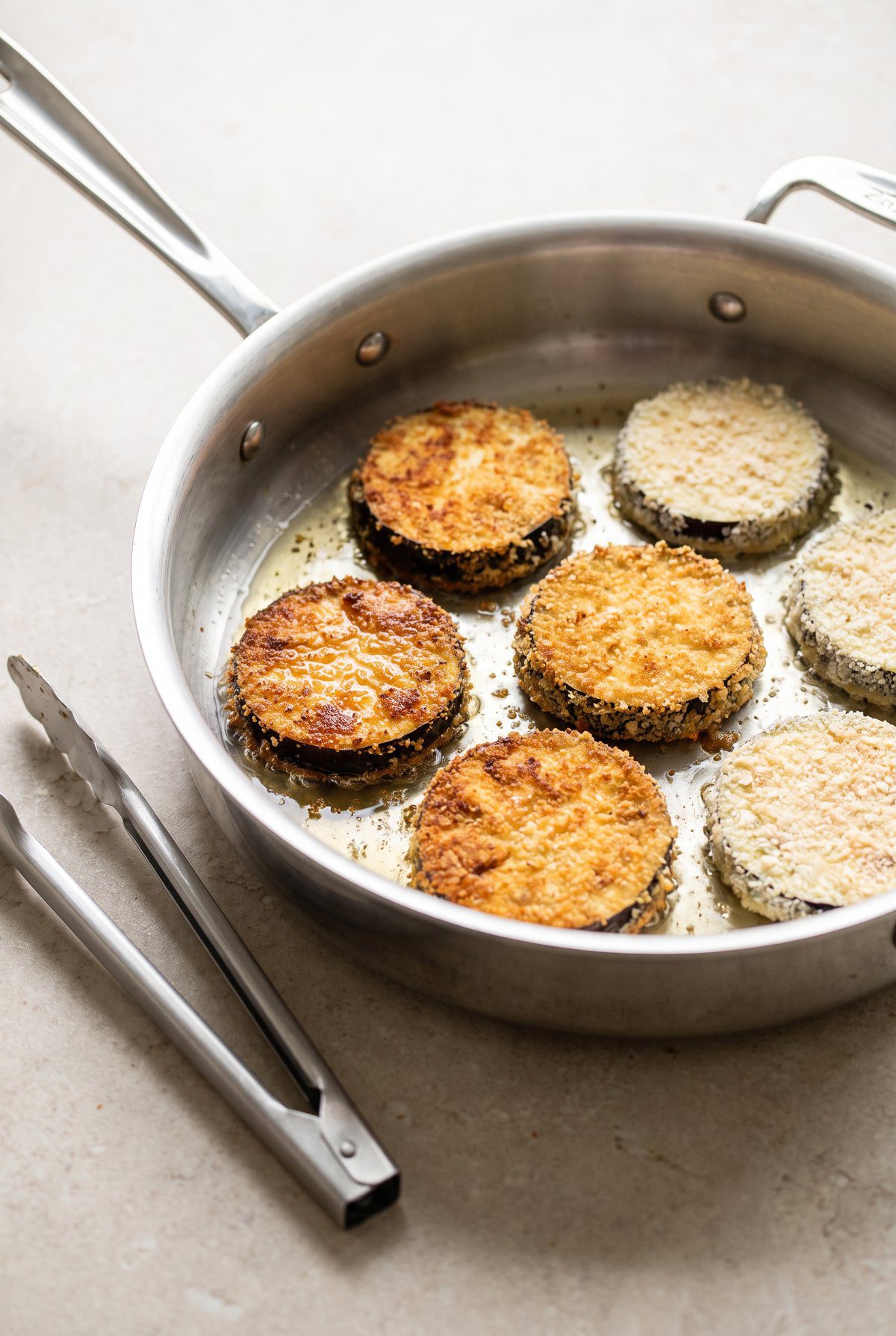
- Fry until golden: Pour the oil into a 12-inch skillet to a depth of about 1/4 inch, which takes roughly 2 cups, and heat over medium until it reaches 350°F or until a pinch of breadcrumbs sizzles steadily. Fry the rounds in batches for 3 minutes per side, until deep golden. Drain on a wire rack and top the oil back up between batches as needed.
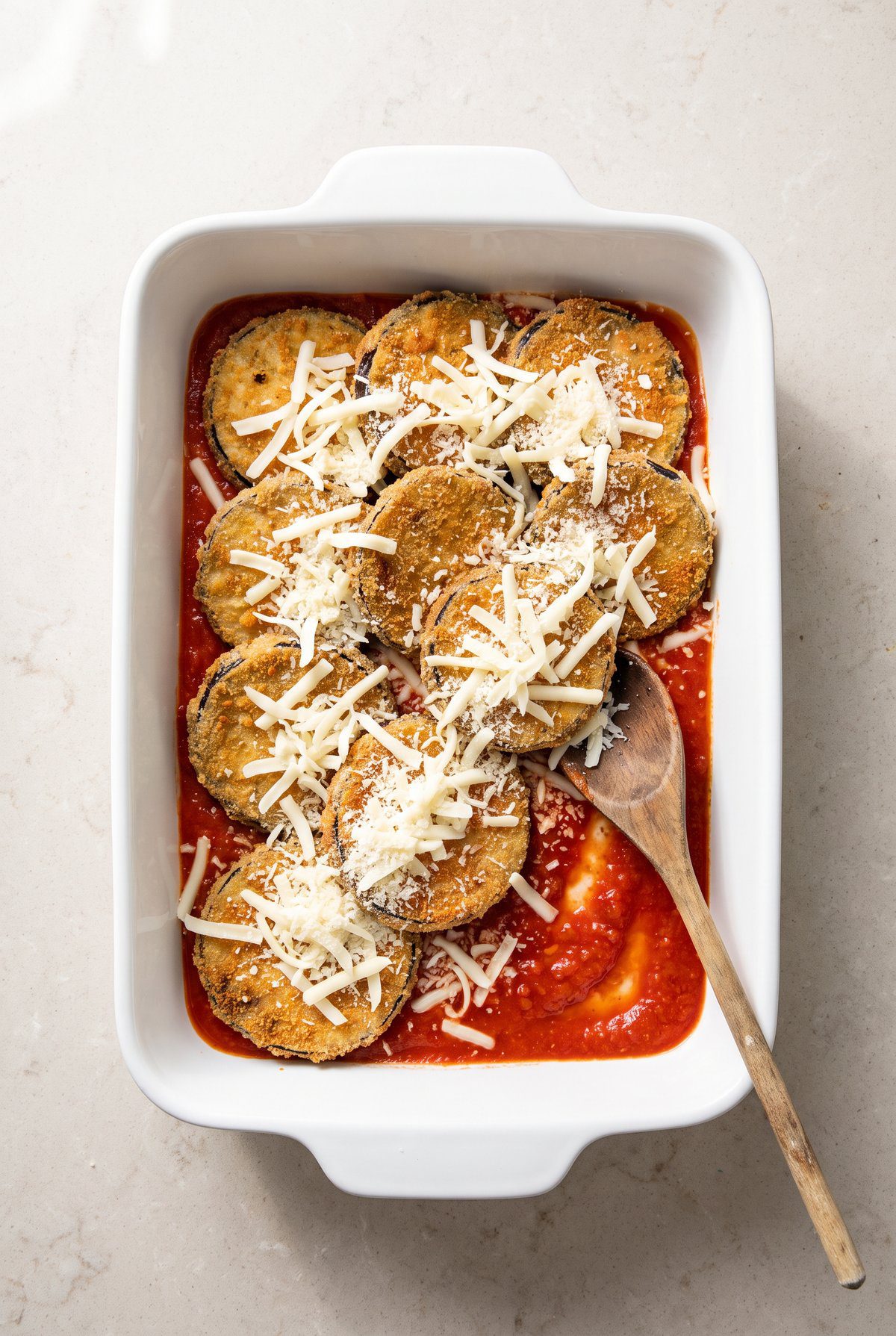
- Layer the pan: Heat the oven to 400°F. Spread 1 cup of the marinara across the bottom of a 9×13 baking dish. Add half the fried eggplant in an overlapping layer, 1 cup of marinara, and 1 cup of the mozzarella. Repeat with the rest of the eggplant and the last cup of marinara, then finish with the remaining 2 cups of mozzarella and 1/2 cup of parmesan.
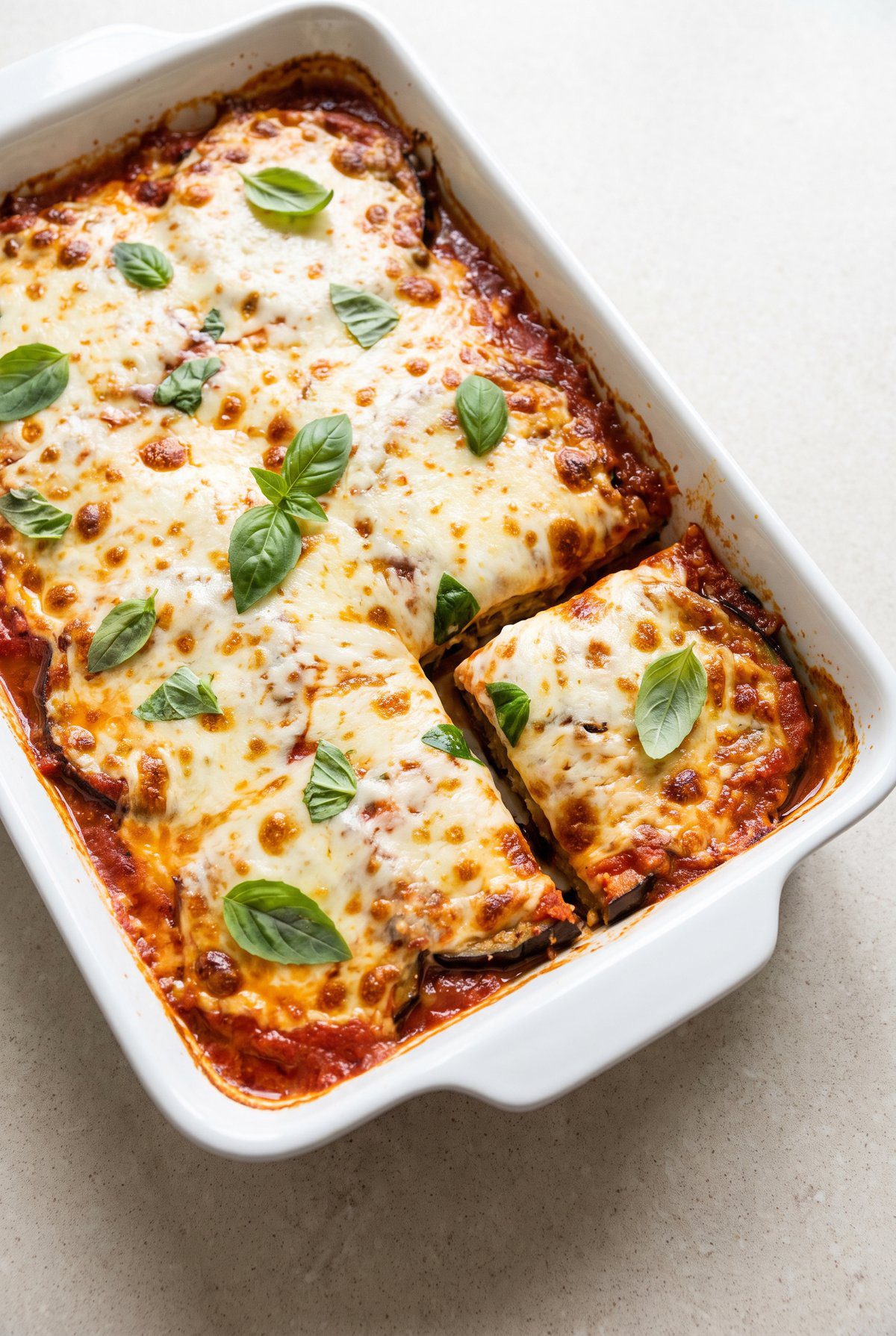
- Bake: Bake uncovered for 25-30 minutes, until the sauce bubbles around the edges and the cheese is golden with browned spots on top.
- Rest and serve: Let the pan sit for 10 minutes so the layers set, then scatter the basil over the top and cut into squares.
Recipe FAQs
Do I Really Have to Salt the Eggplant for This Eggplant Parmesan?
For this version, yes. Salting pulls out the water that would otherwise steam the breading soft in the oven, and it seasons the eggplant from the inside. Thirty minutes is the minimum; an hour is better if you have it.
How Thick Should I Slice the Eggplant?
About 1/3 inch. Thinner rounds collapse into mush under the sauce, and thicker ones stay firm in the middle after the bake. Slice off the very top and bottom of each eggplant so every round has flat sides.
Why Is My Eggplant Bitter?
Usually the eggplant was old or oversized. Big, seedy eggplants and ones with dull, wrinkled skin carry more bitterness. Salting helps, but buying a firm, glossy, medium-sized eggplant helps more.
Can I Make It Ahead of Time?
Yes. Fry the rounds up to a day ahead and refrigerate them on a rack, or assemble the whole pan, cover it, and refrigerate up to 24 hours. Bake it straight from the fridge and add about 10 minutes.
Peel the Eggplant or Leave the Skin On?
Leave it on. The skin holds each round together through frying and softens completely in the oven. Peel it if you’re serving someone who dislikes the texture, and know the slices get more fragile once you do.
Cooking Tips
- Use a slotted spatula and a wire rack for the fried rounds, never a plate lined with paper towels alone. Air moving under the eggplant is what keeps the bottom crust from steaming itself soggy while the next batch cooks.
- Keep the oil around 350°F between batches. It drops every time cold eggplant goes in, and rounds that hit cool oil drink it up instead of crisping.
- Overlap the rounds like roof shingles rather than crowding them flat. It gets all 2 pounds into two layers and gives the sauce somewhere to run instead of pooling on top.
Storage and Freezing
To store: Refrigerate leftovers in an airtight container for up to 4 days. The breading softens overnight, which no amount of technique prevents.
To freeze: Freezes well for up to 3 months, baked or unbaked. Wrap the dish in plastic and then foil, and thaw overnight in the fridge before baking or reheating.
To reheat: Warm squares uncovered at 350°F for 20-25 minutes, until heated through to 165°F. The oven brings back some of the crust; the microwave does not.
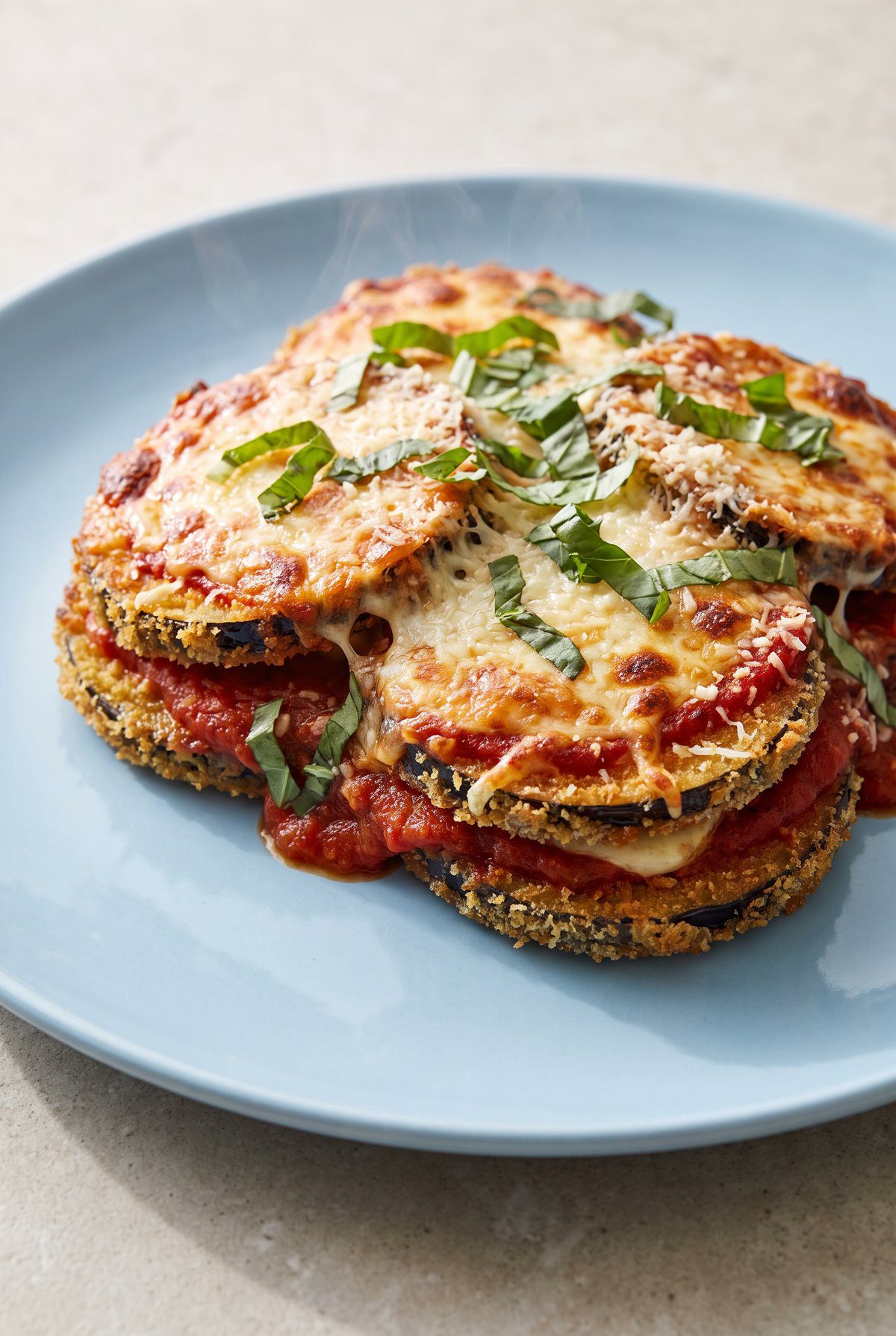
How to Serve Eggplant Parmesan
Eggplant Parmesan is usually served over spaghetti with extra marinara, though it stands on its own with garlic bread and a sharp green salad to cut the richness. Roasted broccoli or sauteed green beans work as a side if you’d rather skip the pasta. Leftover squares also make a good sandwich on a toasted roll the next day.
Loved This Recipe?
Eggplant Parmesan takes a couple of hours from first slice to first square, and it’s the meatless dinner that reliably converts skeptics.
Leave a star rating in the comments below, it helps other people find this recipe. Made it? Tag @allwellfed on Instagram, I love seeing this one in other people’s kitchens.
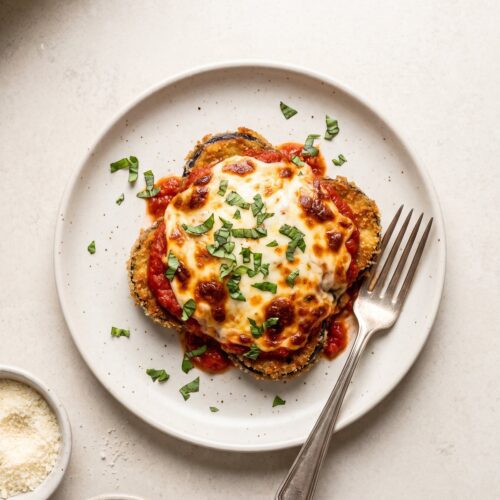
Classic Eggplant Parmesan
Ingredients
- 2 lbs eggplant 2 large or 3 medium, cut into 1/3-inch rounds
- 1 tbsp kosher salt for drawing out moisture
- 3/4 cup all-purpose flour
- 1/2 tsp black pepper
- 3 large eggs beaten
- 2 cups Italian-seasoned breadcrumbs
- 1 cup grated parmesan divided
- 2 cups vegetable oil for frying
- 1 (28 oz) jar marinara sauce about 3 cups
- 3 cups shredded low-moisture mozzarella 12 oz, divided
- 1/4 cup fresh basil chopped, for garnish

Instructions
- Salt the eggplant: Cut the eggplant into 1/3-inch rounds and lay them on a rack or a double layer of paper towels. Sprinkle both sides with the kosher salt and leave them for 30 minutes. Beads of water will collect on the surface. Wipe off the salt and press each round dry with paper towels until it stops feeling damp.
- Set up the breading station: Line up three shallow dishes: the flour whisked with the black pepper in the first, the beaten eggs in the second, and the breadcrumbs mixed with 1/2 cup of the parmesan in the third.
- Bread the rounds: Coat each round in flour and shake off the excess, dip it in egg and let the extra drip away, then press it firmly into the crumb mixture on both sides. Set the breaded rounds on a sheet pan in a single layer.
- Fry until golden: Pour the oil into a 12-inch skillet to a depth of about 1/4 inch, which takes roughly 2 cups, and heat over medium until it reaches 350°F or until a pinch of breadcrumbs sizzles steadily. Fry the rounds in batches for 3 minutes per side, until deep golden. Drain on a wire rack and top the oil back up between batches as needed.
- Layer the pan: Heat the oven to 400°F. Spread 1 cup of the marinara across the bottom of a 9×13 baking dish. Add half the fried eggplant in an overlapping layer, 1 cup of marinara, and 1 cup of the mozzarella. Repeat with the rest of the eggplant and the last cup of marinara, then finish with the remaining 2 cups of mozzarella and 1/2 cup of parmesan.
- Bake: Bake uncovered for 25-30 minutes, until the sauce bubbles around the edges and the cheese is golden with browned spots on top.
- Rest and serve: Let the pan sit for 10 minutes so the layers set, then scatter the basil over the top and cut into squares.
Notes
If you made this, leave a star rating down in the comments. It takes about ten seconds, and it’s how other cooks decide whether a recipe is worth trying.